CM Rio Inaugurates Food Processing Incubation Centre at Toluvi
Synopsis
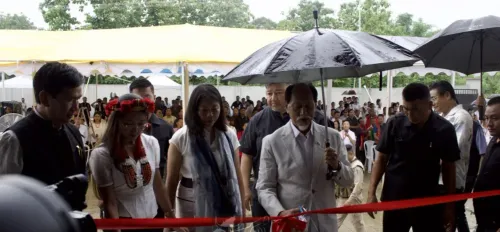
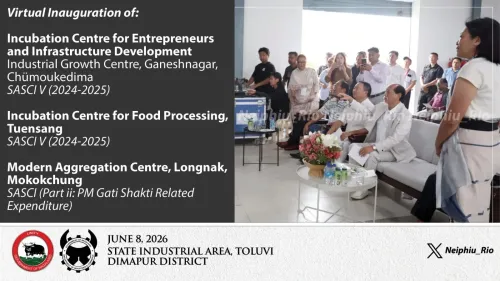
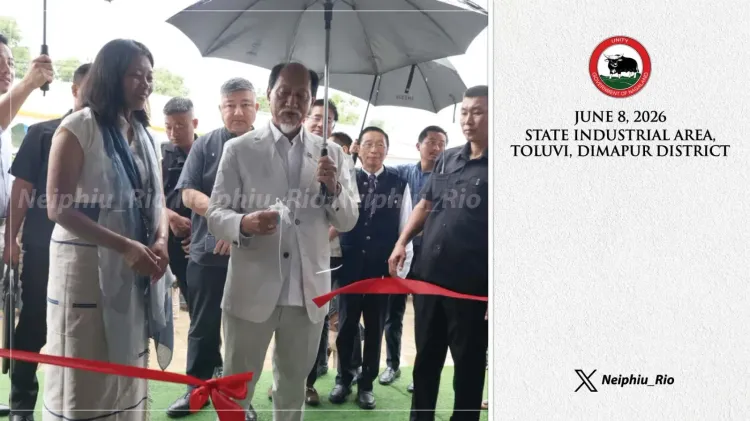
Nagaland Chief Minister Neiphiu Rio on June 8, 2026, inaugurated an Incubation Centre for Food Processing at the State Industrial Area, Toluvi, aimed at helping farmers and entrepreneurs add value to local produce and access wider markets.
Key Takeaways
CM Neiphiu Rio inaugurated the Incubation Centre for Food Processing at State Industrial Area, Toluvi on June 8, 2026 .
The centre is designed to help Nagaland's farmers and entrepreneurs convert local produce into market-ready, quality products.
The initiative aligns with India's PM Formalisation of Micro Food Processing Enterprises (PM FME) scheme launched in 2020 , which supports micro-units in Northeastern states.
Key crops such as pineapple, passion fruit, and ginger — long vulnerable to post-harvest losses — stand to benefit from the new processing infrastructure.
The Nagaland Industrial Development Corporation has been building food processing clusters since the early 2010s, and the Toluvi centre extends that policy lineage.
Operational metrics and potential district-level replication will be key indicators of the centre's long-term impact.
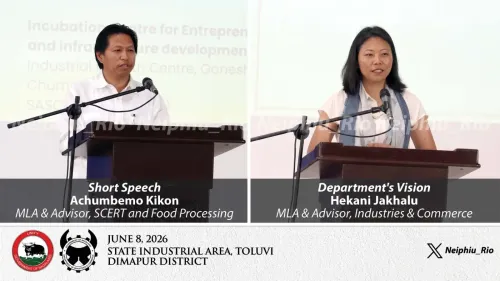
Nagaland Chief Minister Neiphiu Rio on Monday, June 8, 2026, inaugurated an Incubation Centre for Food Processing at the State Industrial Area, Toluvi, marking a significant step toward strengthening agri-value chains in the state. The facility is designed to help farmers and entrepreneurs convert local produce into quality products suited for wider markets, equipping them with new skills and institutional support to build viable enterprises.
Context
Posting on X, Chief Minister Rio stated he was 'happy to inaugurate the Incubation Centre for Food Processing at State Industrial Area, Toluvi,' adding that it 'will help our farmers and entrepreneurs turn produce into quality products for wider markets.' He noted that 'with new skills and support, they will be better equipped to build successful enterprises.' The inauguration underscores the state government's continued focus on formalising micro-enterprises in Nagaland's predominantly agriculture-based economy.
Policy Backdrop
The Nagaland Industrial Development Corporation has promoted food processing clusters since the early 2010s under successive state industrial policies, pairing state-run industrial estates with central government funding streams. The centre at Toluvi aligns with India's PM Formalisation of Micro Food Processing Enterprises (PM FME) scheme, launched in 2020, which provides credit-linked support specifically targeting micro-units in Northeastern states. Nagaland's key perishable crops — including pineapple, passion fruit, and ginger — have long suffered post-harvest losses for want of processing infrastructure, making facilities like this one critical to income stabilisation for farmers.
Northeastern states have consistently pursued food processing infrastructure as a lever to reduce wastage and raise farm incomes. The broader national emphasis on formalising agri-value chains has given state governments both the policy mandate and access to central resources to build out such facilities. The Toluvi centre represents a convergence of state industrial policy and central scheme architecture.
Stakeholders and Impact
Nagaland's farming community and local food entrepreneurs stand to gain most directly from the new incubation centre. By offering training, technical support, and a structured environment for product development, the facility lowers the barrier for small producers to enter formal markets and scale their operations. Entrepreneurs who previously lacked access to processing equipment or market linkages can now develop branded, packaged products with broader commercial reach.
The centre's location within the State Industrial Area at Toluvi also positions it within an existing ecosystem of industrial infrastructure, potentially enabling synergies with other units in the estate. For the state government, a functional incubation model at Toluvi could serve as a template for replication across other districts with high agricultural output.
What's Next
Attention will now turn to the operational rollout of the Toluvi centre — specifically the number of farmers and entrepreneurs enrolled, the range of produce being processed, and the market linkages established in the first phase. Any state budget provisions for scaling the model to other districts will be closely watched as a signal of the government's long-term commitment to food processing infrastructure. The centre's performance will also determine whether it can serve as a replicable blueprint for other Northeastern states grappling with similar post-harvest challenges.
Point of View
The Rio government is betting on infrastructure clustering as a model for enterprise development, a strategy that has shown mixed but promising results elsewhere in the Northeast. The timing also signals an intent to leverage central scheme funding more aggressively, particularly as the PM FME scheme enters a mature phase with performance-linked disbursements. Whether the centre translates political intent into measurable farmer income gains will be the real test of this initiative.
NationPress
24 Oct 2026
Frequently Asked Questions
What is the Incubation Centre for Food Processing in Nagaland?
The Incubation Centre for Food Processing is a new facility at the State Industrial Area, Toluvi, Nagaland, inaugurated by Chief Minister Neiphiu Rio on June 8, 2026, to help farmers and entrepreneurs process local produce into quality products for wider markets.
Where is the Toluvi State Industrial Area located?
Toluvi is a site in Nagaland that hosts the State Industrial Area, which now includes the newly inaugurated Incubation Centre for Food Processing.
How does the PM FME scheme benefit Nagaland food entrepreneurs?
India's PM Formalisation of Micro Food Processing Enterprises scheme, launched in 2020, provides credit-linked support to micro-units in Northeastern states including Nagaland, helping entrepreneurs formalise and scale food processing businesses.
What crops will benefit from Nagaland's food processing incubation centre?
Nagaland's key perishable crops — including pineapple, passion fruit, and ginger — are among the produce expected to benefit, as the centre aims to reduce post-harvest losses through value addition and processing.
What is Neiphiu Rio's role in Nagaland's industrial development?
Neiphiu Rio is the Chief Minister of Nagaland and leader of the Nationalist Democratic Progressive Party, serving multiple terms since 2014. He has overseen efforts to pair state industrial estates with central government schemes to build food processing and cold chain infrastructure.