CM Sai Hails Lok Sabha Passage of Vande Mataram Protection Bill

Synopsis
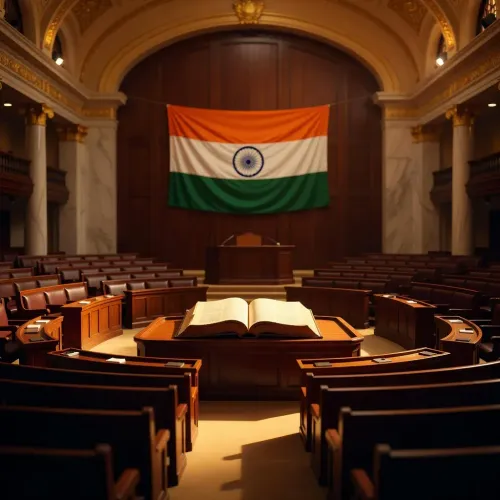
The Lok Sabha passed the Prevention of Insults to National Honour (Amendment) Bill, 2026, granting 'Vande Mataram' the same statutory protection as the national anthem. Chhattisgarh CM Vishnu Deo Sai hailed it as a historic assertion of India's cultural dignity under PM Modi's leadership.
Key Takeaways
The Lok Sabha passed the Prevention of Insults to National Honour (Amendment) Bill, 2026 on 30 July 2026 .
The bill extends to 'Vande Mataram' the same legal protection currently available to the national anthem under the 1971 Act .
Chhattisgarh Chief Minister Vishnu Deo Sai called the passage a historic step for national honour and cultural consciousness.
CM Sai attributed the move to PM Narendra Modi's 'nation first' vision.
The bill must still clear the Rajya Sabha before it becomes law.
A song that once fuelled an independence movement now gets the force of law behind it. On Thursday, 30 July 2026, the Lok Sabha passed the Prevention of Insults to National Honour (Amendment) Bill, 2026 — extending to the national song 'Vande Mataram' the same statutory protection already enjoyed by the national anthem. Chhattisgarh Chief Minister Vishnu Deo Sai welcomed the move as a historic step for the nation's cultural dignity.
Legal parity for Vande Mataram — what the bill does
For decades, 'Jana Gana Mana' — India's national anthem — has been shielded by the Prevention of Insults to National Honour Act, 1971, which criminalises deliberate disrespect to the flag, the anthem, and the Constitution. 'Vande Mataram', though formally recognised as the national song and carrying immense historical weight as the rallying cry of the independence movement, sat outside that legal perimeter. The 2026 amendment closes that gap, placing the national song on equal statutory footing.
Sai's tribute and the BJP's 'nation first' framing
CM Sai, posting in Hindi, called the passage 'ek aitihasik kadam' — a historic step — in the direction of reinforcing the honour of national symbols. He credited Prime Minister Narendra Modi's leadership, describing the move as a strengthening of the 'nation first' resolve that has defined the BJP-led central government's cultural agenda since 2014. The post directly tagged @narendramodi, framing the legislative moment as an expression of the Prime Minister's vision.
A longer arc of symbolic legislation
India has periodically reinforced the legal armour around its national emblems — from the 1971 Act itself to Supreme Court directions on anthem conduct in cinema halls. The current amendment fits a recognisable pattern: under the BJP-led centre, questions of national symbols, cultural identity, and public conduct have been recurring legislative and executive priorities. The bill's passage in the Lok Sabha is the first chamber hurdle; it now moves to the Rajya Sabha, where its final fate will be decided.
If it clears the upper house, enforcement agencies will need fresh guidelines on what constitutes an 'insult' to the national song — a question courts and administrators will inevitably be called upon to answer.
Point of View
The government answers a long-standing demand from cultural-right constituencies while also making opposition to the bill politically costly. The real test will come in the Rajya Sabha and, thereafter, in courts asked to define what 'insulting' the national song actually means — a question with significant free-speech implications that legal scholars are already likely to flag.
NationPress
31 Jul 2026
Frequently Asked Questions
What does the Prevention of Insults to National Honour Amendment Bill 2026 do?
The bill amends the Prevention of Insults to National Honour Act, 1971, to extend to 'Vande Mataram' the same legal protection against deliberate disrespect that the national anthem 'Jana Gana Mana' already enjoys.
What is the difference between India's national anthem and national song?
'Jana Gana Mana' is India's national anthem, adopted in 1950. 'Vande Mataram', composed by Bankim Chandra Chattopadhyay, is the national song — equally revered historically but until now without the same statutory legal protection.
Has the Vande Mataram bill become law yet?
Not yet. The bill passed the Lok Sabha on 30 July 2026 but must also pass the Rajya Sabha before it can receive Presidential assent and become law.
Why did Chhattisgarh CM Vishnu Deo Sai comment on a central government bill?
As a senior BJP leader and state chief minister, Sai regularly endorses central government legislative actions that align with the party's national agenda, particularly those touching on cultural and symbolic issues.
What was the original Prevention of Insults to National Honour Act 1971?
Enacted in 1971, the Act makes it a criminal offence to show deliberate disrespect to the Indian national flag, the national anthem, and the Constitution of India. The 2026 amendment seeks to add the national song to this list.