CM Sai Highlights Bastar's Transformation Under BJP Rule
Synopsis
Chhattisgarh CM Vishnu Deo Sai shares Union Home Minister Amit Shah's remarks crediting the BJP government's Bastar Olympic, Bastar Pandum cultural festival, and Niyad Nellanar welfare scheme with transforming a once Maoist-conflict-ridden region into a hub of tribal sport and development.
Key Takeaways
CM Vishnu Deo Sai shared Home Minister Amit Shah's remarks on Bastar's governance transformation on 15 October 2026 .
The Bastar Olympic is being held in a region long associated with Maoist insurgency, with thousands of tribal youth participating.
The Bastar Pandum festival aims to revive and showcase indigenous tribal arts and culture in southern Chhattisgarh.
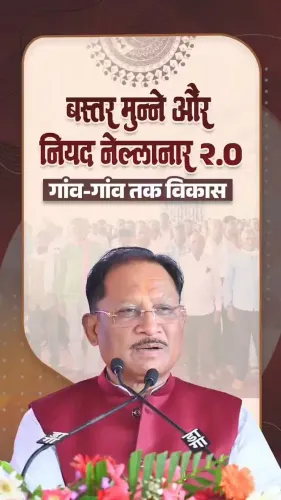
The Niyad Nellanar scheme targets delivery of roads, electricity, and water to remote tribal villages in the Bastar region.
Shah's remarks draw a direct partisan contrast, attributing decades of service denial to Congress governance and crediting the post- December 2023 BJP government for change.
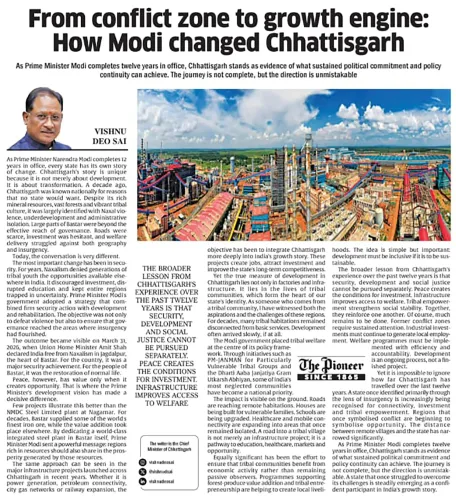
The Home Ministry's twin-track counter-LWE strategy — security operations paired with welfare delivery — underpins the broader federal policy narrative on Bastar.
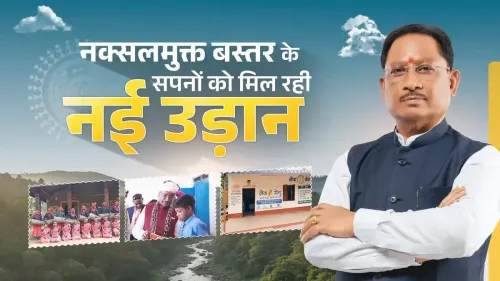
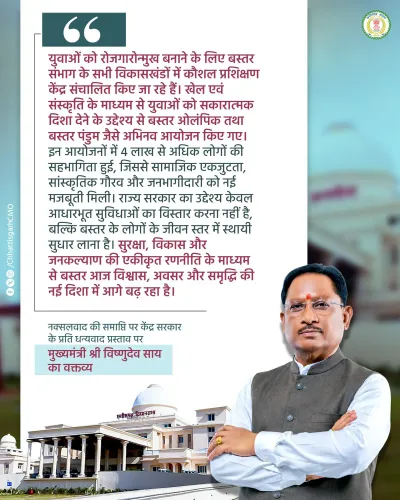
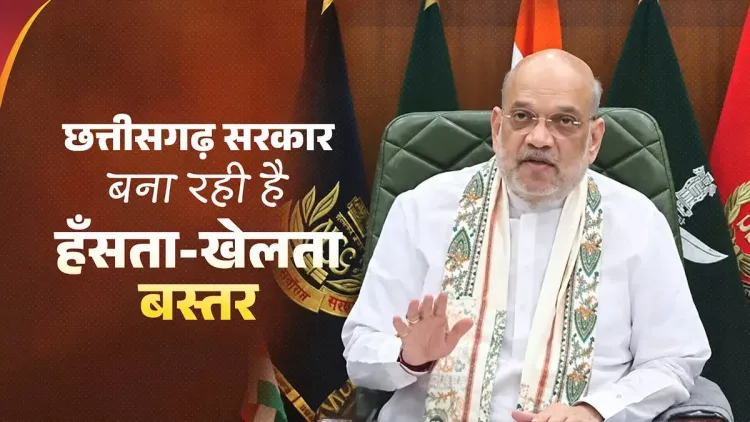
Where gunshots and bomb blasts once defined daily life, thousands of young people are today competing in the Bastar Olympic — a transformation that Chhattisgarh Chief Minister Vishnu Deo Sai says captures the region's dramatic turnaround under BJP governance. Sharing remarks by Union Home Minister Amit Shah on Thursday, 15 October 2026, the Chief Minister framed Bastar's shift from a Maoist conflict zone to a hub of sport and culture as a defining achievement of the current dispensation.
From Conflict Corridors to Competitive Arenas
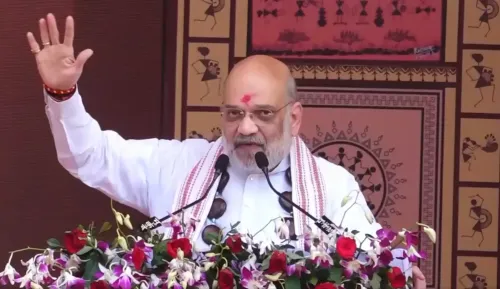
The post quotes Shah directly: 'Jahaan kabhi bandukon ki goliyaan aur bam ke dhamaake sunaai dete the, wahaan aaj hazaron yuva Bastar Olympic mein apni pratibha dikha rahe hain' — 'Where once the sound of bullets and bomb blasts echoed, thousands of young people are today showcasing their talent at the Bastar Olympic.' The remark encapsulates the core argument: that security gains in the Bastar region of southern Chhattisgarh have created the civic space for events that were unthinkable a decade ago.
Alongside the sporting showcase, Shah highlighted the Bastar Pandum festival as a vehicle for reviving tribal arts and culture — positioning cultural reclamation alongside physical security as twin pillars of what the BJP describes as its Bastar model. The festival celebrates the indigenous traditions of the region's tribal communities, communities that bore the heaviest cost of decades-long Maoist insurgency.
Niyad Nellanar and the Infrastructure Argument
The sharpest political edge in Shah's quoted remarks comes with the reference to Congress: five decades of Congress rule, he argued, left Bastar without basic services — roads, electricity, water — that the current state government is now delivering through the Niyad Nellanar scheme. The scheme, launched by the Vishnu Deo Sai government after the BJP's victory in the December 2023 Chhattisgarh assembly elections, targets the most remote tribal villages in the region with last-mile infrastructure delivery.
The name itself carries meaning: 'Niyad Nellanar' translates roughly to 'your good village' in the local Gondi-influenced idiom — a deliberate branding choice that signals ownership and dignity for communities long marginalised from state services. While the full scale of implementation remains to be independently assessed, the scheme has become the centrepiece of the BJP's governance narrative in the state.
Shah's Bastar Remarks and the LWE Policy Frame
That it is Home Minister Amit Shah whose words anchor this post is not incidental. The Union Home Ministry has driven the national counter-Left Wing Extremism strategy, pairing intensified security operations in Maoist-affected districts with parallel development pushes. Shah has repeatedly cited Bastar as proof that the twin-track approach — force and welfare together — is working, a claim that the Bastar Olympic and Bastar Pandum events are now being deployed to reinforce.
For CM Sai, amplifying Shah's words serves a dual purpose: it links state-level achievements to the larger BJP federal architecture and positions Chhattisgarh's tribal heartland as a national success story ahead of any future electoral cycle. The contrast with Congress's record — pointed and deliberate — underscores that governance in Bastar is being contested on political as much as administrative terrain.
Thousands of tribal youth are now in the arena. The question going forward is whether the infrastructure and cultural investments translate into durable change — or remain a compelling, contested narrative.
Point of View
CM Sai ties Chhattisgarh's state-level achievements to the Union Home Ministry's broader LWE counter-strategy, lending federal credibility to what are essentially state-level schemes. The explicit contrast with five decades of Congress rule is a deliberate electoral priming move, signalling that Bastar will remain a key BJP talking point in future cycles. Whether ground-level delivery under Niyad Nellanar matches the rhetoric will ultimately determine how durable this narrative proves.
NationPress
15 Oct 2026
Frequently Asked Questions
What is the Bastar Olympic?
The Bastar Olympic is a sporting event held in the Bastar region of Chhattisgarh that gives tribal youth a platform to showcase their athletic talent, serving as a symbol of the region's improved security situation after years of Maoist insurgency.
What is the Niyad Nellanar scheme?
Niyad Nellanar is a Chhattisgarh government welfare scheme launched after the BJP came to power in December 2023, focused on delivering basic infrastructure — roads, electricity, and water — to remote tribal villages in the Bastar region.
What is Bastar Pandum?
Bastar Pandum is a cultural festival organised in the Bastar region to revive and celebrate indigenous tribal arts, traditions, and community practices that were suppressed or neglected during the prolonged Maoist conflict period.
Why did Amit Shah comment on Bastar's development?
As Union Home Minister, Amit Shah oversees India's national policy on Left Wing Extremism. His remarks on Bastar frame the region's transformation as evidence that the BJP's twin-track strategy of security operations and welfare delivery is succeeding.
What changed in Chhattisgarh after the 2023 elections?
The BJP won the December 2023 Chhattisgarh Legislative Assembly elections and formed a government under Chief Minister Vishnu Deo Sai, replacing the preceding Congress administration and launching new tribal welfare and development initiatives in Bastar.