CM Sai Highlights Jashpur Tea Garden as Tourism, Women Empowerment Hub
Synopsis
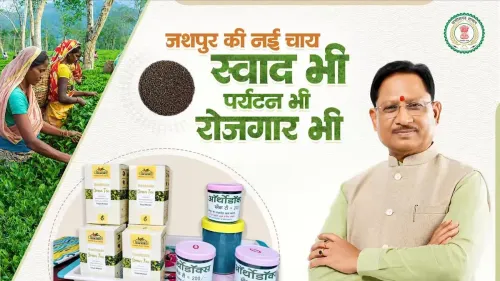
Chhattisgarh CM Vishnu Deo Sai on 9 July 2026 highlighted Jashpur's Sarudih tea garden as a rising agro-tourism hub empowering local women, vowing that the district's produce and people would gain national recognition — signalling a broader state push to brand tribal-belt specialties.
Key Takeaways
CM Vishnu Deo Sai posted on 9 July 2026 spotlighting Sarudih tea garden in Jashpur, Chhattisgarh .
The garden is being promoted as both an agro-tourism destination and a livelihood source for local women .
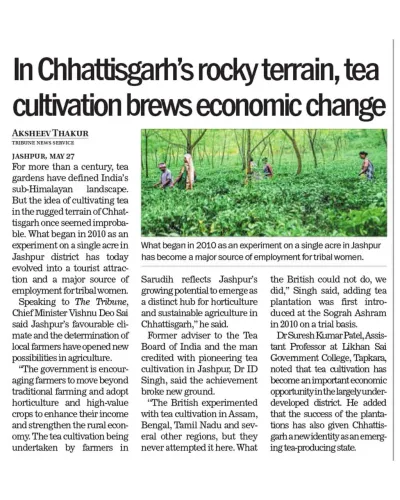
Jashpur is an emerging tea-cultivation zone in Chhattisgarh's tribal north, supported by Tea Board of India partnerships since the early 2000s.
CM Sai pledged national visibility for every Jashpur specialty, local product, and 'hardworking hand' in the district.
Possible next steps include state marketing campaigns, GI registration for Jashpur tea, and tourism infrastructure upgrades at Sarudih .
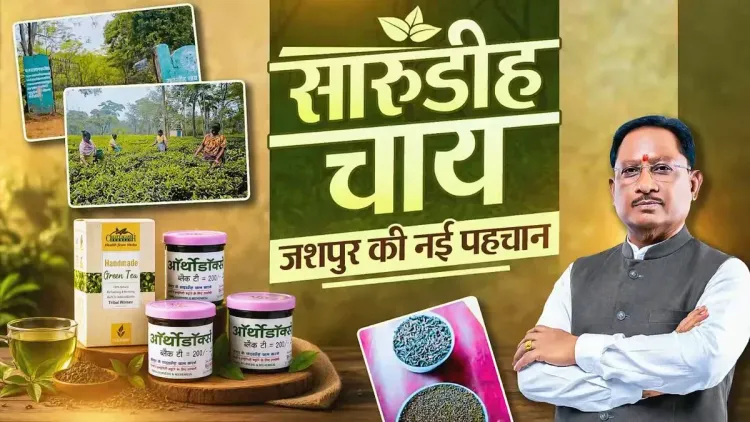
Chhattisgarh Chief Minister Vishnu Deo Sai on Thursday, 9 July 2026, spotlighted the Sarudih tea garden in Jashpur district as a growing destination that blends agro-tourism with livelihood opportunities for local women, pledging that every local product and hardworking hand from Jashpur would receive national recognition.
Context
In a post on X, CM Sai wrote in Hindi: 'जशपुर की चाय का अनूठा स्वाद अब देशभर के लोगों को अपनी ओर आकर्षित कर रहा है' — ('The unique taste of Jashpur tea is now attracting people from across the country'). He described Sarudih tea garden as drawing tourists through its natural beauty while simultaneously giving 'new wings to the dreams of local women.' The post was accompanied by a video, underscoring the state government's effort to visually promote the destination.
Jashpur is a northern district of Chhattisgarh with a predominantly tribal population. Its hilly terrain and cooler microclimate have made it one of the state's emerging tea-cultivation zones, a departure from the traditional tea belts of Assam and Darjeeling.
Policy Backdrop
Chhattisgarh's push into tea cultivation in non-traditional districts dates to the early 2000s, when state agencies began working with the Tea Board of India to diversify rural incomes in forested and tribal belts. Sarudih tea garden in Jashpur has been positioned as both a production site and a tourism asset within that broader framework.
CM Sai's statement fits a wider pattern seen across central Indian states: branding regional agricultural specialties and developing agro-tourism corridors to create supplementary livelihoods. Women's self-help groups and micro-enterprise models are frequently the delivery mechanism for such initiatives, channelling produce promotion into tangible income at the household level.
Stakeholders and Impact
The primary beneficiaries identified in the CM's post are local women engaged in or around the tea garden, alongside tea growers and the broader community of domestic tourists now being drawn to the region. CM Sai stated his government's resolve that 'जशपुर की हर विशेषता, हर स्थानीय उत्पाद और हर मेहनतकश हाथ को देशभर में उचित सम्मान और नई पहचान मिले' — ('every specialty of Jashpur, every local product, and every hardworking hand receives due respect and a new identity across the country').
Agro-tourism at sites like Sarudih can generate income streams beyond direct agriculture — through hospitality, guided experiences, and sale of processed tea — reducing dependence on a single crop cycle and offering women pathways into formal micro-enterprise.
What's Next
Analysts tracking Chhattisgarh's rural economy will watch for concrete follow-through: state-level marketing campaigns for Jashpur tea, a possible application for Geographical Indication (GI) registration, and infrastructure upgrades at Sarudih ahead of upcoming tourism seasons. GI status, if pursued, would legally protect the regional identity of Jashpur tea and potentially command premium pricing in national markets.
The Chief Minister's public endorsement via social media also signals that Jashpur may feature more prominently in the state's official tourism and agri-export narratives in the months ahead, with the tribal district's produce gaining a platform it has historically lacked.
Point of View
The messaging mirrors a national-level political grammar that links welfare delivery with economic agency. The move also keeps alive the prospect of GI registration for Jashpur tea, which would be a tangible policy win the administration could point to ahead of future electoral cycles. Whether the social-media spotlight translates into budgetary allocations and infrastructure at Sarudih will be the real test of intent.
NationPress
9 Jul 2026
Frequently Asked Questions
What is Sarudih tea garden in Jashpur?
Sarudih tea garden is a plantation site in Jashpur district , northern Chhattisgarh , known for its natural scenery and locally grown tea. It is being developed as an agro-tourism destination that also provides livelihoods to local women.
Why is Jashpur famous for tea in Chhattisgarh?
Jashpur's hilly terrain and cooler microclimate make it suitable for tea cultivation, setting it apart from the rest of Chhattisgarh . State support with Tea Board of India assistance since the early 2000s has helped establish it as an emerging tea-producing zone.
What did CM Vishnu Deo Sai say about Jashpur tea?
On 9 July 2026 , CM Vishnu Deo Sai said the unique taste of Jashpur tea is attracting people from across India, and pledged that every local product and hardworking hand in Jashpur would receive national respect and recognition.
How does Sarudih tea garden help local women?
According to CM Sai, Sarudih tea garden is giving 'new wings to the dreams of local women' by creating livelihood opportunities within the agro-tourism and tea production ecosystem, consistent with a broader state model of women's micro-enterprise in tribal districts.
Could Jashpur tea get GI tag status?
A Geographical Indication (GI) tag for Jashpur tea is among the possible next steps being watched by analysts. GI status would legally protect the regional identity of the tea and could help it command premium prices in national markets, though no formal application has been confirmed.