CM Sai Highlights Makhana Farming Push in Dhamtari
Synopsis
Chhattisgarh CM Vishnu Deo Sai on 11 July 2026 highlighted makhana cultivation spanning over 105 acres in Dhamtari district, crediting crop diversification, modern technology, and women's self-help groups for transforming the district into a model of self-reliant agriculture.
Key Takeaways
Chhattisgarh CM Vishnu Deo Sai highlighted makhana farming expansion in Dhamtari district on 11 July 2026 .
Makhana cultivation now covers more than 105 acres in the district, up from negligible levels historically.
The initiative is driven by better use of water resources , modern agricultural technology, and women's self-help groups under NRLM.
The push aligns with the national Atmanirbhar Bharat framework and decade-long crop diversification policy goals.
Dhamtari, traditionally a paddy-belt district , is being positioned as a replicable model for self-reliant, diversified agriculture in Chhattisgarh.
Scaling acreage and establishing processing and market-linkage infrastructure remain the key next steps for the state.
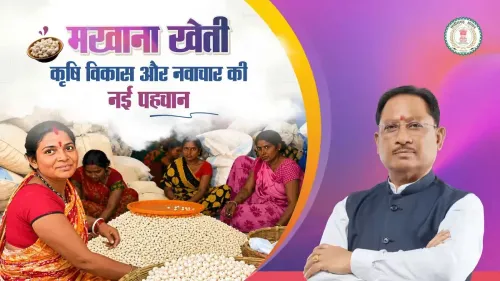
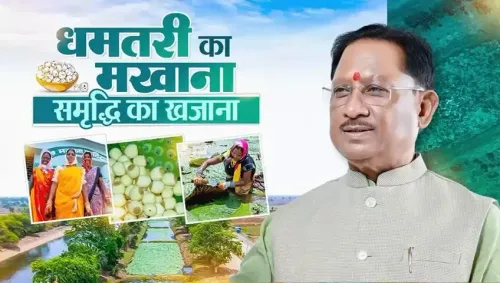
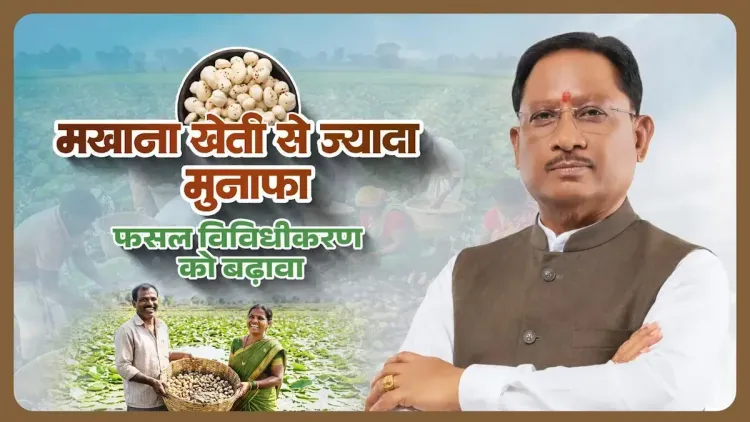
Chhattisgarh Chief Minister Vishnu Deo Sai on Saturday, 11 July 2026, highlighted the rapid expansion of makhana (fox nut) cultivation in Dhamtari district, calling it a model of self-reliant agriculture driven by crop diversification, modern technology, and the active participation of women's self-help groups.
In his post on X, CM Sai stated that makhana farming now covers more than 105 acres in the district, opening new avenues of employment and livelihood for local farmers. He wrote: 'नवाचार और फसल विविधीकरण से धमतरी जिला आत्मनिर्भर कृषि की नई पहचान बन रहा है' ('Through innovation and crop diversification, Dhamtari district is becoming a new identity for self-reliant agriculture').
Context
Dhamtari, a district in southern Chhattisgarh with a predominantly agrarian economy, has historically been associated with paddy cultivation. The shift toward makhana — a high-value wetland crop — represents a deliberate move to diversify farm income and reduce dependence on a single crop. CM Sai's post underscores the state government's intent to position Dhamtari as a replicable example of agricultural transformation.
Makhana cultivation has traditionally been concentrated in Bihar, but central and state governments have piloted its expansion into other eastern and central Indian states using improved agronomic practices and collective farming models over the past decade.
Policy Backdrop
The initiative aligns with the broader Atmanirbhar Bharat framework launched in 2020, which promoted local crop value chains and reduced import dependence for produce including makhana. Crop diversification has been a policy priority since the mid-2010s, aimed at easing water stress caused by paddy monoculture and raising farmer incomes through wetland and horticultural alternatives.
Women's self-help groups operating under India's National Rural Livelihoods Mission (NRLM) have been integrated into such efforts to manage production, processing, and marketing at the grassroots level. CM Sai specifically credited 'स्व-सहायता समूहों की बहनों की सक्रिय भागीदारी' ('the active participation of sisters from self-help groups') as a key driver of makhana farming's new identity in the district.
Stakeholders and Impact
The primary beneficiaries are Dhamtari's farming households and women members of rural self-help groups, who gain both income and agency through participation in the makhana value chain. Better utilisation of water resources — a key concern in a paddy-belt district — is cited as an additional dividend of the shift.
Makhana commands significantly higher market prices than paddy, making it an attractive diversification crop for smallholders. The integration of NRLM-linked women's collectives into production and processing can also create downstream employment in cleaning, grading, and marketing of the crop.
What's Next
The state government's focus will likely turn to scaling acreage beyond the current 105-plus acres, establishing processing infrastructure, and securing stable market linkages for Dhamtari's makhana produce. Observers will watch for specific allocations in upcoming Chhattisgarh agriculture budgets or policy documents that institutionalise this model and extend it to other districts with similar wetland profiles.
If the Dhamtari pilot demonstrates sustained income gains, it could serve as a template for the broader Chhattisgarh government strategy on non-paddy crop promotion — a significant shift for one of India's major rice-producing states.
Point of View
Showcasing a tangible agricultural diversification outcome ahead of what is likely to be a budget and policy-announcement season. By centering women's self-help groups, the messaging simultaneously targets rural women voters and signals alignment with the Union government's NRLM and Atmanirbhar Bharat frameworks. The choice of Dhamtari — a paddy heartland — as the showcase district is politically significant: it signals that the state is willing to challenge entrenched monoculture even in its rice-farming strongholds. The broader arc here is a state government attempting to differentiate itself on agricultural modernisation, a theme that resonates strongly in Chhattisgarh where farm distress has historically driven electoral outcomes.
NationPress
11 Jul 2026
Frequently Asked Questions
What is makhana and why is it being grown in Chhattisgarh?
Makhana, also called fox nut or lotus seed, is a high-value wetland crop traditionally grown in Bihar. Chhattisgarh is promoting it as a crop diversification alternative to paddy in districts like Dhamtari to boost farmer incomes and make better use of water resources.
How many acres are under makhana cultivation in Dhamtari?
According to CM Vishnu Deo Sai's post on 11 July 2026, makhana cultivation covers more than 105 acres in Dhamtari district.
What role are self-help groups playing in makhana farming in Chhattisgarh?
Women's self-help groups, operating under India's National Rural Livelihoods Mission, are actively participating in makhana production, processing, and marketing in Dhamtari, providing both labour and entrepreneurial capacity to the initiative.
How does makhana farming connect to Atmanirbhar Bharat?
The Atmanirbhar Bharat campaign launched in 2020 promoted local crop value chains and reduced import dependence for produce including makhana. Chhattisgarh's push fits within this national policy framework by building a domestic supply base for the crop.
Will makhana farming expand to other districts in Chhattisgarh?
While CM Sai's post focuses on Dhamtari as a model district, the government's stated intent is to scale self-reliant agriculture across the state. Further expansion will depend on budget allocations and market-linkage infrastructure being put in place.