CM Sai Highlights Women Welfare Schemes Under Double Engine Govt
Synopsis
Chhattisgarh CM Vishnu Deo Sai on 13 July 2026 spotlighted three women-welfare schemes — Mahatari Vandan Yojana, Lakhpati Didi Yojana, and PMMVY — calling women's empowerment the top priority of the BJP's double engine government in the state.
Key Takeaways
CM Vishnu Deo Sai posted on 13 July 2026 affirming women's empowerment as the 'highest priority' of the double engine government in Chhattisgarh.
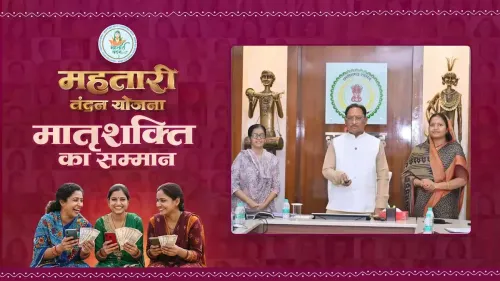
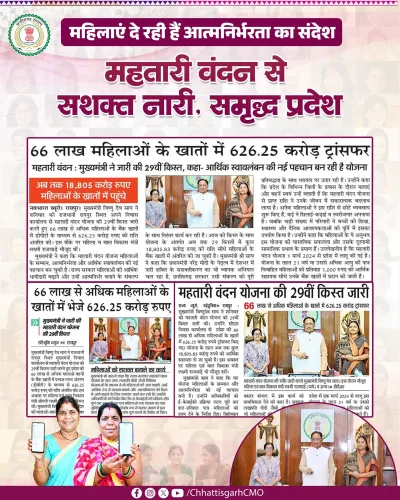
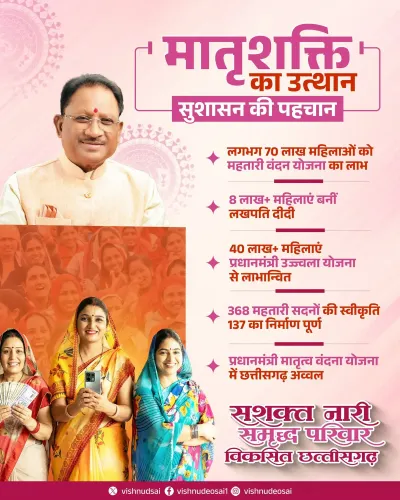
Mahatari Vandan Yojana is a Chhattisgarh state scheme providing monthly financial assistance to eligible mothers.
Lakhpati Didi Yojana , scaled nationally in 2023 under DAY-NRLM, targets women in self-help groups to earn at least Rs 1 lakh annually.
Pradhan Mantri Matru Vandana Yojana , launched in 2017 , provides conditional cash transfers to pregnant and lactating women for maternal health support.
The BJP assumed power in Chhattisgarh in December 2023 and has positioned women-centric welfare schemes as a central governance plank.
The 'double engine' framing signals coordinated delivery of central and state welfare programmes with the BJP in power at both levels.
Chhattisgarh Chief Minister Vishnu Deo Sai on Monday, 13 July 2026, underscored the BJP-led 'double engine' government's commitment to women's economic empowerment, citing three flagship schemes as pillars of the state's women-welfare agenda.
Context
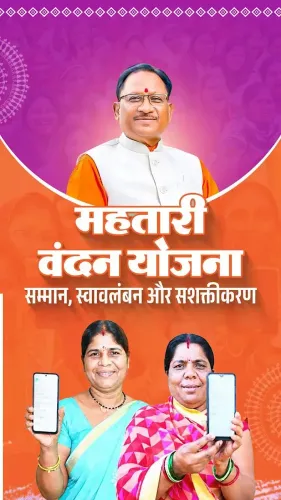
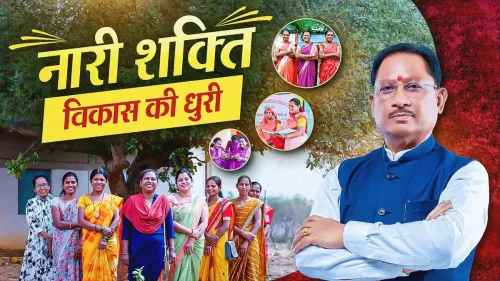
Posting on X in Hindi, CM Sai declared that honouring, enabling self-reliance in, and empowering women — naarishakti ka sammaan, swaavalamban aur sashaktikaran (respect, self-reliance, and empowerment of women) — is the 'highest priority' of the double engine government. He named three schemes driving this agenda: Mahatari Vandan Yojana, Lakhpati Didi Yojana, and Pradhan Mantri Matru Vandana Yojana (PMMVY), saying they are 'strengthening the bright future' of the mothers and sisters of Chhattisgarh while providing economic support.
The phrase 'double engine government' refers to the Bharatiya Janata Party (BJP) holding power simultaneously at the Centre and in the state — a formulation the party uses to argue that central and state schemes can be implemented in tandem without friction.
Policy Backdrop
Mahatari Vandan Yojana is a Chhattisgarh state scheme that provides monthly financial assistance directly to eligible mothers, functioning as an economic safety net for women in the state. The BJP government in Chhattisgarh took office in December 2023 after assembly elections, with women-centric welfare schemes forming a central plank of its governance agenda.
Lakhpati Didi Yojana is a national initiative under the Deendayal Antyodaya Yojana – National Rural Livelihoods Mission (DAY-NRLM), scaled up in 2023, aimed at enabling women in self-help groups (SHGs) to earn at least Rs 1 lakh annually through skill-building and livelihood support. PMMVY, launched in 2017, is a central maternity benefit programme providing conditional cash transfers to pregnant and lactating women to support maternal health and nutrition.
Together, these three schemes span direct cash transfers, maternity support, and livelihood generation — covering women across different life stages and economic situations.
Stakeholders and Impact
The primary beneficiaries are mothers, pregnant women, and women participating in self-help groups across Chhattisgarh. Rural women's households, which form a significant portion of the state's population, stand to gain from the convergence of state and central financial assistance under these programmes.
The BJP has deployed a similar playbook in other states it governs — Ladli Behna Yojana in Madhya Pradesh being a comparable example — combining direct benefit transfers with livelihood schemes to build sustained outreach among rural women voters. Chhattisgarh's Mahatari Vandan Yojana fits squarely within this pattern.
What's Next
The key metrics to watch will be state budget allocations and verified beneficiary coverage numbers for Mahatari Vandan Yojana in the forthcoming Chhattisgarh assembly session. Any central government review of PMMVY implementation and its reach in the state will also indicate how effectively the 'double engine' coordination is translating into ground-level outcomes.
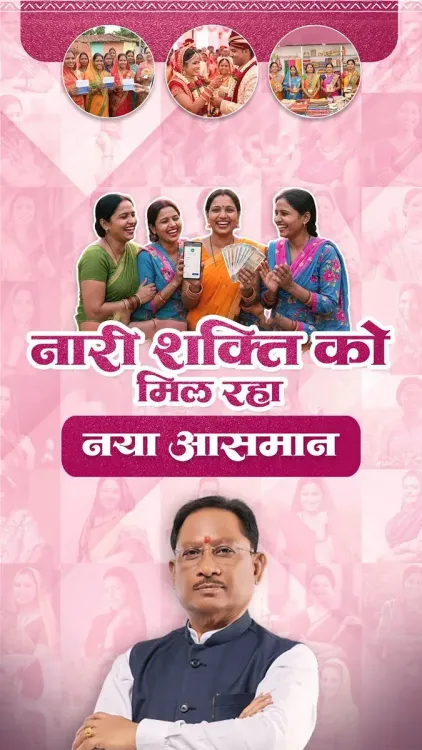
As the BJP continues to use women's welfare as a core governance and political narrative, the actual delivery numbers — how many women are enrolled, how much money has been disbursed, and what livelihood gains SHGs have recorded — will determine whether the promise of a 'new sky for women' moves beyond political messaging into measurable change.
Point of View
A national livelihood programme, and a central maternity benefit — the messaging attempts to show multi-dimensional support rather than a single-point intervention. This mirrors the Ladli Behna playbook in Madhya Pradesh and signals that the party views rural women's economic welfare as both a policy priority and a durable political asset heading into future electoral cycles. The real test, however, lies in verified beneficiary data and disbursement figures, which will determine whether the narrative holds up against ground-level outcomes.
NationPress
13 Jul 2026
Frequently Asked Questions
What is Mahatari Vandan Yojana in Chhattisgarh?
Mahatari Vandan Yojana is a Chhattisgarh state government scheme that provides monthly financial assistance to eligible mothers to offer economic support and strengthen their financial independence.
What is the Lakhpati Didi Yojana?
Lakhpati Didi Yojana is a national initiative under the Deendayal Antyodaya Yojana – National Rural Livelihoods Mission (DAY-NRLM), scaled up in 2023, that aims to help women in self-help groups earn at least Rs 1 lakh per year through skill development and livelihood support.
What is Pradhan Mantri Matru Vandana Yojana?
Pradhan Mantri Matru Vandana Yojana (PMMVY) is a central government maternity benefit scheme launched in 2017 that provides conditional cash transfers to pregnant and lactating women to support maternal health and nutrition.
What does 'double engine government' mean in BJP's context?
'Double engine government' is the BJP's term for states where the party holds power both at the Centre and in the state government, arguing this ensures faster and coordinated delivery of welfare schemes without policy friction between the two levels.
When did BJP come to power in Chhattisgarh?
The BJP formed the government in Chhattisgarh in December 2023 following state assembly elections, with Vishnu Deo Sai taking charge as Chief Minister.