CM Sai pays tribute to CV Raman on death anniversary
Synopsis
Chhattisgarh Chief Minister Vishnu Deo Sai paid homage to Nobel laureate and Bharat Ratna Sir C.V. Raman on his death anniversary, urging future generations to emulate the physicist's curiosity and dedication to scientific research.
Key Takeaways
CM Vishnu Deo Sai posted a death-anniversary tribute to Sir C.V.
Raman on 21 November 2026 .
Raman won the Nobel Prize in Physics in 1930 for discovering the Raman Effect , the first Asian scientist to do so.
He was awarded the Bharat Ratna in 1954 , India's highest civilian honour.
His discovery date — 28 February 1928 — is celebrated annually as National Science Day in India.
CM Sai called Raman's spirit of inquiry an enduring source of inspiration for innovation in coming generations.
A Nobel laureate who bent light and changed science forever — Chhattisgarh Chief Minister Vishnu Deo Sai paused on Saturday, 21 November 2026, to honour the memory of Sir Chandrasekhara Venkata Raman on his death anniversary, calling on future generations to carry forward the physicist's spirit of inquiry.
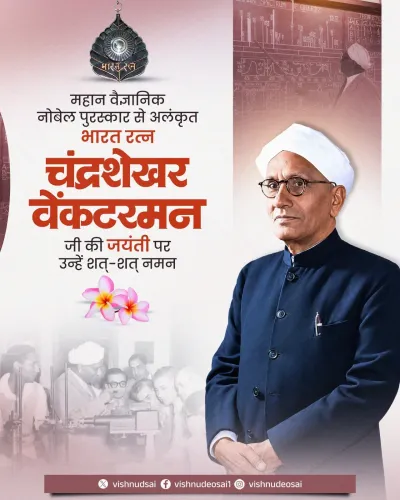
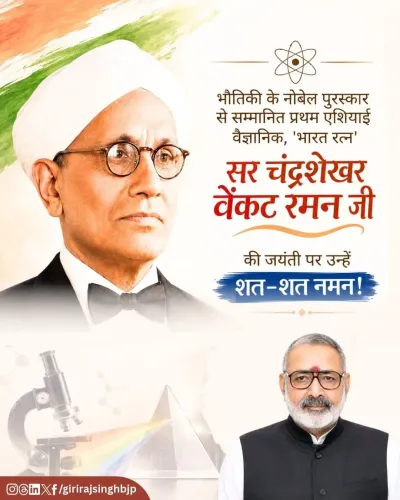
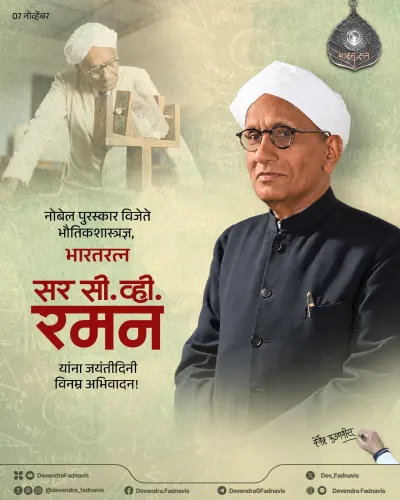
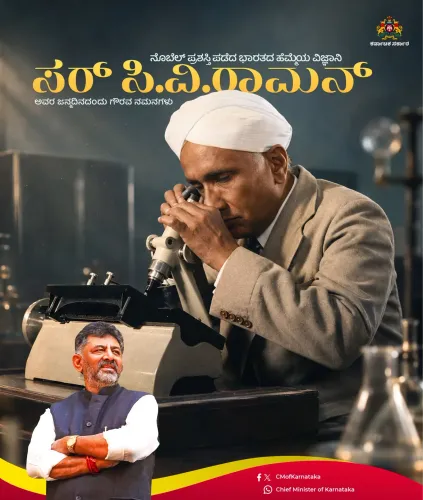
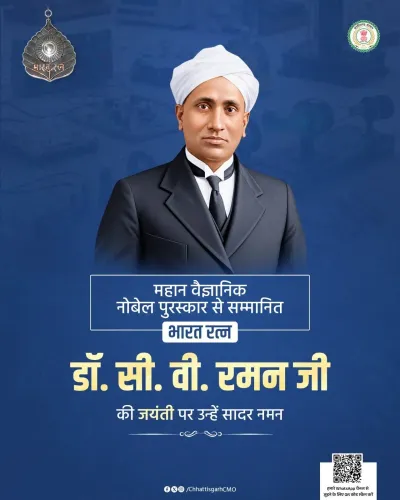
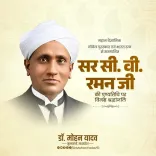
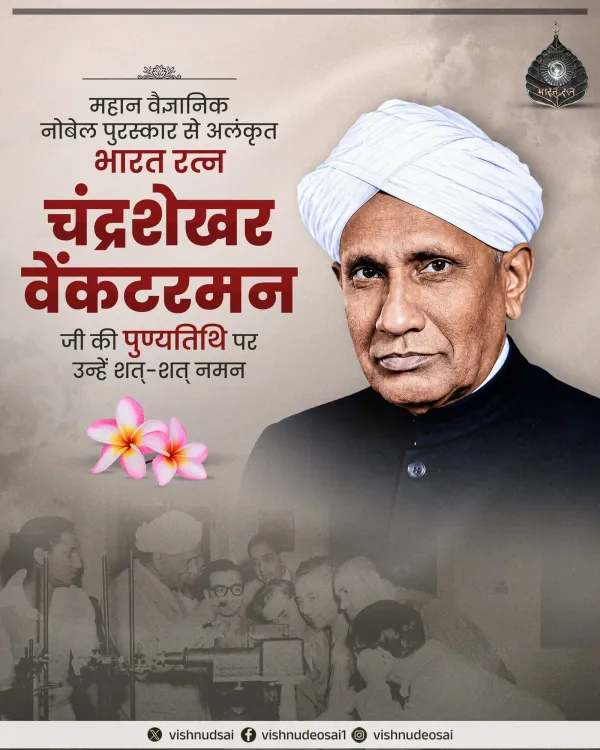
Posting in Hindi, CM Sai wrote: 'महान वैज्ञानिक, नोबेल पुरस्कार से सम्मानित 'भारत रत्न' सर चंद्रशेखर वेंकटरमन जी की पुण्यतिथि पर विनम्र श्रद्धांजलि!' — 'Humble tribute on the death anniversary of the great scientist, Nobel Prize laureate and Bharat Ratna, Sir Chandrasekhara Venkata Raman.' He added that Raman's dedication to science, his curiosity, and his spirit of research 'will forever inspire coming generations towards innovation.'The discovery that made India's scientific name
Sir C.V. Raman remains one of the most luminous figures in India's scientific history. Born in 1888, he won the Nobel Prize in Physics in 1930 — the first Asian and first non-white scientist to receive the honour — for discovering the phenomenon now known as the Raman Effect: the inelastic scattering of light that reveals the molecular composition of matter. The discovery, made on 28 February 1928, is commemorated every year as National Science Day in India. The nation further recognised his legacy with the Bharat Ratna in 1954, the country's highest civilian honour.Why political tributes to scientists carry weight
In India's public life, marking the death anniversaries of science icons has become a steady ritual for political leaders — a signal, however brief, that the state values scientific temper. Such observances sit within a long tradition dating to independence, when the Constitution itself enshrined 'the development of the scientific temper' as a fundamental duty. For a sitting Chief Minister to invoke Raman's legacy is also a nudge to students and researchers: curiosity is a civic virtue, not just an academic one.Point of View
Invoking a Nobel laureate also subtly connects the government to a legacy of national achievement that transcends party lines. The ritual is well-worn, but its frequency signals that science communication remains a valued currency in Indian political messaging. The real test, analysts note, is whether such remembrances translate into sustained public investment in research infrastructure.
NationPress
21 Nov 2026
Frequently Asked Questions
When did Sir C.V. Raman die?
Sir C.V. Raman passed away on 21 November 1970 in Bangalore, aged 82.
Why did C.V. Raman win the Nobel Prize?
He won the Nobel Prize in Physics in 1930 for discovering the Raman Effect — the phenomenon of inelastic scattering of light by molecules, which reveals the molecular structure of substances.
What is the Bharat Ratna and when did Raman receive it?
The Bharat Ratna is India's highest civilian honour. Sir C.V. Raman received it in 1954 , among the first recipients after the award was instituted.
What is National Science Day and why is it celebrated on 28 February?
National Science Day is observed every year on 28 February to commemorate the date in 1928 when C.V. Raman announced the discovery of the Raman Effect.
Who is Vishnu Deo Sai?
Vishnu Deo Sai is a BJP leader serving as the Chief Minister of Chhattisgarh .