CM Sai Hosts Bastar Dussehra Honour Feast for Tribal Leaders
Synopsis
Chhattisgarh CM Vishnu Deo Sai hosted a traditional honour feast for Bastar's Manjhi-Chalki tribal leaders during Bastar Dussehra 2026, with President Draupadi Murmu and Governor Ramen Deka in attendance, underscoring state recognition of indigenous customary leadership.
Key Takeaways
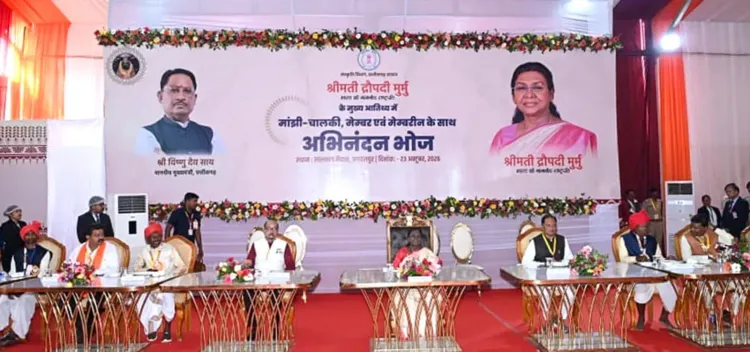
CM Vishnu Deo Sai hosted a traditional honour feast for Manjhi-Chalki tribal leaders during Bastar Dussehra 2026 on 23 October 2026 .
President Draupadi Murmu and Governor Ramen Deka attended the felicitation banquet, lending it national-level significance.
The Manjhi-Chalki system represents a grassroots layer of tribal governance in Bastar, distinct from the formal state administration.
Bastar Dussehra is one of India's most distinctive tribal festivals, centred on goddess Danteshwari rather than the mainstream Ramlila tradition.
President Murmu, the first person of tribal origin to hold India's highest constitutional office, has symbolic resonance at tribal cultural events.
The event reflects a wider pattern of central Indian state governments integrating tribal ceremonial institutions into cultural diplomacy.
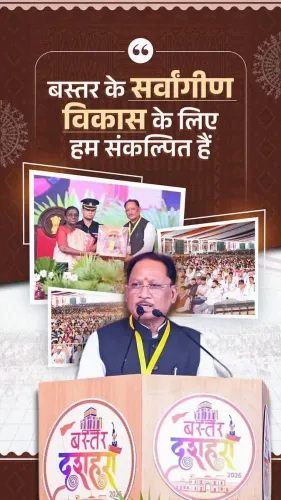
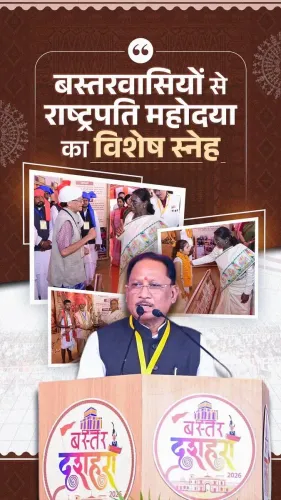
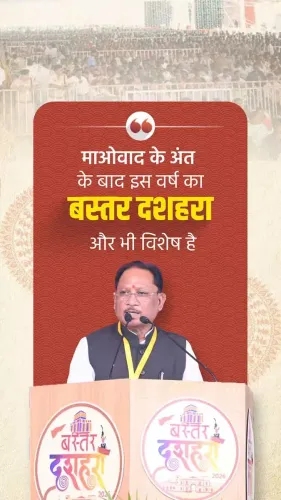
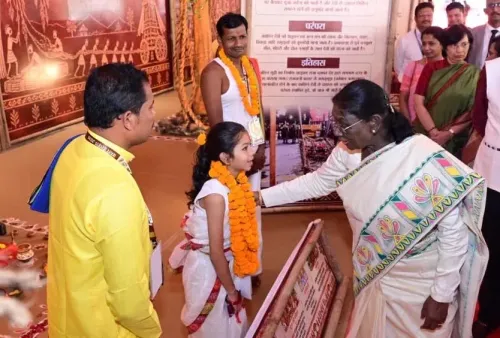
When the President of India steps into the forested heartland of Bastar for a tribal feast, it is not a courtesy call — it is a statement. Chhattisgarh Chief Minister Vishnu Deo Sai on Friday, 23 October 2026, hosted a traditional felicitation banquet honouring the Manjhi-Chalki, Members and Memberins — the customary leaders of Bastar's tribal communities — in the distinguished presence of President Draupadi Murmu and Governor Ramen Deka during the celebrated Bastar Dussehra festival.
A feast rooted in Bastar's living tradition
The occasion, described by CM Sai as an 'aatmiya bhoj' (heartfelt feast), was framed explicitly as an expression of gratitude toward the custodians of Bastar's culture. In his post, Sai wrote that this gathering embodies the region's 'glorious tradition of expressing respect and gratitude towards those who carry its culture forward.' The Manjhi-Chalki system is not ceremonial window-dressing — these leaders mediate community disputes, surface local grievances, and channel collective needs into the public domain, functioning as an organic tier of grassroots governance alongside the formal state apparatus.
President Murmu's presence and what it signals
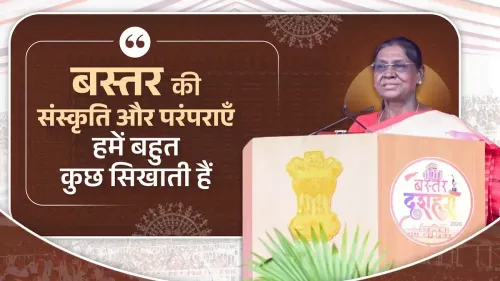
President Draupadi Murmu, who made history in July 2022 as the first person from a tribal community to ascend to India's highest constitutional office, brings unmistakable symbolic weight to any gathering centred on indigenous traditions. Her attendance at the Bastar Dussehra banquet amplifies the event well beyond state-level ceremony — it connects the oldest layers of tribal self-governance to the apex of the Republic. For communities whose cultural institutions have long sought mainstream recognition, the President sharing a feast table with their traditional leaders is a resonant gesture.
Bastar Dussehra — the festival that rewrites the calendar
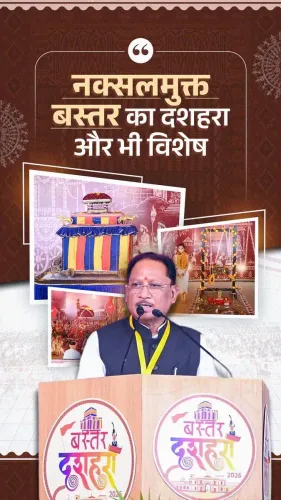
Bastar Dussehra is among India's longest and most distinctive festivals, stretching across several weeks and rooted in rituals entirely separate from the mainstream Ramlila tradition observed elsewhere in the country. Rather than celebrating Lord Ram's victory over Ravana, the Bastar version centres on the goddess Danteshwari and is shaped by tribal customs that have evolved over centuries. State governments have consistently lent official participation to the festival as a means of preserving and showcasing this heritage, and the 2026 edition — marked by the hashtag #बस्तर_दशहरा_2026 — continues that pattern with the highest-profile attendance in recent memory.
The broader pattern is clear: central Indian states are increasingly integrating tribal ceremonial institutions into what might be called cultural diplomacy — using major festivals as platforms to reinforce the legitimacy and continuity of customary leadership structures. In a region where the interface between state authority and tribal self-governance has historically been fraught, a presidential presence at a Manjhi-Chalki honour banquet carries political and social weight that outlasts the occasion itself.
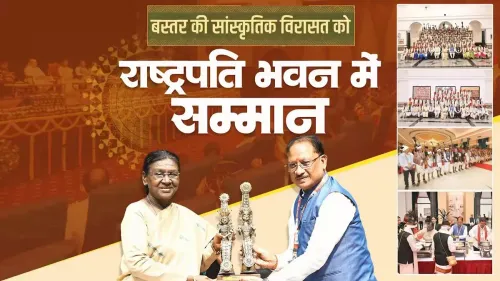
Bastar's ancient rhythms now echo all the way to Rashtrapati Bhavan — and that echo is deliberate.
Point of View
A constituency of electoral and administrative significance in Chhattisgarh. Elevating customary leaders through presidential-level recognition also serves a governance logic: legitimising non-formal institutions as partners in local administration reduces friction in regions where state authority has historically faced resistance. The Bastar Dussehra platform, with its deep cultural roots, gives this messaging unusual authenticity.
NationPress
23 Oct 2026
Frequently Asked Questions
What is Bastar Dussehra and how is it different from regular Dussehra?
Bastar Dussehra is a multi-week tribal festival in Chhattisgarh's Bastar region centred on the goddess Danteshwari, with rituals rooted in indigenous customs rather than the Ramlila tradition. It is one of India's longest festivals and is distinct from the mainstream celebration of Ram's victory over Ravana observed elsewhere.
Who are Manjhi-Chalki in Bastar?
Manjhi-Chalki are traditional tribal leaders and functionaries in the Bastar region who guide community decisions, represent local interests, mediate disputes, and surface grassroots needs — acting as an organic layer of governance alongside the formal state administration.
Why did President Draupadi Murmu attend Bastar Dussehra 2026?
President Draupadi Murmu attended the Bastar Dussehra celebrations and the traditional felicitation feast hosted by CM Vishnu Deo Sai in honour of Manjhi-Chalki leaders. As the first person from a tribal community to serve as President of India, her presence at the event carried significant symbolic weight for indigenous communities.
What was the honour feast at Bastar Dussehra 2026 about?
The feast, called an 'aatmiya bhoj', was a traditional felicitation banquet organised by Chhattisgarh CM Vishnu Deo Sai to honour Manjhi-Chalki, Members and Memberins — the customary leaders of Bastar's tribal communities — as an expression of respect for the custodians of the region's culture.
Who is Ramen Deka and what is his role in Chhattisgarh?
Ramen Deka serves as the Governor of Chhattisgarh and was present alongside President Draupadi Murmu at the traditional honour feast during Bastar Dussehra 2026.