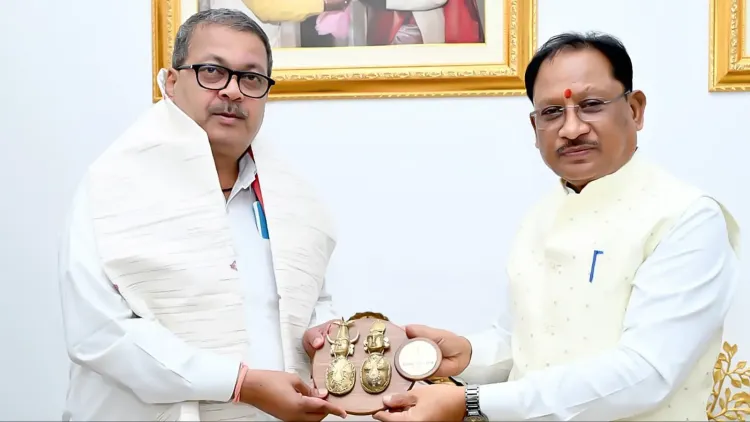
CM Sai meets Maharashtra MLA delegation studying Chhattisgarh farm model
Synopsis
Chhattisgarh Chief Minister Vishnu Deo Sai hosted a Maharashtra MLA delegation on 19 June 2026 that came to study the state's paddy procurement system and farmer-welfare model, calling the visit proof of the success of his government's agricultural policies under the BJP's double-engine framework.
Key Takeaways
Chhattisgarh CM Vishnu Deo Sai met a Maharashtra legislator delegation on 19 June 2026 to discuss the state's agricultural model.
The delegation visited specifically to study Chhattisgarh's paddy procurement system, farmer income initiatives, and rural economy measures.
Key state programmes highlighted include the Krishak Unnati Yojana , irrigation expansion, modern farm technology adoption, and timely farmer payments.
CM Sai linked the policies to PM Narendra Modi's guidance and the 'double engine government' model of centre-state BJP alignment.
The visit is part of a broader pattern of BJP-ruled states sharing and replicating agricultural policy models across state boundaries.
Whether Maharashtra adopts elements of the Chhattisgarh model in its own policy or budget cycle remains the key development to watch.
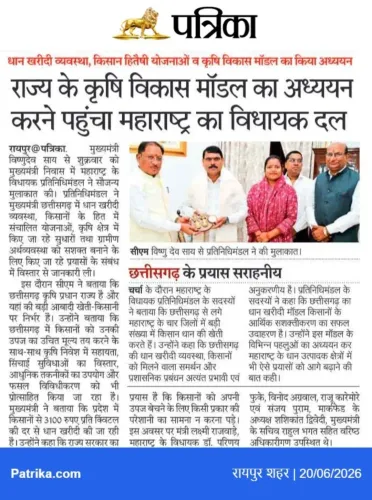
Chhattisgarh Chief Minister Vishnu Deo Sai met a delegation of Maharashtra legislators on Friday, 19 June 2026, who had travelled to the state to study its farmer-welfare policies, paddy procurement system, and agricultural development model. The meeting, described by the Chief Minister as warm and substantive, centred on strategies for raising farmer incomes and strengthening rural economies.
Context
Posting on X, CM Sai said the delegation engaged in detailed discussions on efforts to make farming remunerative and to empower the rural economy — 'किसानों की आय वृद्धि, कृषि को लाभकारी बनाने तथा ग्रामीण अर्थव्यवस्था को सशक्त करने' (raising farmer incomes, making agriculture profitable, and empowering the rural economy). He framed the visit as evidence of the credibility earned by Chhattisgarh's agricultural reforms since the BJP government took office in December 2023.
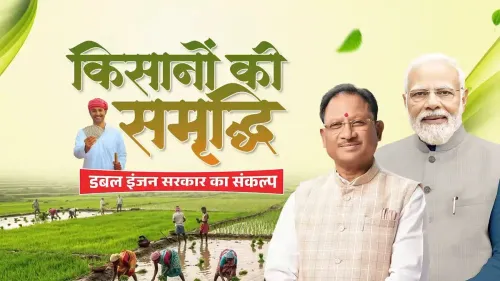
The Chief Minister credited the visit's significance to the guidance of Prime Minister Narendra Modi and what he described as the 'double engine government' model — the alignment of BJP administrations at the centre and in states for coordinated policy delivery.
Policy Backdrop
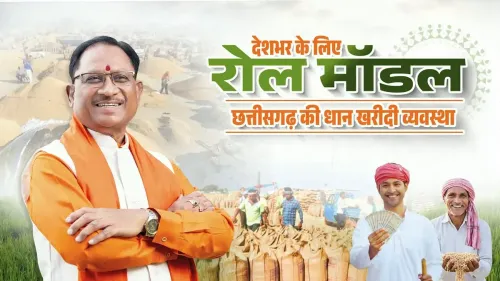
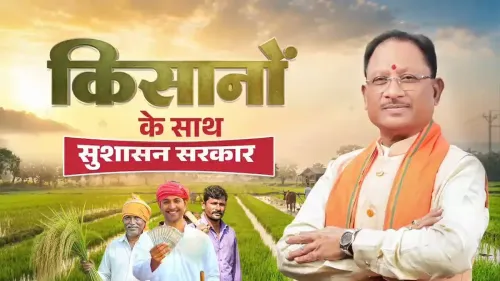
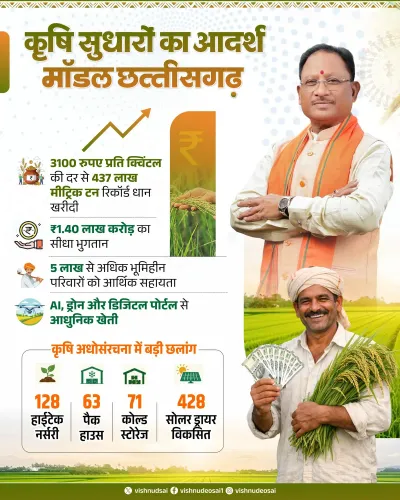
Chhattisgarh is one of India's major paddy-producing states. Since the formation of the current state government, the administration has prioritised assured paddy procurement, expansion of irrigation infrastructure, promotion of modern agricultural technologies, and timely payment to farmers. The Krishak Unnati Yojana — a scheme aimed at farmer advancement — has been highlighted as a key pillar of this approach.
These measures sit within a broader national framework that includes the PM-KISAN scheme, which has provided annual direct income support to landholding farmer families across India since 2019, and the Pradhan Mantri Krishi Sinchayee Yojana (PMKSY), which has driven irrigation expansion since 2015. CM Sai described these combined initiatives as having created 'a new atmosphere of confidence' — 'नए विश्वास का वातावरण' — in the agricultural sector.
Stakeholders and Impact
The primary beneficiaries of the policies under discussion are Chhattisgarh's paddy farmers and rural households, who have seen changes in procurement reliability and payment timelines under the post-2023 policy package. The Maharashtra delegation's interest signals that the model is drawing attention from legislators in other states as a potentially replicable framework.
BJP-ruled states have increasingly institutionalised such cross-learning visits, treating state-level policy experiments as templates for horizontal diffusion across aligned administrations. A delegation of elected representatives travelling specifically to study another state's agricultural procurement system is an unusual step that reflects the weight being placed on this model.
What's Next
The key question following the delegation's visit is whether Maharashtra will incorporate elements of Chhattisgarh's paddy procurement and farmer-payment model into its own agricultural policy or budget cycle. Any follow-up agreements, study reports, or policy announcements from the Maharashtra side will indicate how deeply the cross-learning exercise influences actual governance decisions.
CM Sai concluded his post with a commitment to continue working 'with full dedication' — 'पूरी प्रतिबद्धता के साथ' — toward farmer prosperity and the holistic development of villages, signalling that further policy announcements in this domain remain likely.
Point of View
The optics are significant: having legislators from another major state arrive as students of your governance model is a soft-power moment that reinforces the BJP's narrative of Chhattisgarh as a development exemplar. The emphasis on paddy procurement and timely payments also addresses a historically sensitive fault line in the state, where farmer distress has driven electoral outcomes. Whether this translates into concrete policy adoption in Maharashtra or remains a ceremonial exchange will determine its real political and administrative weight.
NationPress
19 Sept 2026
Frequently Asked Questions
Why did Maharashtra MLAs visit Chhattisgarh in June 2026?
A delegation of Maharashtra legislators visited Chhattisgarh on or before 19 June 2026 to study the state's paddy procurement system, farmer-welfare policies, and agricultural development model, which the Sai government has promoted as a replicable framework.
What is the Krishak Unnati Yojana in Chhattisgarh?
The Krishak Unnati Yojana is a Chhattisgarh state scheme aimed at farmer advancement, highlighted by CM Vishnu Deo Sai as one of the key initiatives — alongside assured paddy procurement and irrigation expansion — that have strengthened the state's agricultural sector since December 2023.
What is the 'double engine government' model in Indian politics?
The 'double engine government' is a BJP formulation describing the alignment of its governments at the central and state levels, arguing that this coordination accelerates policy delivery and development outcomes in BJP-ruled states.
How has Chhattisgarh improved its paddy procurement system?
Since the BJP government took office in December 2023, Chhattisgarh has focused on assured paddy purchase, timely payments to farmers, expansion of irrigation infrastructure, and promotion of modern agricultural technologies, collectively described by CM Sai as creating a new atmosphere of confidence in farming.
Will Maharashtra adopt Chhattisgarh's farm model?
That remains to be seen. The Maharashtra MLA delegation's study visit is the first step; whether the state incorporates elements of Chhattisgarh's procurement or farmer-payment model into its own agricultural budget or policy announcements will be the key indicator to watch in the coming months.