CM Sai Launches 100-Week Anti-Drug Campaign in Chhattisgarh
Synopsis
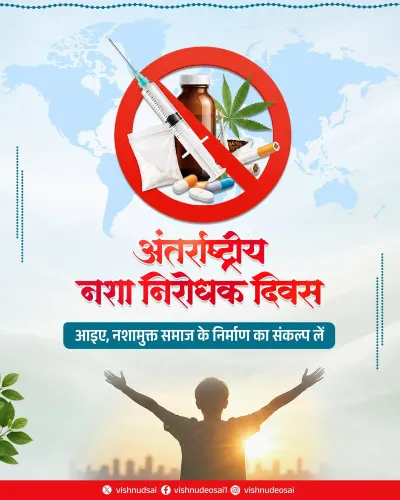
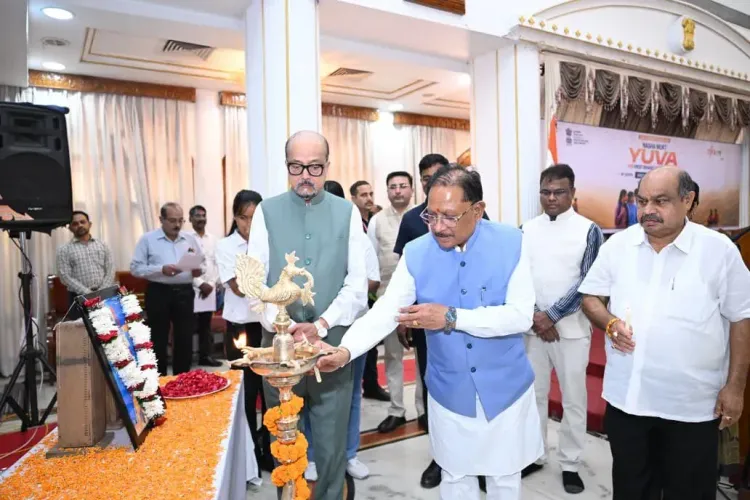
Chief Minister Vishnu Deo Sai and Governor Ramen Deka launched the state-level rollout of the 'Nasha Mukt Yuva Viksit Bharat Sankalp Abhiyan' at Lok Bhawan, Raipur — a 100-week anti-drug awareness drive targeting youth through schools, colleges, and universities across Chhattisgarh.
Key Takeaways
Vishnu Deo Sai and Governor Ramen Deka jointly inaugurated Chhattisgarh's state-level launch at Lok Bhawan, Raipur on August 2, 2026 .
The Nasha Mukt Yuva Viksit Bharat Sankalp Abhiyan is a 100-week mass-awareness campaign initiated on PM Narendra Modi's call.
The campaign will engage schools, colleges, universities, and youth organisations across Chhattisgarh.
CM Sai pledged that the dream of a Developed India can only be realised through a drug-free, healthy, and aware youth force.
The drive extends the lineage of the Nasha Mukt Bharat Abhiyan launched in 2020 by the Union Ministry of Social Justice and Empowerment.
The campaign is framed as integral to the broader Viksit Bharat 2047 national development vision.
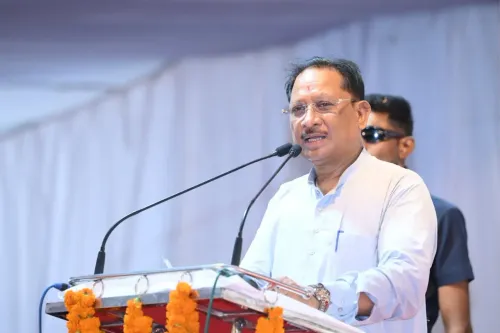
A state-level declaration against drug abuse took shape at Lok Bhawan, Raipur on Sunday, August 2, 2026, as Chief Minister Vishnu Deo Sai and Governor Ramen Deka jointly inaugurated Chhattisgarh's rollout of the Nasha Mukt Yuva Viksit Bharat Sankalp Abhiyan — a national 100-week mass-awareness drive anchored in Prime Minister Narendra Modi's call to free India's youth from substance abuse.
What the Abhiyan Pledges — and Who It Targets
The campaign is no single-day event. Designed to run for 100 consecutive weeks, it will mobilise schools, colleges, universities, and youth organisations across Chhattisgarh to carry anti-drug messaging deep into communities. The architecture is deliberately institutional: by routing awareness through campuses rather than only government offices, organisers aim to reach adolescents and young adults at the exact life-stage when substance use risks spike.
CM Sai framed the stakes plainly at the launch: 'Viksit Bharat ka sapna tabhi sakaar hoga, jab hamari yuva shakti nashe se mukt, jagruk, swasth aur rashtra nirman ke liye samarpit hogi' — 'The dream of a Developed India will be realised only when our youth are free from addiction, aware, healthy, and dedicated to nation-building.'
From 2020 Roots to a Viksit Bharat Frame
The campaign draws on the lineage of the Nasha Mukt Bharat Abhiyan, launched in 2020 by the Union Ministry of Social Justice and Empowerment as a district-by-district offensive against substance abuse. That earlier drive identified the most drug-affected districts and concentrated resources there; the new Sankalp Abhiyan broadens the mandate, tying anti-drug work explicitly to the government's Viksit Bharat 2047 vision — the argument being that a narcotics-affected youth cohort cannot power the economic and social transformation the target demands.
Chhattisgarh's state-level launch signals that the campaign is moving from central conception to ground-level execution, with the Governor's presence lending constitutional weight to what is fundamentally a social-mobilisation effort.
What the Next 100 Weeks Look Like
The immediate test is whether the week-on-week cadence holds. Campaigns of this kind live or die on sustained institutional participation — whether a school principal schedules the awareness session in week 47 with the same urgency as week one. The involvement of youth organisations alongside formal educational institutions is designed to extend reach beyond classrooms into peer networks, where influence over substance-use decisions is arguably strongest.
Chhattisgarh's monitoring mechanisms and any measurable impact assessments will be the real story to watch as the 100-week clock runs.
Point of View
Branded under PM Modi's call, executed with the state CM and Governor sharing a stage to signal unified political and constitutional backing. Linking anti-drug work to the Viksit Bharat 2047 framework is a deliberate strategic choice — it elevates a welfare programme into a national-vision deliverable, making it harder to deprioritise in subsequent budget cycles. The 100-week structure is ambitious; the credibility test will come in whether Chhattisgarh's institutional machinery — particularly its rural schools and colleges — maintains momentum well past the launch-week media cycle.
NationPress
2 Aug 2026
Frequently Asked Questions
What is the Nasha Mukt Yuva Viksit Bharat Sankalp Abhiyan?
It is a national 100-week anti-drug awareness campaign launched on Prime Minister Narendra Modi's call, aimed at freeing India's youth from substance abuse by mobilising schools, colleges, universities, and youth organisations.
Who launched the campaign in Chhattisgarh?
Chief Minister Vishnu Deo Sai and Governor Ramen Deka jointly inaugurated the state-level rollout at Lok Bhawan, Raipur on August 2, 2026 .
How long will the Nasha Mukt Yuva campaign run?
The campaign is designed to run for 100 consecutive weeks , with sustained awareness activities across educational institutions and youth organisations.
What is the connection between this campaign and Nasha Mukt Bharat Abhiyan?
The new Sankalp Abhiyan builds on the Nasha Mukt Bharat Abhiyan launched in 2020 by the Union Ministry of Social Justice and Empowerment, broadening its scope and linking it explicitly to the Viksit Bharat 2047 vision.
Why is drug-free youth important for Viksit Bharat 2047?
CM Sai stated that the dream of a Developed India can only be realised when the youth are 'free from addiction, aware, healthy, and dedicated to nation-building' — framing youth health as foundational to India's long-term development goals.