CM Sai Leads Bastar Delegation to Rashtrapati Bhavan
Synopsis
President Droupadi Murmu welcomed a 209-member Bastar delegation led by CM Vishnu Deo Sai at Rashtrapati Bhavan on 30 July 2026, marking the first-ever display of Bastar tribal culture at the presidential palace. Amit Shah called it a moment of national pride. CM Sai gifted the President an artwork of the 300-year-old folk legend 'Jhitku-Mitki' and invited her to visit Bastar.
Key Takeaways
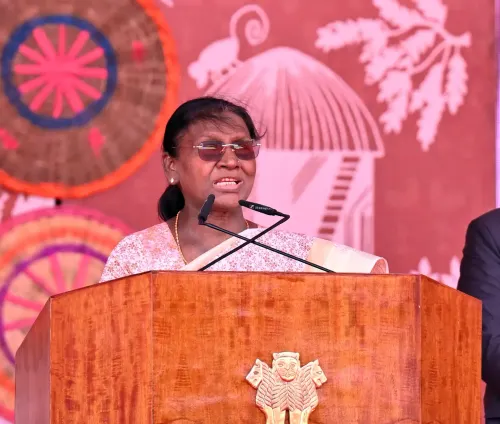
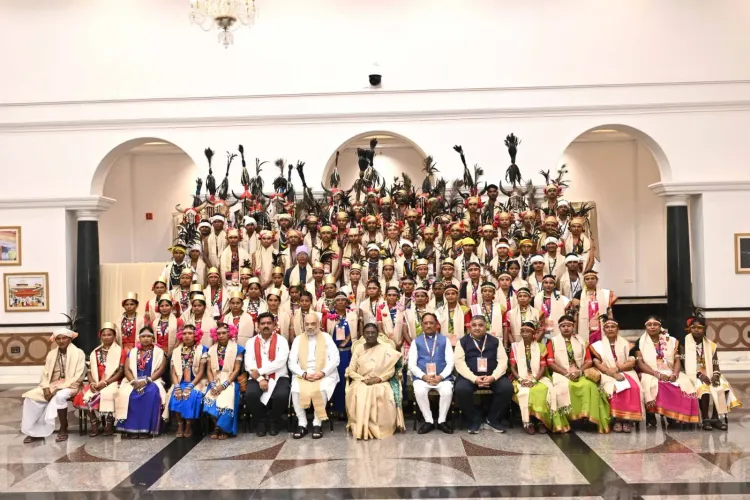
President Droupadi Murmu hosted winners of Bastar Pandum-2026 , Padma Shri awardees, Manjhi-Chalki leaders, and tribal representatives at Rashtrapati Bhavan on 30 July 2026 .
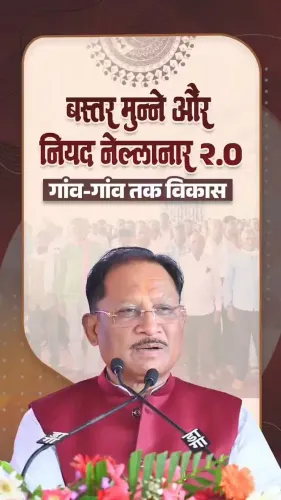
Chief Minister Vishnu Deo Sai led a 209-member delegation from Chhattisgarh for the reception.
Union Minister Amit Shah described the event as the first-ever display of Bastar's traditional tribal culture and attire at Rashtrapati Bhavan.
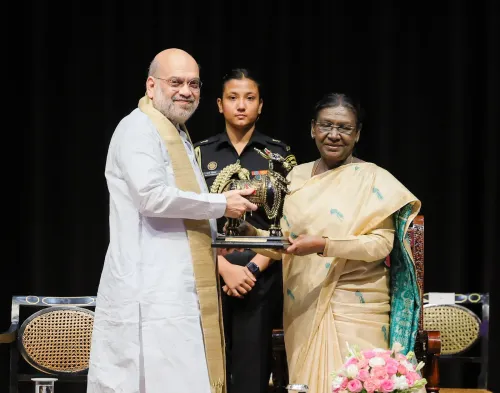
CM Sai presented President Murmu with an artwork depicting 'Jhitku-Mitki' , a 300-year-old Bastar folk legend, and extended a formal invitation for her to visit Bastar.
The event spotlights the Chhattisgarh government's effort to link indigenous tribal cultural identity with India's highest constitutional institutions.
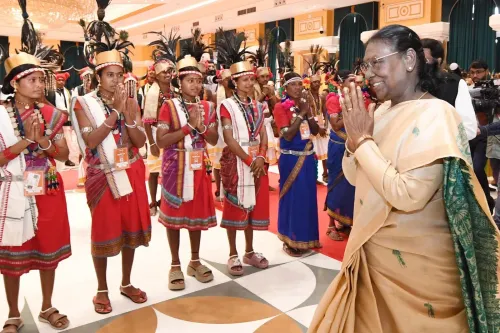
For the first time in its history, Rashtrapati Bhavan echoed with the rhythms of Bastar — tribal attire, folk traditions, and a 300-year-old love legend walked into India's highest constitutional address on Thursday, 30 July 2026. The Chief Minister's Office of Chhattisgarh announced that President Droupadi Murmu hosted winners of Bastar Pandum-2026, Manjhi-Chalki community leaders, Padma Shri awardees, and tribal representatives in a formal reception that brought an entire region's cultural soul to New Delhi.
A 209-member delegation, one historic first
Chief Minister Vishnu Deo Sai led the 209-member delegation — a number that underscores the breadth of the occasion. Union Home and Cooperation Minister Amit Shah, present at the reception, called it a moment of pride and honour for the entire nation. 'Pehli baar Bastar ki paramparagat janjatiya sanskriti aur veshbhusha ka aisa bhavy swaroop dekha' — 'For the first time, such a grand display of Bastar's traditional tribal culture and attire has been witnessed here,' he said, framing the event not as a regional showcase but as a national statement.
The gift of 'Jhitku-Mitki' and an open invitation
CM Sai presented President Murmu with a piece of artwork depicting 'Jhitku-Mitki' — Bastar's 300-year-old immortal folk legend — and formally invited her to visit Bastar. The gesture carried layered significance: President Murmu is herself the first person from a tribal community to hold the office, making her the most resonant possible audience for an offering rooted in indigenous storytelling. The artwork and the invitation together signal that the Chhattisgarh government sees the President's tribal identity not as incidental, but as a bridge between constitutional India and its forest communities.
Bastar Pandum and the politics of cultural visibility
Bastar Pandum-2026 is a tribal cultural festival celebrating the distinct performances, rituals, and traditions of the Bastar region in southern Chhattisgarh — a belt with one of the country's densest concentrations of indigenous communities. Bringing its winners to Rashtrapati Bhavan is part of a deliberate pattern: state and central governments have increasingly used such visits to anchor local cultural expressions to national institutions, giving tribal heritage a platform far beyond its geographic origin. Chhattisgarh's own formation in 2000 was premised on exactly this promise — development alongside the preservation of tribal identity.
The reception also spotlighted the Manjhi-Chalki system, a traditional layer of village-level governance among Bastar's Gond communities, bringing customary leadership structures into the frame of formal national recognition.
Whether President Murmu accepts the invitation and visits Bastar — and what cultural or tourism announcements might follow — will determine how far this moment travels beyond the photograph.
Point of View
It reinforces a dual narrative: that tribal communities are central to the national mainstream, and that CM Sai's administration is their most visible champion. The invitation extended to the President to visit Bastar also sets up a potential high-visibility follow-up event that could amplify both cultural tourism and political messaging in a state where tribal voters are decisive.
NationPress
30 Jul 2026
Frequently Asked Questions
What is Bastar Pandum 2026?
Bastar Pandum-2026 is a tribal cultural festival celebrating the traditional performances, rituals, folk arts, and attire of the Bastar region in southern Chhattisgarh. Its winners were among those received by President Droupadi Murmu at Rashtrapati Bhavan on 30 July 2026.
Who led the Bastar delegation to Rashtrapati Bhavan?
Chief Minister Vishnu Deo Sai led the 209-member delegation from Chhattisgarh that visited Rashtrapati Bhavan on 30 July 2026.
What did CM Vishnu Deo Sai gift President Droupadi Murmu?
CM Sai presented President Murmu with a piece of artwork depicting 'Jhitku-Mitki', a 300-year-old immortal folk legend from Bastar, and also invited her to visit Bastar.
Why is this Rashtrapati Bhavan event significant for Bastar?
According to Union Minister Amit Shah, it marked the first time that Bastar's traditional tribal culture and attire were displayed in such a grand form at Rashtrapati Bhavan, giving the region's indigenous heritage recognition at India's highest constitutional platform.
Who are Manjhi-Chalki in the context of Bastar?
Manjhi-Chalki refers to traditional village-level leaders within the customary governance structures of Bastar's tribal communities, particularly among the Gond people. Representatives of this system were part of the delegation received by President Murmu.