CM Sai Hails Modi's 12 Years of Garib Kalyan Governance
Synopsis
Chhattisgarh CM Vishnu Deo Sai marked 12 years of PM Modi's governance on 8 June 2026, lauding the Garib Kalyan agenda for reaching marginalised citizens through transparent, technology-driven welfare delivery and calling poverty-exit a contribution to nation-building.
Key Takeaways
CM Vishnu Deo Sai posted on 8 June 2026 marking 12 years of PM Narendra Modi 's governance.
The post used the hashtag #12YearsOfGaribKalyan , reflecting coordinated BJP anniversary messaging.
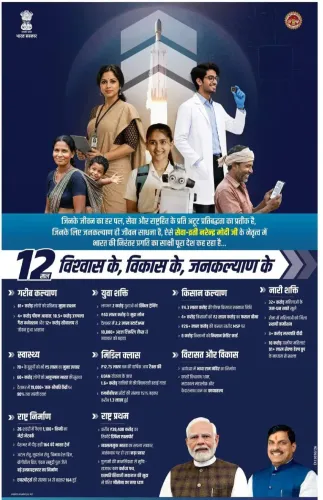
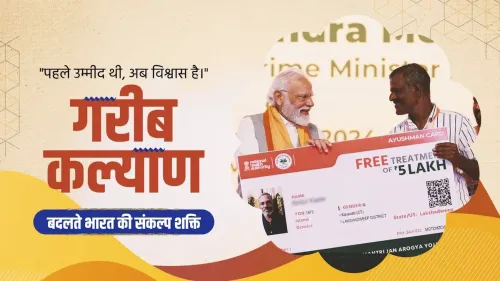
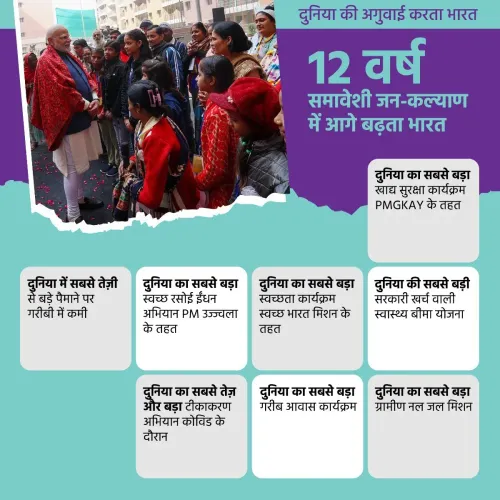
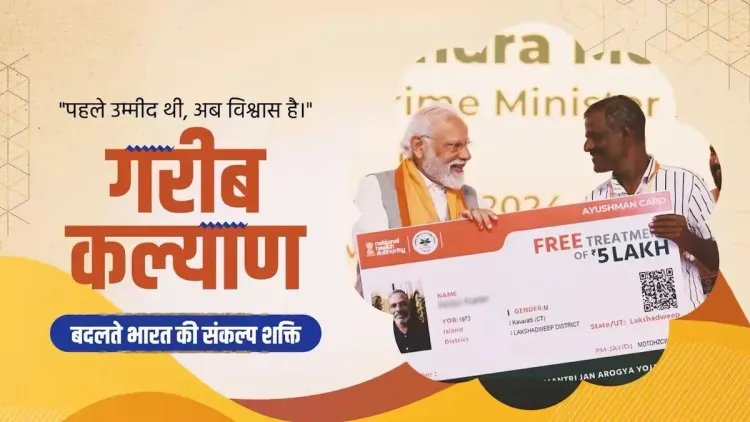
Sai described reaching 'the last person in the queue' without discrimination as the Modi government's 'highest priority.' Key welfare pillars cited in the broader Garib Kalyan framework include Ayushman Bharat , PM-KISAN , PM Garib Kalyan Anna Yojana and Direct Benefit Transfer .
Chhattisgarh , with large tribal and rural populations, is a significant implementation ground for central welfare schemes.
The post frames poverty alleviation as both a social goal and a driver of broader nation-building .
Chhattisgarh Chief Minister Vishnu Deo Sai on Monday, 8 June 2026, took to X to mark 12 years of Prime Minister Narendra Modi's governance, calling it a 'golden chapter of service, good governance and public welfare' (sewa, sushasan aur jankalyan ka swarnim adhyay).
Context
CM Sai's post, tagged #12YearsOfGaribKalyan, marks the completion of 12 years since Narendra Modi assumed office as Prime Minister in May 2014. In the post, Sai states that reaching 'the person standing in the last row' — a phrase denoting the most marginalised citizens — without discrimination, with simplicity, transparency and ease, has been 'the highest priority of the Modi government.'
The post reflects a coordinated BJP messaging effort around the anniversary, with state-level leaders amplifying the central government's welfare narrative across social media platforms.
Policy Backdrop
The Garib Kalyan framework encompasses a range of flagship programmes launched since 2014. These include the Ayushman Bharat Pradhan Mantri Jan Arogya Yojana (launched 2018), which extends health coverage to economically vulnerable households, and the PM Garib Kalyan Anna Yojana (launched 2020), which provides free foodgrain to crores of beneficiaries.
The Direct Benefit Transfer mechanism, built on the Jan Dhan–Aadhaar–Mobile trinity, has been central to reducing leakages in subsidy delivery. The PM-KISAN scheme, introduced in 2019, provides annual income support directly to landholding farmer families, bypassing intermediaries.
Chhattisgarh, a state with significant tribal and rural populations, has been among the key implementation grounds for these central schemes, with the BJP government under Sai aligning state-level delivery with central priorities since December 2023.
Stakeholders and Impact
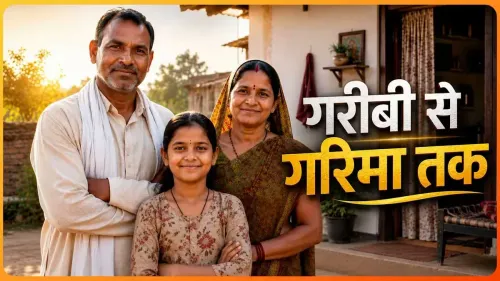
CM Sai's post frames welfare delivery not merely as a social obligation but as a driver of nation-building. He writes that when a poor family escapes the 'vicious cycle of poverty' (garibi ke dushchakra) and gains access to education, health, employment and a dignified life, 'it does not merely change its own life, but becomes a participant in the journey of nation-building.'
The primary stakeholders are last-mile welfare beneficiaries — rural households, tribal communities, small farmers and urban poor — who are the intended recipients of the schemes cited in the broader Garib Kalyan agenda. Chhattisgarh has a large proportion of Scheduled Tribe and below-poverty-line households, making scheme saturation in the state a political and administrative priority.
What's Next
State-level audits of scheme saturation in Chhattisgarh are expected to gain focus as the BJP seeks to demonstrate governance delivery ahead of future electoral cycles. Central government announcements extending or expanding Garib Kalyan priorities could follow in the coming months, with state leaders like Sai positioned as key amplifiers of that messaging.
The sustained emphasis on technology-enabled direct transfers and universal coverage suggests the Garib Kalyan narrative will remain a cornerstone of BJP's political communication well into the next electoral cycle.
Point of View
Threading together disparate schemes into a single moral arc of inclusion. By invoking the 'last person in the queue,' Sai reinforces the party's positioning against what it characterises as the leakage-ridden, intermediary-dependent welfare model of previous governments. With the 2029 general elections on the horizon, this kind of coordinated state-level amplification signals that Garib Kalyan will remain the BJP's primary social-contract argument to voters.
NationPress
22 Sept 2026
Frequently Asked Questions
What is the Garib Kalyan scheme by Modi government?
'Garib Kalyan' is not a single scheme but an umbrella welfare agenda of the Modi government since 2014, encompassing programmes like PM Garib Kalyan Anna Yojana (free foodgrain), Ayushman Bharat (health cover), PM-KISAN (farmer income support) and Direct Benefit Transfer to reduce subsidy leakages.
Why did CM Vishnu Deo Sai post about Modi's 12 years?
CM Sai posted on 8 June 2026 to mark 12 years of PM Narendra Modi's governance, joining a BJP-wide social media effort under the hashtag #12YearsOfGaribKalyan to highlight welfare delivery achievements.
What welfare schemes are being implemented in Chhattisgarh?
Chhattisgarh implements multiple central welfare schemes including Ayushman Bharat for health coverage, PM Garib Kalyan Anna Yojana for free foodgrain, PM-KISAN for farmer support and Direct Benefit Transfers using Jan Dhan accounts and Aadhaar authentication.
Who is Vishnu Deo Sai and what is his role?
Vishnu Deo Sai is a BJP leader who has served as Chief Minister of Chhattisgarh since December 2023. He is known for aligning state governance with central welfare initiatives and is a prominent tribal leader from the state.
What is Direct Benefit Transfer and how does it work in India?
Direct Benefit Transfer (DBT) is a government mechanism that routes subsidies and welfare payments directly into beneficiaries' bank accounts using the Jan Dhan–Aadhaar–Mobile infrastructure, bypassing intermediaries to reduce leakages and ensure last-mile delivery.