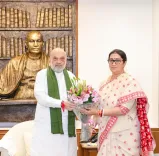
Rajnath Singh marks 12 years of Modi govt's welfare push
Synopsis
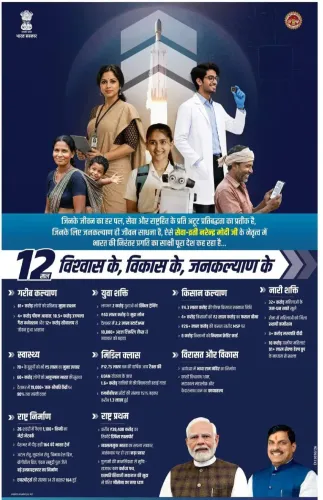
Union Defence Minister Rajnath Singh marked 12 years of the Modi government on June 8, 2026, crediting flagship welfare schemes in housing, health, sanitation and financial inclusion with delivering inclusive development to crores of India's poorest citizens under the #12YearsOfGaribKalyan campaign.
Key Takeaways
Rajnath Singh posted on June 8, 2026 marking 12 years of the Modi government under the hashtag #12YearsOfGaribKalyan .
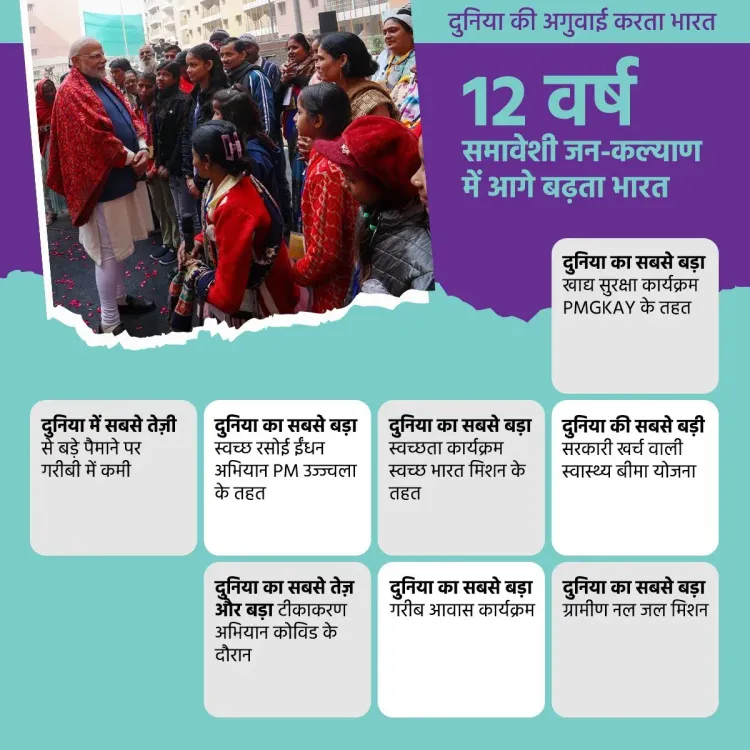
He highlighted six welfare pillars: housing, health, sanitation, financial inclusion, food security and clean fuel.
Pradhan Mantri Awas Yojana (2015), Swachh Bharat Mission (2014) and Ujjwala Yojana (2016) are among the flagship schemes referenced.
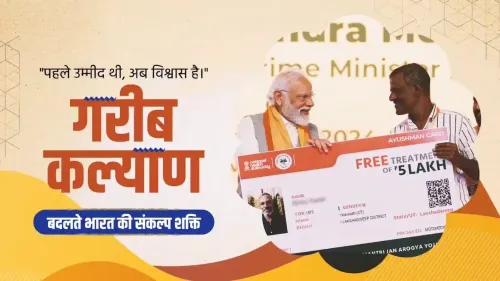
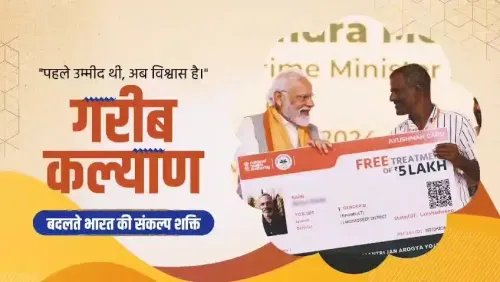
Ayushman Bharat offers up to Rs 5 lakh health insurance per eligible family; Jan Dhan Yojana opened bank accounts for the unbanked since August 2014 .
Singh framed welfare delivery through the Antyodaya principle — reaching the last and most deprived citizen first.
Next Budget allocations for PMAY and Ayushman Bharat expansion will test the durability of the Garib Kalyan agenda.
Union Defence Minister Rajnath Singh on Monday, June 8, 2026, took to X to mark 12 years of the Narendra Modi-led central government, highlighting what he described as a decade-plus commitment to inclusive growth and welfare delivery for India's poorest citizens. Singh's post, tagged #12YearsOfGaribKalyan, framed the government's record not merely as economic expansion but as a deliberate effort to ensure the fruits of development reach the last person in the queue.
Context
Singh wrote in Hindi that under Prime Minister Narendra Modi's leadership over the past 12 years, governance priorities have not been confined to economic growth alone. 'विकास का लाभ समाज के सबसे वंचित और अंतिम व्यक्ति तक पहुँचे' ['that the benefits of development reach the most deprived and the last person in society'] — this, he argued, has been the central organising principle. He cited housing, health, sanitation, financial inclusion, food security, clean fuel and basic infrastructure as the pillars of this effort, saying they have brought dignity, security and new opportunities to crores of families.
Singh concluded that placing public welfare at the heart of nation-building has made development 'broader, participatory and inclusive,' and that 12 years of pro-poor policy have demonstrated that when policies are people-centric, intent is clear and service is paramount, social justice becomes a lived reality rather than a distant goal.
Policy Backdrop
The schemes Singh alludes to span multiple sectors. Pradhan Mantri Awas Yojana, launched in 2015, targets pucca housing for rural and urban poor households. The Swachh Bharat Mission, initiated in October 2014, set nationwide sanitation targets and aimed to end open defecation. Pradhan Mantri Ujjwala Yojana, begun in 2016, provided LPG connections to below-poverty-line women, addressing the clean cooking fuel gap.
Pradhan Mantri Jan Dhan Yojana, launched in August 2014, opened bank accounts for previously unbanked households, enabling direct benefit transfers. Ayushman Bharat, introduced in 2018, offers health insurance coverage of up to Rs 5 lakh per eligible family. The PM Garib Kalyan Anna Yojana, expanded from 2020, extended free grain rations to hundreds of millions of beneficiaries under the National Food Security Act framework.
Together, these programmes reflect the Antyodaya principle — a philosophy of prioritising the weakest and most marginalised — that has been the stated ideological anchor of welfare delivery under the current government.
Stakeholders and Impact
The primary beneficiaries across these schemes are below-poverty-line families, rural households and women. Financial inclusion measures have been especially significant for women, who constitute a large share of Jan Dhan account holders and Ujjwala beneficiaries. Direct benefit transfers routed through these accounts have reduced leakage and improved last-mile delivery, according to government assessments.
Senior ministers across portfolios — including those, like Singh, whose primary brief is defence — have regularly amplified welfare messaging, reflecting a coordinated political communication strategy around scheme anniversaries and campaign timelines. The #12YearsOfGaribKalyan hashtag signals a broader, party-wide observance of the government's June 2026 anniversary.
What's Next
Attention will now turn to the next Union Budget and whether allocations for key scheme verticals — particularly PMAY housing targets and Ayushman Bharat expansion — are renewed or scaled up. Any updated multidimensional poverty index figures from NITI Aayog will be closely watched as an independent measure of whether the welfare push has translated into durable poverty reduction. The government's ability to sustain scheme momentum amid fiscal consolidation pressures will define the next chapter of the Garib Kalyan narrative.
Point of View
Notable because a senior minister whose portfolio is defence is amplifying a social-sector narrative — underscoring how central the welfare identity is to the party's political brand heading into future electoral cycles. The Antyodaya framing, linking individual scheme outputs to a philosophical commitment to the last citizen, has been a consistent rhetorical thread since 2014, and its repetition signals the government intends to contest any poverty-reduction narrative on its own terms. The real test will come when independent poverty metrics and scheme-saturation data are placed alongside the political messaging — gaps between claimed coverage and ground-level outcomes remain a point of contestation. Watching NITI Aayog's next multidimensional poverty update alongside Budget allocations will reveal whether the welfare push is being institutionalised or is plateauing.
NationPress
22 Oct 2026
Frequently Asked Questions
What is #12YearsOfGaribKalyan?
#12YearsOfGaribKalyan is a hashtag used by BJP leaders in June 2026 to mark 12 years of the Narendra Modi government, highlighting welfare schemes focused on housing, health, sanitation, food security and financial inclusion for the poor.
What did Rajnath Singh say about Modi government's welfare record?
Rajnath Singh said that over 12 years, the Modi government ensured development benefits reached the most deprived citizens through schemes covering housing, health, sanitation, financial inclusion, food security and clean fuel, making social justice a lived reality.
What are the main welfare schemes of the Modi government?
Key schemes include Pradhan Mantri Awas Yojana for housing (2015), Swachh Bharat Mission for sanitation (2014), PM Ujjwala Yojana for LPG connections (2016), Ayushman Bharat for health insurance up to Rs 5 lakh (2018) and PM Jan Dhan Yojana for financial inclusion (2014).
What is Ayushman Bharat and who benefits from it?
Ayushman Bharat is a government health insurance scheme introduced in 2018 that provides coverage of up to Rs 5 lakh per year to eligible low-income families for hospitalisation and medical treatment.
What is the Antyodaya principle in Indian welfare policy?
Antyodaya refers to the philosophy of prioritising the welfare of the weakest and most marginalised sections of society first. The Modi government has used this principle as the stated ideological anchor for its direct benefit transfer and targeted subsidy programmes since 2014.