CM Sai meets UNICEF India rep, discusses child health in Chhattisgarh
Synopsis
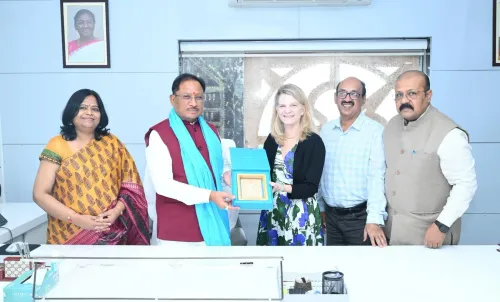
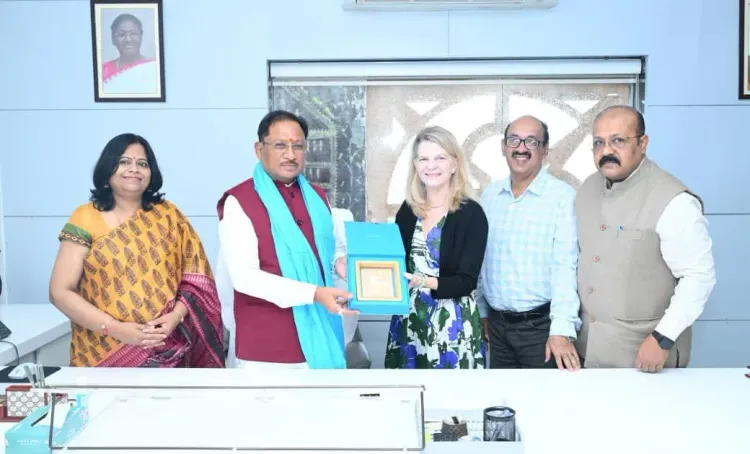
Chief Minister Vishnu Deo Sai met UNICEF India Representative Cynthia McCaffrey at Mahanadi Bhawan, Nava Raipur on 22 July 2026. Talks covered maternal-child health, malnutrition elimination, and holistic child development, reinforcing Chhattisgarh's partnership with the UN agency in high-burden tribal districts.
Key Takeaways
Chief Minister Vishnu Deo Sai held a courtesy meeting with UNICEF India Representative Cynthia McCaffrey on 22 July 2026 .
The meeting took place at Mahanadi Bhawan, Nava Raipur , the seat of the Chhattisgarh state secretariat.
Discussions covered maternal and child health, malnutrition elimination, and comprehensive child development .
Chhattisgarh is a high-priority state under the national POSHAN Abhiyaan due to elevated malnutrition indicators, especially in tribal districts.
The state's own Mukhyamantri Suposhan Abhiyan (launched ~2019) complements central nutrition schemes with UNICEF technical support.
Any formal programme commitments or pilots emerging from the meeting will be tracked through POSHAN Tracker data and future NFHS rounds.
The Chief Minister's Office of Chhattisgarh announced on Wednesday, 22 July 2026 that Chief Minister Vishnu Deo Sai received UNICEF India Representative Cynthia McCaffrey in a courtesy call at Mahanadi Bhawan, Nava Raipur, with discussions centred on maternal and child health, malnutrition elimination, and the holistic development of children in the state.
Context
The meeting, described by the Chief Minister's Office as a shishṭāchār bheṃṭ (courtesy call), brought together the state's top executive and the UN agency's India head for what officials characterised as 'detailed discussions' on child and maternal welfare. The official post noted that topics covered included mātṛ evaṃ śiśu svāsthya, kupoṣaṇ unmūlan tathā baccoṃ ke samagra vikās — maternal and infant health, malnutrition eradication, and the comprehensive development of children.
Cynthia McCaffrey, who leads UNICEF's country operations in India, regularly engages with state governments to align UN-supported programmes with local delivery systems. Chhattisgarh, which has a significant tribal population, has historically recorded elevated malnutrition indicators, making it a priority state for such collaborations.
Policy Backdrop
The meeting sits within a well-established framework of Centre-state-UN cooperation on nutrition. India's POSHAN Abhiyaan (National Nutrition Mission), launched in 2018, set targets to reduce stunting, wasting, and anaemia, with state-level dashboards tracked through the POSHAN Tracker platform. Chhattisgarh is among the high-burden states monitored under this mission.
At the state level, the Mukhyamantri Suposhan Abhiyan, initiated around 2019, was designed specifically to address malnutrition among tribal children through supplementary nutrition and community-level monitoring. Such state schemes are typically implemented in convergence with UNICEF technical support, particularly in areas like complementary feeding, immunisation outreach, and behaviour-change communication targeting mothers and caregivers.
Chief Minister Sai, who took office in December 2023 heading a BJP government, has positioned governance reform and social sector improvement as central planks of his administration. The hashtags accompanying the official post — #Sushasansarkar (good governance government) and #ViksitChhattisgarh (developed Chhattisgarh) — reflect this framing.
Stakeholders and Impact
The primary beneficiaries of any outcomes from this engagement are mothers, infants, and children across Chhattisgarh, with tribal communities in districts with the highest malnutrition burden standing to gain the most from strengthened programme delivery. UNICEF partnerships typically translate into technical assistance for frontline workers such as Anganwadi workers and ASHAs, as well as data systems that help target interventions more precisely.
Women's empowerment — flagged explicitly in the official post under #WomenEmpowerment — is closely linked to child nutrition outcomes, as maternal education and agency are among the strongest predictors of child health in research across Indian states.
What's Next
Observers will watch for any formal follow-up announcements from the state government, including new UNICEF-supported pilots on complementary feeding or maternal nutrition, or fresh budget allocations in the social sector. The next round of POSHAN Tracker district-level data for Chhattisgarh and future rounds of NFHS surveys will serve as the primary metrics against which the impact of such high-level engagements is ultimately measured. If the courtesy call leads to a structured programme agreement, it would mark a visible step in the Sai government's stated commitment to inclusive development in the state's most vulnerable communities.
Point of View
Which took office in late 2023, visible traction on child nutrition in tribal Chhattisgarh is both a governance imperative and a political asset. UNICEF's continued engagement at the Chief Minister level also reflects the agency's assessment that state political will is the critical variable in translating national nutrition targets into district-level results. The real test will be whether this courtesy call generates measurable programme action — new pilots, revised budget lines, or improved POSHAN Tracker scores — in the months ahead.
NationPress
22 Jul 2026
Frequently Asked Questions
Why did UNICEF India meet the Chhattisgarh Chief Minister?
UNICEF India Representative Cynthia McCaffrey called on Chief Minister Vishnu Deo Sai on 22 July 2026 for a courtesy meeting focused on maternal and child health, malnutrition elimination, and holistic child development in Chhattisgarh.
What is the malnutrition situation in Chhattisgarh?
Chhattisgarh has historically recorded elevated malnutrition indicators, particularly among children in tribal districts, making it a priority state under India's POSHAN Abhiyaan and a key focus for UNICEF's state-level partnerships.
What is the Mukhyamantri Suposhan Abhiyan?
The Mukhyamantri Suposhan Abhiyan is a Chhattisgarh state scheme initiated around 2019 to address child malnutrition through supplementary nutrition, community monitoring, and convergence with central health programmes.
Who is Cynthia McCaffrey?
Cynthia McCaffrey is the UNICEF India Representative who heads the UN agency's country office and engages with Indian state governments on child nutrition, maternal health, immunisation, and early childhood development.
Where is Mahanadi Bhawan located?
Mahanadi Bhawan is the state secretariat building located in Nava Raipur, the planned new capital of Chhattisgarh, where official government meetings and ministerial functions are conducted.