CM Sai Pushes Irrigation Drive for Jashpur Farmers
Synopsis
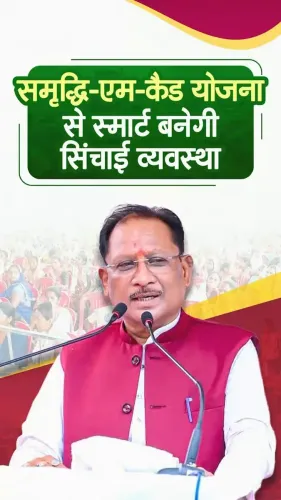
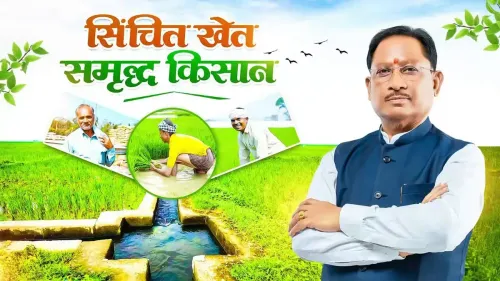
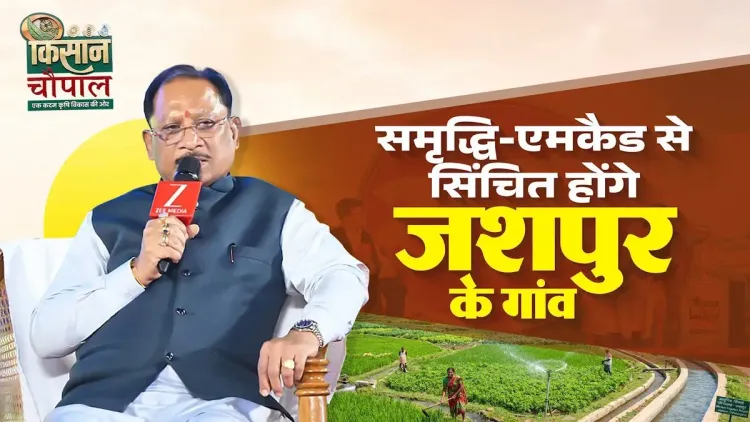
Chief Minister Vishnu Deo Sai on 12 July 2026 spotlighted the Bagiya Cluster development under the Samriddhi MKAD Yojana in Jashpur, pledging that the 'double engine government' will ensure irrigation reaches every farm and every farmer prospers in Chhattisgarh.
Key Takeaways
CM Vishnu Deo Sai on 12 July 2026 reaffirmed the Chhattisgarh government's goal of extending irrigation to every farm in the state.
The Bagiya Cluster in Jashpur district is being developed under the Samriddhi MKAD Yojana as a concrete step toward that goal.
Jashpur is a predominantly tribal district where rain-fed agriculture has historically left farmers vulnerable to monsoon variability.
The initiative aligns with the centrally sponsored Pradhan Mantri Krishi Sinchayee Yojana , launched in 2015 to expand irrigated area and water-use efficiency.
Multiple villages in the Bagiya Cluster zone are expected to receive improved irrigation, potentially enabling additional crop cycles and more stable farm incomes.
Success in Jashpur could prompt replication of the cluster-based irrigation model across other rain-fed and tribal districts of Chhattisgarh .
Chhattisgarh Chief Minister Vishnu Deo Sai on Sunday, 12 July 2026, reaffirmed his government's commitment to extending irrigation access to every farm in the state, highlighting the development of the Bagiya Cluster under the Samriddhi MKAD Yojana in Jashpur district as a concrete step toward farmer prosperity.
Context
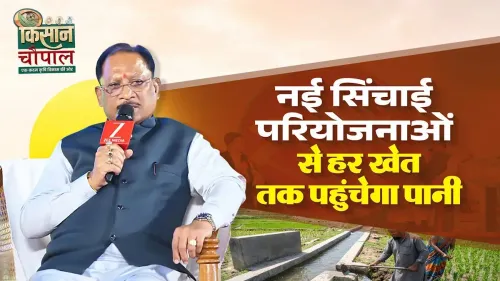
In his post, Chief Minister Sai wrote: 'प्रदेश के हर खेत तक सिंचाई की सुविधा पहुंचे और हर किसान समृद्ध हो' ('Let irrigation reach every farm in the state and every farmer prosper'), framing the initiative as a core resolve of the 'double engine government' — a term the BJP uses to describe aligned state and central administrations working in tandem. He noted that the Bagiya Cluster development in Jashpur is actively under way as part of this direction.
The post underscores the government's stated goal of ensuring that no farm remains dependent solely on rain, a particularly acute concern in Jashpur, a northern Chhattisgarh district where tribal communities form the majority and rain-fed agriculture has historically been the norm.
Policy Backdrop
The Samriddhi MKAD Yojana under which the Bagiya Cluster is being developed is positioned as a state-level vehicle to channel irrigation infrastructure to villages across the district. The cluster-based model groups nearby villages to share irrigation assets, improving cost efficiency and coverage.
This initiative aligns with the nationally launched Pradhan Mantri Krishi Sinchayee Yojana (PMKSY), introduced in 2015 to expand irrigated agricultural area, improve water-use efficiency, and promote micro-irrigation across Indian states. Chhattisgarh has been among the states seeking to converge central irrigation funding with state-level projects, particularly in tribal and rain-fed regions that have lagged behind in agricultural infrastructure.
Post-December 2023 — when the BJP returned to power in Chhattisgarh under Chief Minister Sai — the state government has prioritised cluster-based irrigation works as part of a broader national emphasis on doubling farmer incomes through rural infrastructure investment.
Stakeholders and Impact
Jashpur district's small and marginal farmers, many of them from tribal communities, stand to be the most direct beneficiaries. Chief Minister Sai's post stated that 'many villages in the area will get better irrigation facilities and agriculture of farmers will gain new strength,' pointing to an expected multiplier effect across multiple settlements within the Bagiya Cluster zone.
Improved irrigation in a predominantly rain-fed district can reduce crop losses in deficit monsoon years, increase cropping intensity by enabling a second or third crop cycle, and provide more stable incomes for households that have limited access to alternative livelihoods. Tribal farming communities in Jashpur are among the most economically vulnerable in the state, making irrigation access a high-impact intervention.
What's Next
The immediate focus will be on the pace of physical works at the Bagiya Cluster and the number of villages brought under assured irrigation coverage once the infrastructure is operational. District-level progress reports and any state budget announcements earmarking funds for additional clusters under the Samriddhi MKAD Yojana will indicate how broadly the model is intended to scale.
If the cluster approach delivers measurable gains in Jashpur, it could serve as a template for replication in other rain-fed and tribal districts of Chhattisgarh, reinforcing the state government's stated commitment to universal farm irrigation as a development priority.
Point of View
District-level infrastructure announcements to demonstrate governance delivery in tribal heartlands. By invoking the 'double engine government' framing, the messaging simultaneously credits the central government's PMKSY framework, reinforcing political alignment between Raipur and New Delhi. The cluster-based irrigation model is a pragmatic approach in rain-fed districts where large dam projects are neither feasible nor quick to deliver. The real test will be whether physical works translate into measurable gains in cropping intensity and farmer incomes before the next electoral cycle.
NationPress
12 Jul 2026
Frequently Asked Questions
What is the Samriddhi MKAD Yojana in Chhattisgarh?
The Samriddhi MKAD Yojana is a state-level scheme in Chhattisgarh under which irrigation infrastructure is being developed in clusters of villages; the Bagiya Cluster in Jashpur district is among the areas currently under development.
What is the Bagiya Cluster irrigation project in Jashpur?
The Bagiya Cluster is an irrigation development project in Jashpur district, Chhattisgarh, being executed under the Samriddhi MKAD Yojana to provide better water access to multiple villages and strengthen local agriculture.
Who is Vishnu Deo Sai and what did he announce?
Vishnu Deo Sai is the Chief Minister of Chhattisgarh and a BJP leader who took office in December 2023. On 12 July 2026, he highlighted the Bagiya Cluster irrigation development in Jashpur as part of the government's commitment to reaching every farm with irrigation.
How does the Jashpur irrigation project help tribal farmers?
Jashpur is a predominantly tribal district reliant on rain-fed agriculture; improved irrigation through the Bagiya Cluster can reduce crop losses in poor monsoon years, enable additional crop cycles, and provide more stable incomes for vulnerable farming households.
What is the Pradhan Mantri Krishi Sinchayee Yojana and how is it connected?
Pradhan Mantri Krishi Sinchayee Yojana is a central government scheme launched in 2015 to expand irrigated area and improve water-use efficiency across India; Chhattisgarh's state-level irrigation initiatives, including the Samriddhi MKAD Yojana, align with this national framework.