CM Sai Chairs Five-District Review Under Sushasan Tihar
Synopsis
Chhattisgarh CM Vishnu Deo Sai chaired a joint review of five districts under Sushasan Tihar 2026 in Gariaband on 6 June, assessing progress on PMAY, Jal Jeevan Mission, DMF utilisation, and directing officials to ensure kharif fertiliser availability including Nano DAP.
Key Takeaways
CM Vishnu Deo Sai held a joint review meeting of five districts — Raipur, Dhamtari, Gariaband, Balodabazar-Bhatapara and Mahasamund — at Gariaband on 6 June 2026 .
The meeting was conducted under Sushasan Tihar 2026 , the Chhattisgarh government's annual district-level governance review initiative.
Review covered pending revenue cases, law and order, PMAY , Bihan , DMF and Jal Jeevan Mission implementation.
Officials were directed to ensure adequate fertiliser and seed availability ahead of the upcoming kharif season .
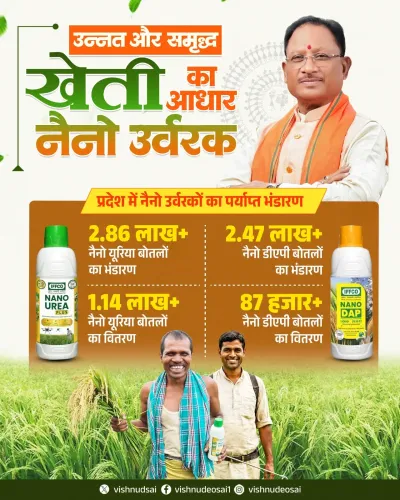
Promotion of Nano DAP and other alternative fertilisers was specifically highlighted as a priority directive.
CM Sai underlined that delivering services to the common people through good governance remains the administration's 'topmost priority.'
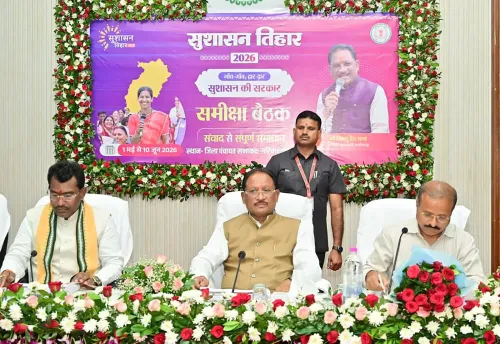
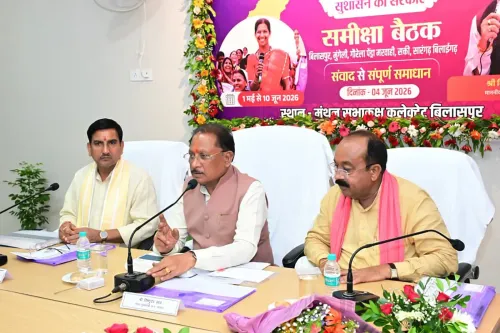
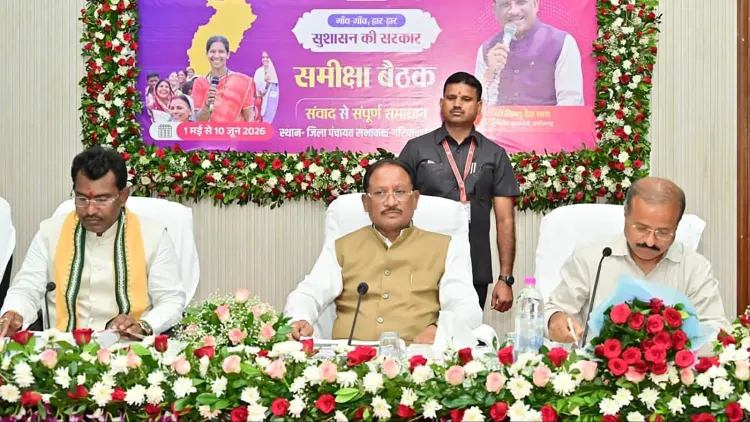
Chhattisgarh Chief Minister Vishnu Deo Sai on Saturday, 6 June 2026, chaired a joint review meeting of officials from five districts — Raipur, Dhamtari, Gariaband, Balodabazar-Bhatapara and Mahasamund — at the District Panchayat hall in Gariaband under the state government's annual governance initiative, Sushasan Tihar 2026.
Context
The meeting, held under the Sushasan Tihar (Good Governance Festival) framework, brought together district-level officers for a comprehensive review of scheme implementation and development works. CM Sai stated that 'delivering better facilities to the common people through good governance is our topmost priority,' directing officials to ensure swift resolution of public grievances and quality, time-bound execution of development works.
The review covered a wide agenda: resolution of pending revenue cases, law and order, and the progress of flagship central schemes including the Pradhan Mantri Awas Yojana (PMAY), the Bihan self-help group programme, the District Mineral Foundation (DMF) fund utilisation, and the Jal Jeevan Mission (JJM).
Policy Backdrop
Sushasan Tihar was institutionalised by the Chhattisgarh administration as an annual exercise to monitor convergence of central and state schemes at the district level. Since the BJP government led by CM Sai took office in December 2023, such district-level monitoring reviews have been a recurring feature of the administration's governance calendar.
The Jal Jeevan Mission, launched nationally in 2019, aims to provide functional household tap water connections in rural areas, with states responsible for ground-level implementation. The District Mineral Foundation, established under the Mines and Minerals (Development and Regulation) Act, channels mining royalties into local development — a mechanism of particular significance in mineral-rich Chhattisgarh.
On the agricultural front, officials were directed to ensure adequate availability of fertilisers and seeds ahead of the upcoming kharif season, and to actively promote the use of alternative fertilisers including Nano DAP. The national push for nano-fertilisers, scaled up from 2023 onwards, aims to reduce dependence on conventional urea and improve soil health while easing the subsidy burden.
Stakeholders and Impact
The five districts covered by the review — Raipur, Dhamtari, Gariaband, Balodabazar-Bhatapara and Mahasamund — together represent a significant share of central Chhattisgarh's rural population and agricultural land. Farmers in these districts stand to benefit directly from pre-kharif inputs planning, while rural households are the primary beneficiaries of PMAY housing targets and JJM water connections.
District Mineral Foundation funds, drawn from royalties on mineral extraction, are earmarked for health, education and infrastructure in affected communities. The review of DMF utilisation signals an administrative push to ensure these resources are deployed effectively and on schedule.
What's Next
Subsequent rounds of Sushasan Tihar 2026 review meetings are expected to cover other districts across Chhattisgarh, with the state agriculture department's reports on fertiliser availability and kharif sowing progress serving as key indicators of follow-through. The administration's emphasis on 'time-bound' delivery and quality in development works will be tested as the monsoon season — and the kharif sowing window — approaches in the coming weeks.
Point of View
Pending revenue cases, housing, water and agricultural inputs in a single multi-district meeting, CM Sai is projecting a whole-of-government approach ahead of the politically sensitive kharif season. The specific mention of Nano DAP aligns Chhattisgarh's state directives with the Centre's broader fertiliser reform agenda, reinforcing the BJP's narrative of Centre-state policy coherence. How quickly pending cases and scheme gaps identified in these reviews are actually resolved will determine whether Sushasan Tihar translates into tangible outcomes or remains primarily a communications exercise.
NationPress
21 Oct 2026
Frequently Asked Questions
What is Sushasan Tihar in Chhattisgarh?
Sushasan Tihar is an annual governance review initiative of the Chhattisgarh government in which district-level meetings are held to assess the implementation of central and state schemes, resolve pending cases, and issue directives for development work. The 2026 edition, tagged Sushasan Tihar 2026 , is currently under way across districts.
Which districts were covered in CM Sai's Gariaband review meeting?
The joint review meeting held at Gariaband on 6 June 2026 covered officials from five districts: Raipur, Dhamtari, Gariaband, Balodabazar-Bhatapara and Mahasamund .
What schemes were reviewed under Sushasan Tihar 2026 on 6 June?
The meeting reviewed progress on the Pradhan Mantri Awas Yojana (PMAY) , Bihan self-help group programme, District Mineral Foundation (DMF) fund utilisation, and the Jal Jeevan Mission , along with pending revenue cases and law and order.
Why was Nano DAP mentioned in the Chhattisgarh review meeting?
CM Sai directed officials to promote Nano DAP and other alternative fertilisers as part of preparations for the upcoming kharif sowing season , in line with the national policy push to reduce dependence on conventional urea and improve soil health.
What is the District Mineral Foundation in Chhattisgarh?
The District Mineral Foundation (DMF) is a statutory body established under the Mines and Minerals (Development and Regulation) Act that collects a share of mining royalties and deploys the funds for local development — including health, education and infrastructure — in mineral-affected districts. Chhattisgarh, being mineral-rich, has significant DMF resources under review.