CM Sai Reviews Kharif 2026 Prep Amid Rainfall Concerns
Synopsis
Chief Minister Vishnu Deo Sai on 3 July 2026 held a high-level review of Chhattisgarh's Kharif 2026 preparations, assessing drought contingency plans, fertiliser and seed stocks, water conservation, irrigation management, and rural employment schemes under the Viksit Bharat-BVG Ram Ji Yojana.
Key Takeaways
CM Vishnu Deo Sai chaired a high-level review on 3 July 2026 focused on Kharif season 2026 readiness amid possible low-rainfall conditions.
The review covered fertiliser and seed availability , water conservation, irrigation management, and scientific farming practices.
The Viksit Bharat-BVG Ram Ji Yojana , linked to the national Viksit Bharat 2047 vision, was a central subject of the preparedness assessment.
Rural employment schemes were discussed as a potential income buffer if the monsoon underperforms during the kharif season.
Chhattisgarh has conducted similar pre-kharif reviews annually since at least 2019 , reflecting the state's dependence on monsoon-fed rice cultivation.
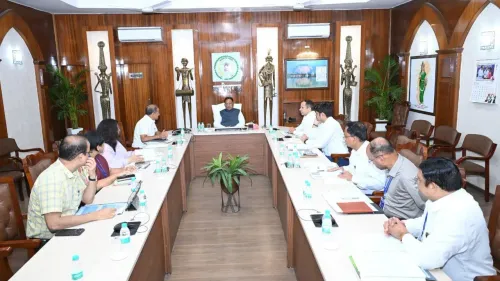
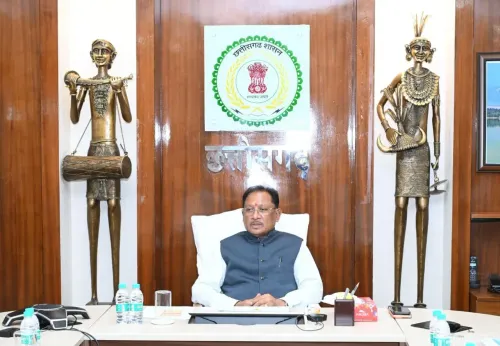
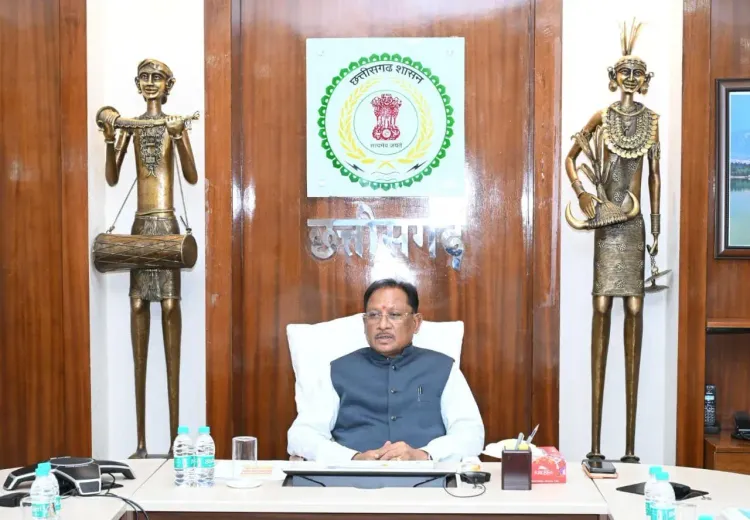
The Chief Minister's Office of Chhattisgarh announced on Friday, 3 July 2026 that Chief Minister Vishnu Deo Sai chaired a high-level review meeting to assess preparations for the Kharif season 2026, with particular attention to the possibility of below-normal rainfall across the state. The meeting covered the agriculture department's readiness as well as the status of the Viksit Bharat-BVG Ram Ji Yojana, a state initiative aligned with the national Viksit Bharat 2047 vision.
Context
The Chief Minister's Office posted in Hindi: 'मुख्यमंत्री श्री विष्णु देव साय ने आज खरीफ सीजन-2026 के दौरान संभावित अल्प वर्षा की परिस्थितियों को ध्यान में रखते हुए कृषि विभाग तथा विकसित भारत-बीवी-जी राम जी योजना की तैयारियों की उच्चस्तरीय समीक्षा की।' — translated: 'Chief Minister Vishnu Deo Sai today conducted a high-level review of the Agriculture Department and preparations under the Viksit Bharat-BVG Ram Ji Yojana in view of possible low-rainfall conditions during Kharif season 2026.' The meeting also examined weather forecasts, availability of fertilisers and seeds, water conservation, irrigation management, scientific farming practices, and rural employment.
Chhattisgarh is a predominantly agrarian state where rice is the dominant crop and a large share of the workforce depends on agriculture. Rainfall deficits during the kharif season — which runs roughly from June to October — can significantly affect output and rural incomes.
Policy Backdrop
CM Sai, who took office in December 2023, has maintained a focus on rural and agricultural administration. The state has held annual pre-kharif reviews since at least 2019 to manage monsoon variability and coordinate input supply chains. National frameworks such as PM-KISAN and the National Food Security Mission have provided the broader scaffolding within which state-level drought contingency planning operates.
The Viksit Bharat-BVG Ram Ji Yojana is designed to support rural development and farming communities, linking state-level delivery to the central government's Viksit Bharat 2047 long-term development agenda. Wednesday's review signals the administration's intent to stress-test these schemes before the season peaks.
Stakeholders and Impact
The primary beneficiaries of the reviewed preparedness measures are Chhattisgarh's farmers and rural households, who face the most direct exposure to erratic monsoon patterns. Adequate seed and fertiliser stocks, functional irrigation infrastructure, and active rural employment programmes are critical buffers when rainfall falls short.
The integration of water conservation and scientific farming into a single high-level review reflects an effort to treat drought preparedness as a multi-departmental challenge rather than a narrow agricultural one. Rural employment schemes discussed in the meeting could serve as an income safety net if crop yields disappoint.
What's Next
Attention will now shift to the India Meteorological Department's long-range forecasts for the 2026 monsoon and how district-level administrations translate the review's directives into on-ground distribution of seeds, fertilisers, and irrigation support. The effectiveness of the Viksit Bharat-BVG Ram Ji Yojana in reaching smallholder farmers before the season's critical sowing window will be a key indicator of the state's preparedness. If rainfall remains deficient, the rural employment component discussed in the review is likely to assume greater urgency as a livelihood backstop for affected communities.
Point of View
As the monsoon season reaches a critical phase — signals that the Sai administration is treating rainfall uncertainty as a governance priority rather than a reactive crisis. By bundling seed-fertiliser logistics, water conservation, irrigation management, and rural employment into a single ministerial review, the government is attempting to present an integrated response to climate variability, a posture that aligns with the BJP's broader 'Viksit Bharat' narrative of technocratic rural governance. The explicit inclusion of the Viksit Bharat-BVG Ram Ji Yojana in the agenda also serves to anchor a state-level scheme to the national political brand ahead of any potential distress season. How effectively these directives translate into district-level action before the sowing window closes will ultimately determine whether this review is substantive policy or performative optics.
NationPress
3 Jul 2026
Frequently Asked Questions
Why did CM Vishnu Deo Sai hold a Kharif 2026 review meeting?
CM Sai convened the high-level meeting on 3 July 2026 to assess Chhattisgarh's preparedness for the Kharif season in light of possible below-normal rainfall, covering seed and fertiliser availability, water conservation, irrigation, and rural employment schemes.
What is the Viksit Bharat-BVG Ram Ji Yojana in Chhattisgarh?
The Viksit Bharat-BVG Ram Ji Yojana is a Chhattisgarh state initiative focused on rural development and farming support, aligned with the central government's Viksit Bharat 2047 long-term development vision.
How does Chhattisgarh prepare for low rainfall during the Kharif season?
The state holds high-level pre-kharif reviews — a practice in place since at least 2019 — to coordinate fertiliser and seed stocks, water conservation measures, irrigation management, and rural employment programmes as contingency buffers against rainfall deficits.
Which crops are most at risk if Chhattisgarh faces low rainfall in 2026?
Rice is the dominant kharif crop in Chhattisgarh and is most vulnerable to below-normal rainfall, given that a large share of cultivation in the state is rain-fed.
What rural employment support was discussed in the CM Sai Kharif review?
The meeting discussed rural employment-linked schemes as part of the preparedness framework, with the intent that such programmes serve as an income safety net for farming households if the 2026 monsoon underperforms.