CM Sai Secures 46,500 MT Extra DAP for Chhattisgarh Kharif
Synopsis
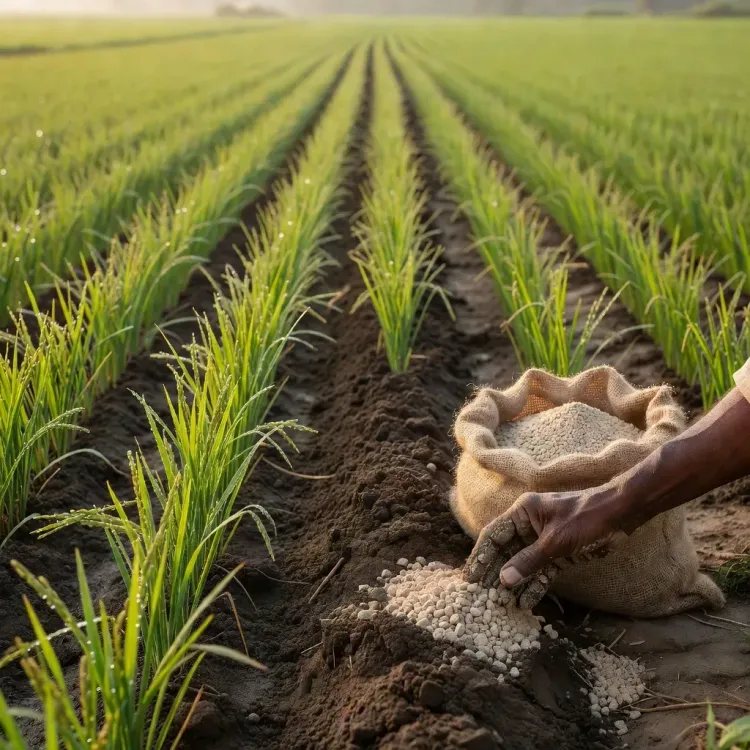
Chhattisgarh Chief Minister Vishnu Deo Sai has announced that the Centre has allocated an additional 46,500 metric tonnes of DAP fertilizer to the state for the kharif season, following his personal request to Union Minister Jagat Prakash Nadda in New Delhi. Urea availability was already adequate, making fertilizer supply sufficient for the season.
Key Takeaways
The Centre has allocated an additional 46,500 metric tonnes of DAP fertilizer to Chhattisgarh for the kharif season.
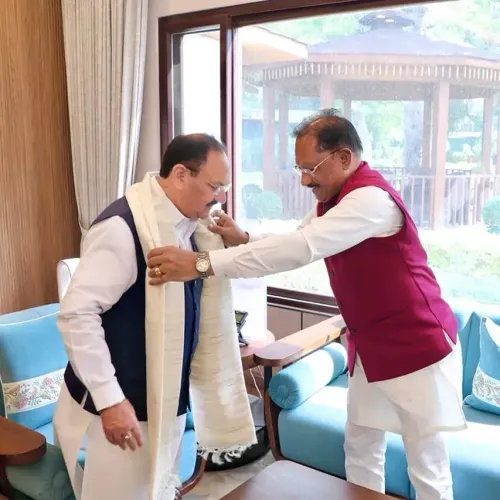
CM Vishnu Deo Sai personally requested the allocation during a meeting with Union Minister Jagat Prakash Nadda in New Delhi .
Sai credited the allocation to PM Narendra Modi's guidance and Nadda's 'special cooperation.' Urea supply in the state was already described as adequate; the DAP addition completes kharif fertilizer requirements.
The announcement is framed under the BJP's 'double engine government' model of centre-state policy alignment.
Last-mile distribution to district warehouses and cooperative outlets will be the next logistical challenge.
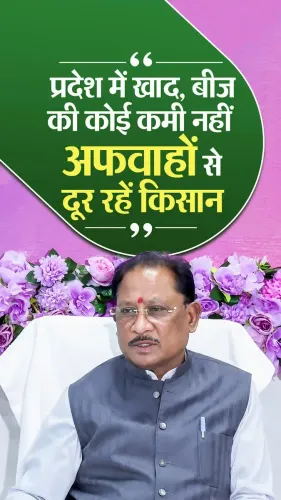
Chhattisgarh Chief Minister Vishnu Deo Sai on Saturday, 4 July 2026 announced that the Union government has allocated an additional 46,500 metric tonnes of DAP (di-ammonium phosphate) fertilizer to the state, crediting the intervention to Union Chemicals and Fertilizers Minister Jagat Prakash Nadda and Prime Minister Narendra Modi ahead of the critical kharif sowing season.
Context
Chief Minister Sai posted in Hindi on X, expressing gratitude on behalf of the state's farming community: 'प्रदेश के समस्त अन्नदाता भाइयों-बहनों की ओर से उनका हार्दिक आभार' ['heartfelt gratitude on behalf of all farmer brothers and sisters of the state']. He disclosed that during a meeting with Nadda in New Delhi, he had personally requested the additional allocation, citing the requirements of the kharif season. The request has now been fulfilled, he said, through the 'special cooperation' of the Union minister and under Prime Minister Modi's guidance.
DAP is one of the two most widely used fertilizers in Indian agriculture, providing both nitrogen and phosphorus. Its timely availability before monsoon sowing is considered critical for paddy and coarse cereal cultivation — the backbone of Chhattisgarh's agrarian economy.
Policy Backdrop
The central government allocates urea and DAP to states through the Department of Fertilizers under the Nutrient Based Subsidy (NBS) scheme, which has been operational since 2010. Seasonal allocations for kharif are routinely revised upward when states communicate higher demand assessments — a process that typically involves chief ministers or agriculture ministers engaging directly with the Union ministry. Sai's New Delhi meeting with Nadda follows this established channel of centre-state fertilizer coordination.
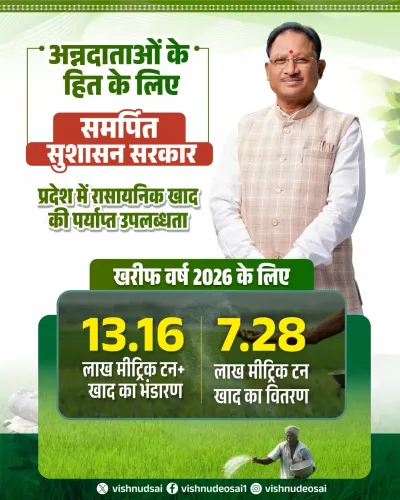
Chief Minister Sai noted that urea availability in the state was already adequate. With the additional DAP allocation now confirmed, he said, Chhattisgarh has secured sufficient fertilizer supplies for the entire kharif season. His post used the phrase 'समुचित उपलब्धता सुनिश्चित हो गई है' ['adequate availability has now been ensured'].
Stakeholders and Impact
The direct beneficiaries are Chhattisgarh's farming households, who depend on timely access to subsidised DAP and urea to prepare their fields before the monsoon window closes. Delayed or short fertilizer supplies can force farmers to purchase from the open market at higher prices, compressing margins on paddy and other kharif crops. The state government has framed the allocation as a fulfilment of its 'double engine government' promise — a BJP formulation describing aligned policy action when the same party governs both the state and the centre.
CM Sai articulated the broader goal in his post: 'किसानों को समय पर डीएपी, यूरिया सहित सभी आवश्यक कृषि आदान उपलब्ध हों' ['farmers should receive DAP, urea and all necessary agricultural inputs on time'] so they can 'farm without worry, produce better, and move towards prosperity.'
What's Next
The Department of Fertilizers is expected to release updated state-wise stock position reports as peak kharif sowing approaches in July–August 2026. Similar allocation revisions from other states are likely as monsoon progress is tracked and demand assessments are finalised. For Chhattisgarh, the focus will now shift to last-mile distribution — ensuring the additional DAP reaches district-level warehouses and cooperative outlets before the sowing window peaks. Timely physical delivery, rather than the allocation itself, will determine whether farmers benefit on the ground.
Point of View
The public framing by CM Sai — thanking both the PM and a senior party figure — signals an intent to convert a procedural outcome into visible political capital with the farming electorate. The broader pattern suggests that fertilizer logistics, long a technocratic domain, have become an increasingly prominent arena for BJP governments to demonstrate responsiveness to agrarian constituencies. The real test, as analysts consistently note, lies not in the allocation announcement but in whether the additional stocks reach the last mile before peak sowing demand.
NationPress
5 Jul 2026
Frequently Asked Questions
How much extra DAP has Chhattisgarh received for kharif 2026?
Chhattisgarh has received an additional allocation of 46,500 metric tonnes of DAP fertilizer for the kharif season, as announced by Chief Minister Vishnu Deo Sai on 4 July 2026.
Who approved the additional DAP allocation for Chhattisgarh?
Union Minister for Chemicals and Fertilizers Jagat Prakash Nadda approved the additional DAP allocation. CM Sai also credited Prime Minister Narendra Modi's guidance for the outcome.
What is DAP and why is it important for kharif farming?
DAP, or di-ammonium phosphate, is a key fertilizer that supplies both nitrogen and phosphorus to crops. It is widely used at the time of sowing kharif crops such as paddy, and its timely availability is critical for healthy crop establishment.
Is urea also available in Chhattisgarh for kharif 2026?
Yes. CM Sai stated in his post that urea availability in Chhattisgarh was already adequate before this announcement. The additional DAP allocation completes the fertilizer requirements for the kharif season.
What is the 'double engine government' model mentioned by CM Sai?
The 'double engine government' is a BJP phrase describing the alignment of policy and delivery when the same party governs both the state and the central government. CM Sai used it to explain how coordinated action between Raipur and New Delhi secured the additional fertilizer allocation.