CM Sai Secures Nod for 2,305 Mobile Towers in Chhattisgarh
Synopsis
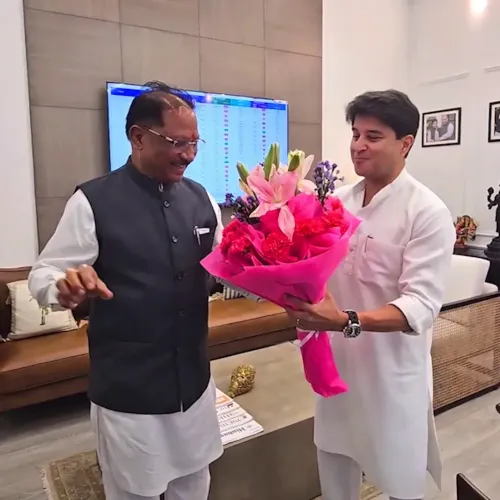
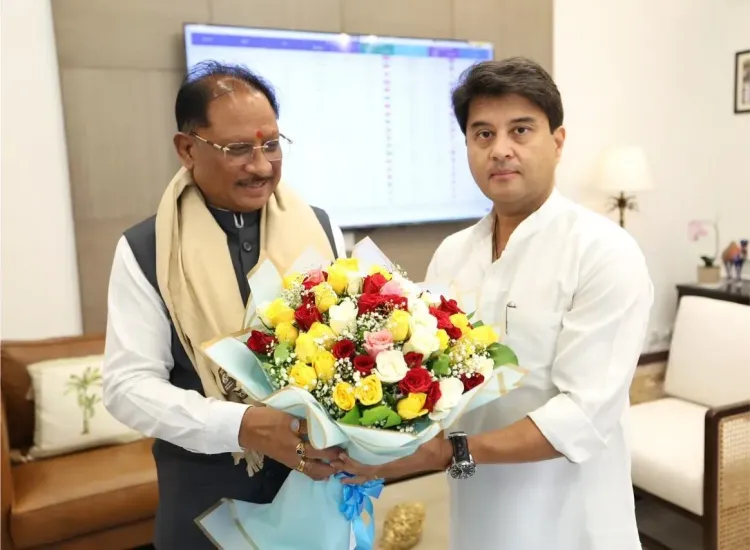
Chhattisgarh CM Vishnu Deo Sai met Union Communications Minister Jyotiraditya Scindia in Delhi on 31 July 2026, securing assurance for fast-track approval of 2,305 mobile towers under the Digital Bharat Nidhi scheme to connect remote, tribal, and border communities.
Key Takeaways
2,305 new mobile towers are set for fast-track approval in Chhattisgarh under the Digital Bharat Nidhi (DBN) scheme.
CM Vishnu Deo Sai met Union Minister Jyotiraditya Scindia in New Delhi on 31 July 2026 to discuss digital connectivity expansion.
The towers will target remote, tribal, and border areas currently underserved by mobile and internet networks.
Intended benefits include access to education, telemedicine, banking, and e-governance services for last-mile populations.
Digital Bharat Nidhi was restructured around 2023 from the Universal Service Obligation Fund to accelerate tower rollout in difficult terrain.
Chhattisgarh has one of India's largest tribal populations, making it a priority state for closing the digital divide.
Two thousand three hundred and five mobile towers — that is the number Chhattisgarh Chief Minister Vishnu Deo Sai carried back from New Delhi on Friday, 31 July 2026, after a meeting with Union Communications Minister Jyotiraditya Scindia that could reshape digital access across the state's most isolated corners.
CM Sai met Scindia in Delhi and held what he described as a detailed discussion on expanding digital connectivity in Chhattisgarh. Scindia, he said, assured him of fast-track approval for the installation of 2,305 new mobile towers under the Digital Bharat Nidhi (DBN) scheme — the Centre's flagship fund for rolling out telecom infrastructure in areas that private operators have no commercial incentive to serve.
What DBN Means for Chhattisgarh's Unreached Villages
The Digital Bharat Nidhi, restructured around 2023 from the older Universal Service Obligation Fund, exists precisely for terrain like Chhattisgarh's: dense forests, plateau interiors, and long stretches of tribal land where a mobile signal is still a luxury. The state is home to one of India's largest tribal populations, and its border and interior districts have historically lagged on every connectivity metric.
CM Sai's post spells out the downstream logic directly: once these towers go up, remote, tribal, and border-area residents will gain uninterrupted mobile network and internet access — unlocking education portals, telemedicine, banking services, and e-governance platforms for people currently cut off from all of them. The last-mile delivery argument is not rhetorical here; it is the entire point of DBN's design.
The Bigger Pattern: Connectivity as State-Building in Central India
This push sits inside a decade-long central government priority to close the digital divide in tribal and Left Wing Extremism-affected districts of central India. The Digital India programme, launched in 2015, set broadband and mobile access in rural areas as a foundational goal. What has changed since is the scale of ambition and the institutional plumbing to fund it — DBN being the most direct expression of that.
For Chhattisgarh specifically, connectivity in border and interior blocks carries a dimension beyond convenience: administrative reach, emergency coordination, and the ability of residents to access state services without travelling to district headquarters. 2,305 towers across a state of this geography is not a small number.
The watch now is simple: how fast do approvals translate into ground-level installation, and how soon do coverage maps in target blocks actually change? The minister's assurance is the starting gun — the race is the rollout.
Point of View
305 towers under DBN is a meaningful political win for CM Sai, who can frame it as the Centre responding directly to Chhattisgarh's specific geography and tribal demography. For the BJP, delivering visible infrastructure in tribal heartlands carries electoral weight — particularly in a state where tribal voters are decisive. The meeting also signals that state-Centre coordination on telecom is moving beyond generic Digital India rhetoric toward project-specific commitments. The real test, however, will be the speed of physical rollout: in India's connectivity programmes, the gap between ministerial assurance and tower-on-ground has historically been the widest part of the story.
NationPress
31 Jul 2026
Frequently Asked Questions
What is the Digital Bharat Nidhi scheme?
Digital Bharat Nidhi (DBN) is a central government scheme that funds the installation of telecom towers and broadband infrastructure in areas not commercially served by private operators. It was restructured around 2023 from the earlier Universal Service Obligation Fund to speed up connectivity in remote, tribal, and border regions.
How many mobile towers will be set up in Chhattisgarh under this plan?
Union Communications Minister Jyotiraditya Scindia has assured Chhattisgarh CM Vishnu Deo Sai of fast-track approval for 2,305 new mobile towers under the Digital Bharat Nidhi scheme.
Which areas in Chhattisgarh will benefit from the new mobile towers?
The towers are targeted at remote, tribal, and border areas of Chhattisgarh that currently lack reliable mobile network and internet access. These include interior forested districts and communities near state borders.
Why did CM Vishnu Deo Sai meet Jyotiraditya Scindia in Delhi?
CM Sai travelled to New Delhi on 31 July 2026 to hold detailed discussions with Union Communications Minister Scindia on expanding digital connectivity in Chhattisgarh, specifically to push for approval of new mobile towers under the DBN scheme.
What services will the new towers enable for tribal communities in Chhattisgarh?
Once installed, the towers are expected to enable access to education portals, telemedicine, digital banking, e-governance services, and uninterrupted mobile communication for residents in currently underserved areas.