CM Sai Shares Shah's Naxal Challenge at CGRajyotsav2026
Synopsis
At Chhattisgarh Rajyotsav 2026, Union Home Minister Amit Shah challenged human-rights defenders of Naxalism, asking whether poor tribals deserve no rights. CM Vishnu Deo Sai amplified the remarks on X, framing the Red Corridor as a betrayal of the cultural potential of the state's tribal heartland.
Key Takeaways
Amit Shah used Chhattisgarh Rajyotsav 2026 on November 3, 2026 to directly challenge those who invoke human rights to defend Naxalism.
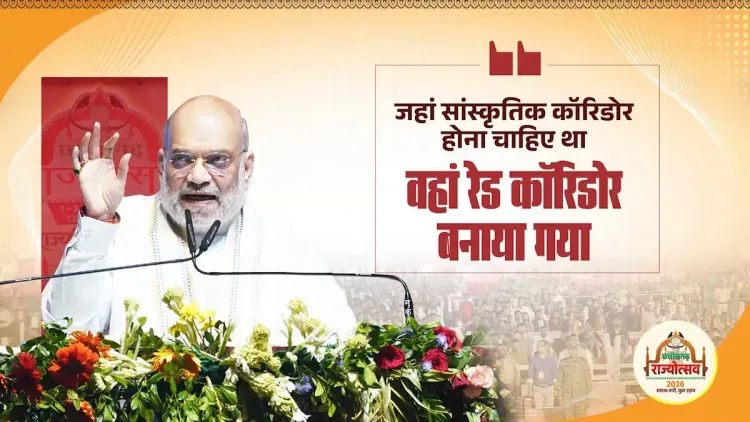
Shah argued that 'the land where a cultural corridor should have existed' was turned into a Red Corridor, framing the insurgency as a theft of tribal potential.
His pointed question — whether poor tribal communities have no human rights — targets what the BJP describes as asymmetric application of human-rights standards.
CM Vishnu Deo Sai , in office since December 2023 , amplified the remarks on X under the hashtag #CGRajyotsav2026 .
The SAMADHAN doctrine (c.
2019–2020) underpins the centre's dual strategy of security operations and welfare delivery in Left-Wing Extremism districts.
Annual MHA incident data and Bastar infrastructure benchmarks remain the key metrics for measuring whether the government's counter-Naxal strategy is delivering.
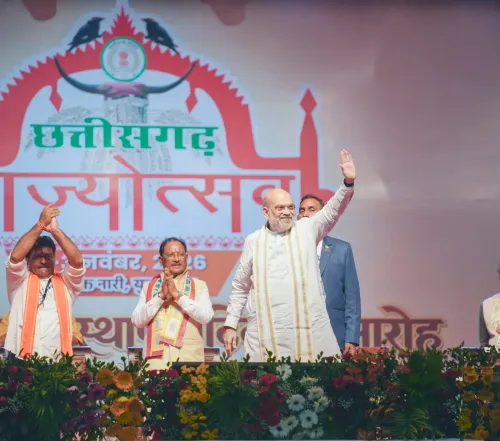
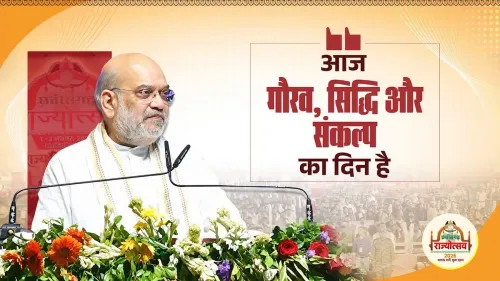
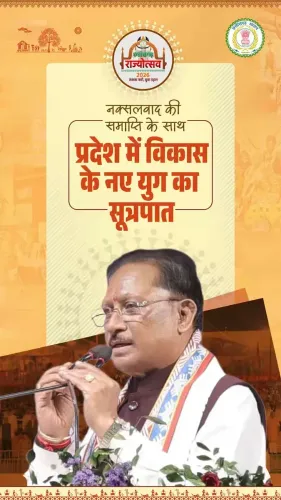
On the land that was meant to have a cultural corridor, a Red Corridor was built instead — and on Tuesday, November 3, 2026, at Chhattisgarh Rajyotsav 2026, Union Home and Cooperation Minister Amit Shah turned that contrast into a direct challenge, with Chhattisgarh Chief Minister Vishnu Deo Sai amplifying his words to the nation.
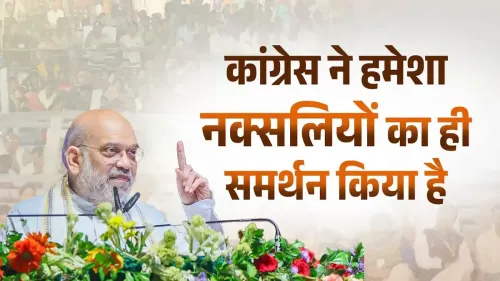
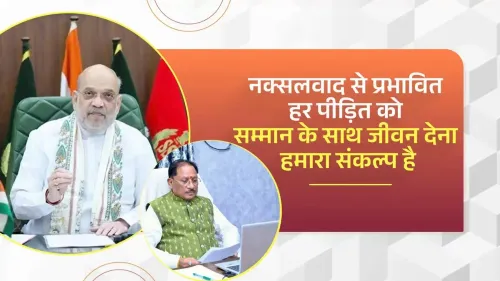
Quoting Shah on X, CM Sai shared the minister's pointed remarks: 'जिस धरती पर सांस्कृतिक गलियारा होना चाहिए था, वहाँ रेड कॉरिडोर बनाया गया' — 'On the land where a cultural corridor should have existed, a Red Corridor was created.' The minister then posed a question aimed squarely at those who invoke human rights to defend Naxalism: 'Does the right to bear arms and block development count as a human right? Does the poor tribal not have human rights?'
A State Anniversary as a Political Reckoning
Chhattisgarh, carved out of Madhya Pradesh in November 2000, marks its foundation day each year on November 1. The Rajyotsav is not merely ceremonial — it is the state's largest political and cultural gathering, one where the centre–state relationship on security and development is routinely on display. That Shah chose this platform to deliver a sharp counter to human-rights critics of anti-Naxal operations gives the remarks extra political weight.
The Red Corridor — a sweep of central and eastern Indian districts historically dominated by Maoist insurgents — has cut deepest through Chhattisgarh's Bastar region. For two decades, the region has been a theatre of competing narratives: security forces and successive central governments frame the conflict as protecting tribal populations from armed coercion; a section of civil society argues that operations have trampled on the rights of those same communities.
The Human-Rights Question Shah Is Asking
Shah's remarks land at the sharpest edge of that debate. His core provocation: the human-rights framework, as applied by some commentators, has consistently shielded armed actors while ignoring the rights of poor tribals to roads, schools, healthcare, and physical safety. It is a critique the BJP has pressed for years, but rarely this starkly at a state-level public event.
The broader policy architecture backing his argument is the SAMADHAN doctrine, introduced by the Ministry of Home Affairs around 2019–2020, which combines security operations with infrastructure delivery and welfare in Left-Wing Extremism-affected districts. The logic: deprive the insurgency of its grievance base while neutralising its armed capability simultaneously.
Bastar's Long Road From Conflict to Connectivity
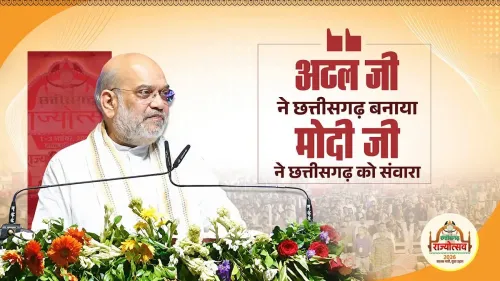
Since the mid-2000s, Chhattisgarh has deployed District Reserve Guards and partnered with central paramilitary forces in sustained counter-Naxal operations across Bastar. The pace of road-building, mobile-tower installation, and opening of schools in former core Naxal zones has been a recurring yardstick for both the state government and the Home Ministry to measure progress. CM Vishnu Deo Sai, who took office in December 2023, has staked significant political capital on accelerating that development push and on claims that Naxal influence is receding.
Shah's Rajyotsav address, as amplified by Sai, signals that the BJP intends to press that case hard — framing tribal welfare not just as a development goal but as the definitive moral answer to the human-rights debate around counter-insurgency.
The numbers that will ultimately test that argument — annual incident data from the Home Ministry and ground-level infrastructure benchmarks from Bastar — are the ones to watch.
Point of View
The party is anchoring counter-Naxal policy in a moral-rights framework rather than a purely security one — a calculated move ahead of annual Home Ministry reporting on LWE incidents. CM Sai's amplification on X signals a deliberate attempt to take this framing national, extending the political reach of a state-level event. The unanswered test remains whether accelerating infrastructure delivery in Bastar can substantiate the rhetoric.
NationPress
3 Nov 2026
Frequently Asked Questions
What did Amit Shah say about Naxalism at Chhattisgarh Rajyotsav 2026?
Shah stated that the land which should have had a cultural corridor was turned into a Red Corridor, and challenged those who defend Naxalism under the banner of human rights, asking whether poor tribal communities have no human rights of their own.
What is the Red Corridor in India?
The Red Corridor refers to a belt of districts in central and eastern India, heavily concentrated in Chhattisgarh's Bastar region, that have historically experienced Maoist or Naxal insurgency activity.
What is the SAMADHAN doctrine for Naxal areas?
The SAMADHAN doctrine, introduced by the Ministry of Home Affairs around 2019–2020, is a multi-pronged counter-Left-Wing-Extremism strategy combining security operations with development projects and rights protection in affected tribal districts.
Why is Chhattisgarh Rajyotsav celebrated?
Chhattisgarh Rajyotsav marks the state's foundation day on November 1, commemorating its formation from Madhya Pradesh in the year 2000. It is the state's largest annual political and cultural gathering.
Who is Vishnu Deo Sai and why is he sharing Amit Shah's speech?
Vishnu Deo Sai is the Chief Minister of Chhattisgarh, in office since December 2023 and a senior BJP leader. He shared Shah's remarks on X to amplify the BJP's position on Naxalism and tribal rights ahead of a national audience.