CM Saini Backs Centre's 2-Year Agniveer Extension Decision
Synopsis
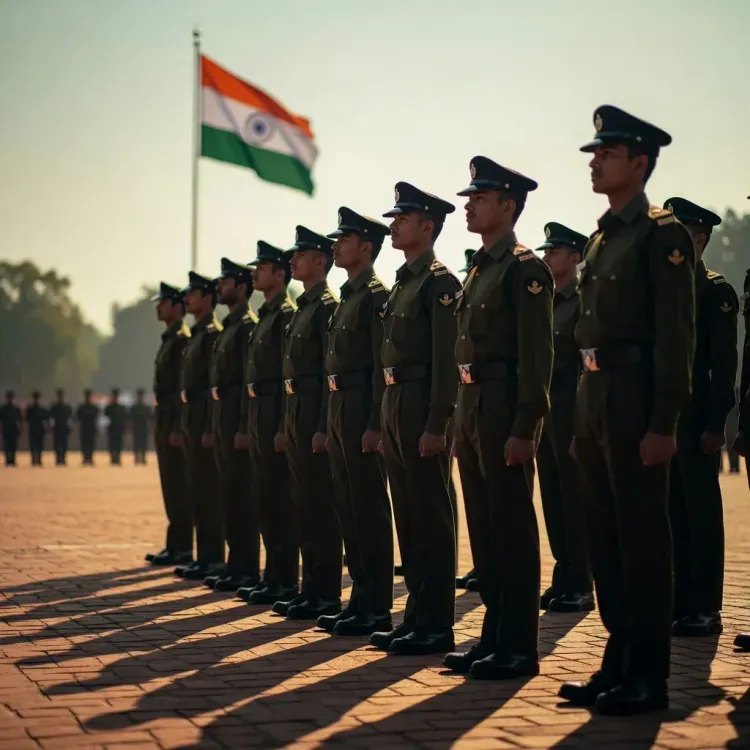
The central government has approved a two-year 'Second Tour of Duty' for Agniveers, extending service to six years and opening a pathway to regular soldiership. Haryana CM Nayab Singh Saini welcomed the move as a boost to armed forces capability under PM Modi's leadership.
Key Takeaways
The Centre has approved a two-year 'Second Tour of Duty' for eligible Agniveers, extending their total service period to six years .
Agniveers who clear selection criteria after the extended tour will have an opportunity to become regular soldiers in the Indian Armed Forces.
Haryana CM Nayab Singh Saini praised the decision as commendable and thanked PM Narendra Modi for the reform.
The Agnipath scheme was originally launched in June 2022 with a fixed four-year short-service tenure for Agniveers.
Specific selection criteria and implementation timelines are yet to be formally notified by the Ministry of Defence.
A significant policy adjustment to India's military recruitment architecture landed on Wednesday, 4 November 2026, as the central government approved a two-year 'Second Tour of Duty' for Agniveers — extending eligible recruits' service from four years to six. Haryana Chief Minister Nayab Singh Saini was among the first to publicly welcome the move, calling it a commendable decision and expressing gratitude to Prime Minister Narendra Modi for the reform.
Posting on X in Hindi, CM Saini wrote: 'Agniveeron ke liye 2 varsh ke atirikt Second Tour of Duty ko manzuri dena Kendra Sarkar ka sarhaniya nirnay hai' — 'Approving an additional two-year Second Tour of Duty for Agniveers is a commendable decision by the central government.' He added that those who meet the selection criteria will also get an opportunity to become regular soldiers — a pathway that significantly changes the calculus for young recruits considering the scheme.
What the Second Tour of Duty Changes for Agniveers
The Agnipath scheme, launched in June 2022, created a new short-service military recruitment model under which young men and women enlist as Agniveers for a fixed four-year tenure. At the end of that tenure, up to 25 per cent of each batch could be retained as regular soldiers — the rest exit with a one-time 'Seva Nidhi' fund and a certificate of service. The scheme drew intense scrutiny and protests at launch, with critics arguing it left too many trained recruits without long-term career security.
The newly approved 'Second Tour of Duty' adds a two-year extension window for willing and eligible Agniveers after their initial four years. More significantly, CM Saini's post flags that those clearing the selection criteria during this extended period will have a formal route to permanent regular service — a direct response to one of the scheme's most persistent criticisms.
Why Haryana's Chief Minister Has Skin in This Game
Haryana has historically been one of India's highest military-recruitment states per capita, with deep familial and cultural ties to the armed forces. The Agnipath scheme generated significant unrest in the state at its 2022 launch, with protests concentrated in districts that have long supplied soldiers to the army. For CM Saini, endorsing this expansion is both a political signal and a practical one — the state has a direct stake in whether Agniveers see the scheme as a credible career path.
Saini's post frames the decision as a force-multiplier: 'This decision will make our armed forces more capable and prepared for future challenges, while leveraging the experience and strength of young recruits.' The language is deliberate — it positions the extension not as a concession to critics, but as a proactive modernisation of military human resources.
Selection Criteria and What Comes Next
The specifics of the selection criteria for the Second Tour of Duty — physical benchmarks, performance assessments, vacancy availability across the Army, Navy, and Air Force — are yet to be formally notified. Official implementation timelines and the gazette notification will be the ones to watch. Agniveers currently serving in their first four-year cycle, particularly those in the 2022 and 2023 intake batches, stand to be directly affected by when and how the new policy is operationalised.
India's armed forces have been navigating a significant demographic and budgetary shift under the Agnipath model. A six-year service window, with a genuine permanent-retention pathway at the end, could reshape how the military manages its talent pipeline — and how India's youth weighs a defence career against civilian alternatives. The next move belongs to the Ministry of Defence.
Point of View
Suggesting the government is actively course-correcting on the scheme's most contentious weakness — career uncertainty. By pairing the extension with a formal regular-service pathway, the Centre is attempting to convert Agnipath from a short-term contract model into a staged career ladder, which could meaningfully change recruitment sentiment in high-enlistment states like Haryana and Uttar Pradesh. CM Saini's swift and vocal endorsement reflects the political weight this carries in Haryana, where military service is a matter of community identity, not just employment. The real test will be in the implementation details — specifically, what fraction of Agniveers the selection criteria allow through to permanent service.
NationPress
4 Nov 2026
Frequently Asked Questions
What is the Agniveer Second Tour of Duty?
The Second Tour of Duty is a newly approved two-year extension for eligible Agniveers after their initial four-year tenure under the Agnipath scheme, bringing total possible service to six years. Those who meet selection criteria may also be offered permanent regular-soldier status.
What is the Agnipath scheme and when was it launched?
The Agnipath scheme is a short-service military recruitment model launched by the central government in June 2022. It allows young Indians to serve as Agniveers for four years, after which a portion may be retained as regular soldiers.
Can Agniveers become permanent soldiers now?
Yes, under the newly approved policy, Agniveers who opt for the Second Tour of Duty and meet the specified selection criteria will be eligible for permanent regular-soldier status in the Indian Armed Forces.
Why did CM Nayab Singh Saini comment on the Agnipath extension?
Haryana is one of India's highest military-recruitment states and has a deep stake in the Agnipath scheme. CM Saini welcomed the two-year extension as a commendable decision that strengthens the armed forces and benefits youth from states like Haryana.
When will the Agniveer Second Tour of Duty criteria be announced?
Official selection criteria, eligibility benchmarks, and implementation timelines for the Second Tour of Duty are yet to be formally notified by the Ministry of Defence, and are the key details to watch.