CM Saini Cites IMF 7% GDP Forecast for India in 2026-27
Synopsis
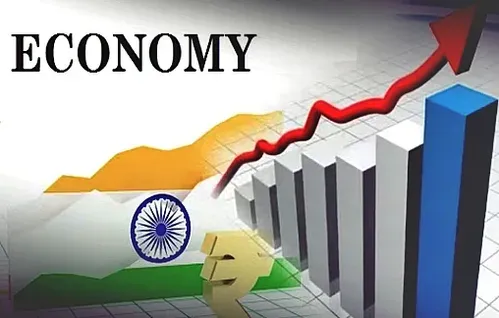
Haryana CM Nayab Singh Saini highlighted the IMF's World Economic Outlook projecting India's GDP growth at 7% for 2026 and 2027, crediting PM Modi's decade of structural reforms and linking the figures to India's Viksit Bharat 2047 development target.
Key Takeaways
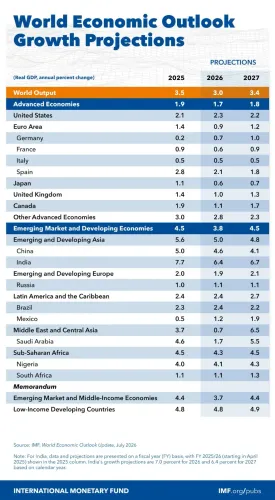
The IMF's latest World Economic Outlook projects India's GDP growth at 7 per cent for both 2026 and 2027 , as cited by CM Saini.
Haryana CM Nayab Singh Saini attributed the forecast to PM Modi's 'strong economic foundation, continuous reforms, and unwavering resolve.' Key reform milestones underpinning the growth story include Make in India (2014) , GST (2017) , and the Atmanirbhar Bharat package (2020) .
India's Viksit Bharat goal targets developed-economy status by 2047 , the centenary of independence, requiring sustained high growth.
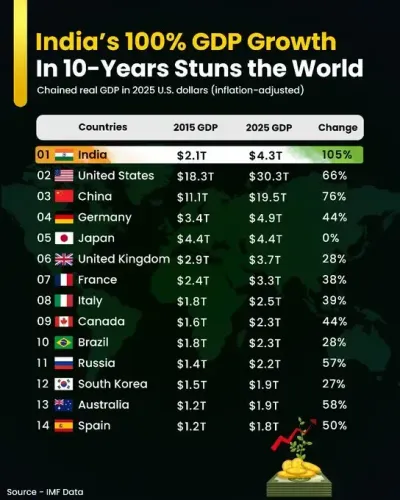
Successive IMF outlooks have consistently ranked India among the fastest-growing major economies globally.
Confirmation of the 7% trajectory hinges on upcoming quarterly GDP prints and the next IMF WEO update .
India is being projected as one of the world's fastest-growing major economies — again. Haryana Chief Minister Nayab Singh Saini on Tuesday, October 13, 2026, pointed to the IMF's latest World Economic Outlook, which estimates India's GDP growth at 7 per cent for both 2026 and 2027, framing the figures as validation of a decade of sustained economic reforms under Prime Minister Narendra Modi.
Posting in Hindi, CM Saini wrote: 'IMF ke naveenatam World Economic Outlook ke anusaar, varsh 2026 aur 2027 mein Bharat ki GDP vriddhi dar 7% rahne ka anumaan hai' — 'According to the IMF's latest World Economic Outlook, India's GDP growth rate is estimated to remain at 7 per cent in 2026 and 2027.' He attributed this trajectory to 'a strong economic foundation, continuous reforms, and an unwavering resolve toward development.'
A decade of reforms behind the number
The 7 per cent projection does not arrive in a vacuum. Since 2014, India has rolled out a sequence of structural interventions — the Make in India initiative to anchor manufacturing, the nationwide GST rollout in 2017 that unified a fragmented indirect-tax system, and the Atmanirbhar Bharat package of 2020 designed to tighten supply-chain resilience after the pandemic shock. Each reform layered onto the last, compounding the country's attractiveness to global capital.
The result has been a consistent pattern in successive IMF outlooks: India positioned at or near the top of the major-economy growth table, even as peers in Europe and East Asia wrestle with sluggish demand and demographic drag. CM Saini's post channels that pattern into a political argument — that the growth story is not accidental but architected.
Viksit Bharat 2047 — the destination behind the data
The backdrop to every GDP headline from New Delhi is the Viksit Bharat vision — India's target to achieve developed-economy status by 2047, the centenary of independence. At roughly 7 per cent annual growth, economists broadly estimate India could quadruple its per-capita income over the next two decades, a precondition for crossing the developed-nation threshold. Saini explicitly linked Tuesday's IMF figures to that long arc, calling India 'continuously advancing toward realising the Viksit Bharat vision.'
For Indian manufacturers and global investors — the two constituencies most sensitive to growth signals — a confirmed 7 per cent trajectory matters in concrete ways: it shapes capital allocation cycles, credit ratings assessments, and the bargaining position Indian negotiators carry into trade and investment talks.
What the next data points will settle
The IMF forecast cited in the post has not been independently verified through official documents, and India's quarterly GDP prints will be the ground-truth test. The next WEO update and India's Q2/Q3 GDP releases will tell whether the 7 per cent projection holds as global headwinds — geopolitical fractures, commodity-price volatility, tightening financial conditions in advanced economies — continue to bite.
Seven per cent may be a number on a spreadsheet in Washington. In New Delhi, it is the political and economic north star — and Tuesday's post is a reminder that no one intends to let the public forget it.
Point of View
If sustained, is materially significant: it keeps India on the trajectory economists say is necessary to reach the Viksit Bharat 2047 threshold, turning a long-horizon aspiration into a near-term accountability benchmark. The move also signals that economic performance, not just welfare delivery, will be central to the BJP's messaging heading into future electoral cycles. The caveat is real, however — IMF projections are conditional, and the gap between a forecast and a confirmed print is where political narratives get stress-tested.
NationPress
13 Oct 2026
Frequently Asked Questions
What does the IMF World Economic Outlook say about India's GDP growth?
According to the IMF's latest World Economic Outlook cited by CM Nayab Singh Saini, India's GDP growth rate is projected at 7 per cent for both 2026 and 2027, positioning it among the fastest-growing major economies globally.
What is Viksit Bharat 2047?
Viksit Bharat is India's national vision to become a developed economy by 2047, the 100th anniversary of independence, through sustained economic reforms, infrastructure expansion, and high GDP growth.
What reforms has India carried out to sustain high GDP growth?
Key reforms include the Make in India initiative launched in 2014 to boost manufacturing, the nationwide GST rollout in 2017 to unify indirect taxation, and the Atmanirbhar Bharat self-reliance package announced in 2020.
Why did Haryana CM Nayab Singh Saini post about India's economy?
CM Saini highlighted the IMF's 7 per cent GDP growth forecast to credit PM Narendra Modi's economic stewardship and reinforce the BJP's narrative of sustained, reform-driven growth toward the Viksit Bharat 2047 goal.
Is India the fastest-growing major economy in the world?
Successive IMF World Economic Outlooks have consistently positioned India at or near the top of the major-economy growth rankings. The latest outlook, as cited by CM Saini, projects a 7 per cent growth rate for 2026-27, which would maintain that standing.