CM Sai's Chhattisgarh Bets on NEP to Shape Every Child's Future
Synopsis
The Chhattisgarh CMO says CM Vishnu Dev Sai's government is implementing NEP 2020 through local-language teaching, modern technology, and skill development — a push that carries particular weight in a state with one of India's largest tribal school-going populations.
Key Takeaways
The Chief Minister's Office of Chhattisgarh announced on 26 October 2026 that the state is implementing NEP 2020 under CM Vishnu Dev Sai .
The three core pillars cited are: local-language instruction, modern technology integration, and skill development.
The National Education Policy 2020 was approved by the Union Cabinet in July 2020 , replacing the 1986 policy framework.
Chhattisgarh's large tribal population makes mother-tongue instruction especially consequential for reducing school dropout rates.
The rollout is linked to the Samagra Shiksha scheme, which channels central and state funds for NEP-aligned reforms.
CM Sai has led a BJP government in the state since December 2023 .
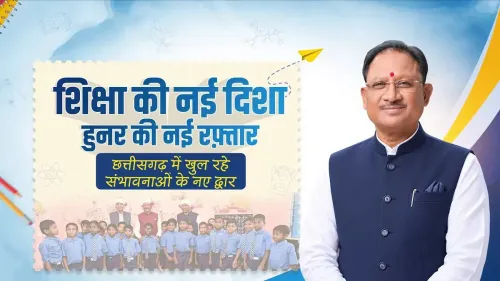
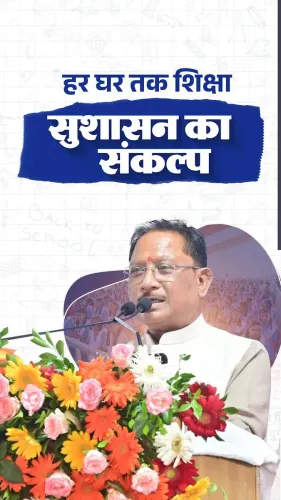
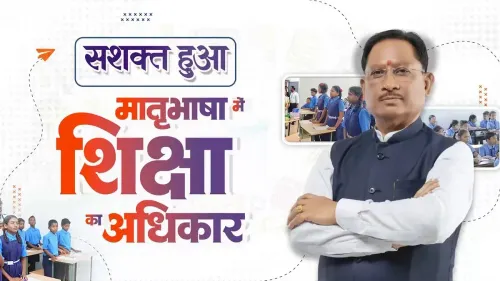
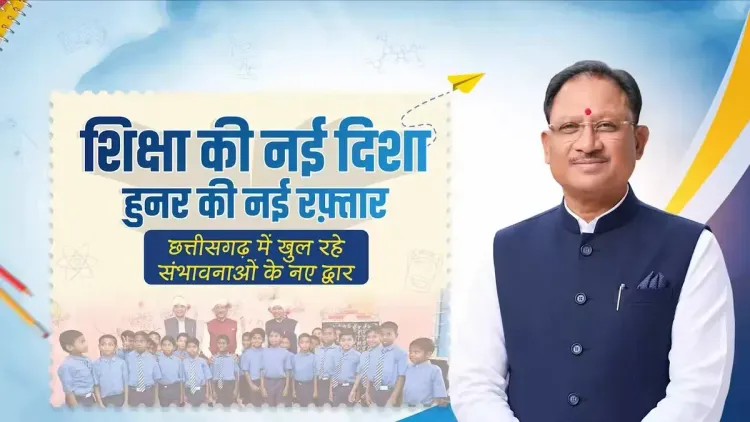
For the tribal heartland of central India, the question has never just been about classrooms — it has been about whether those classrooms speak the children's own language. Under Chief Minister Vishnu Dev Sai, the Chhattisgarh government is now pressing that exact lever, rolling out the National Education Policy (NEP) 2020 framework with a focus on local-language instruction, modern technology, and skill development to sharpen young talent and steer it toward new horizons.
The Chief Minister's Office of Chhattisgarh stated on Monday, 26 October 2026 that the 'Sushasan Sarkar' — the government's self-described good-governance administration — is working continuously to 'polish children's talent and give their future a new direction' through these three pillars. The post underlined a resolve to ensure 'quality education and better opportunities to reach every child.'
What NEP 2020 Actually Demands — and Why Chhattisgarh's Context Is Different
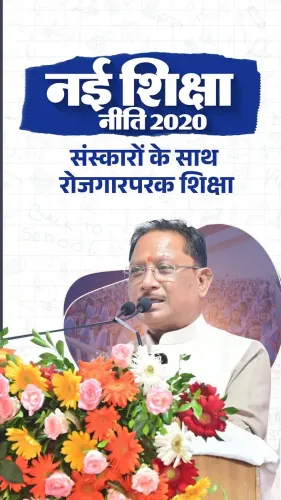
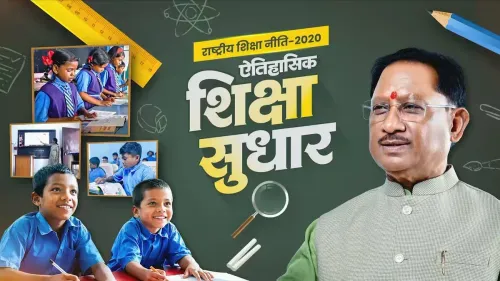
Approved by the Union Cabinet in July 2020, the National Education Policy 2020 replaced India's three-decade-old 1986 education framework. Its headline mandates: teach children in their mother tongue through the early grades, weave vocational skills into the curriculum from school level, and integrate technology as a core learning tool — not an add-on. For most Indian states, this is an administrative pivot. For Chhattisgarh, it is something more urgent.
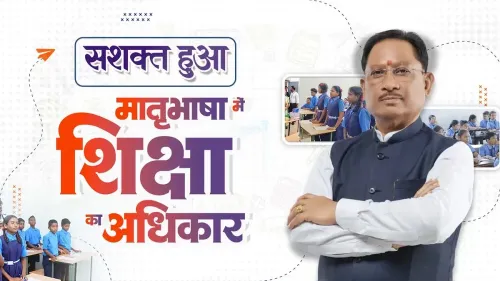
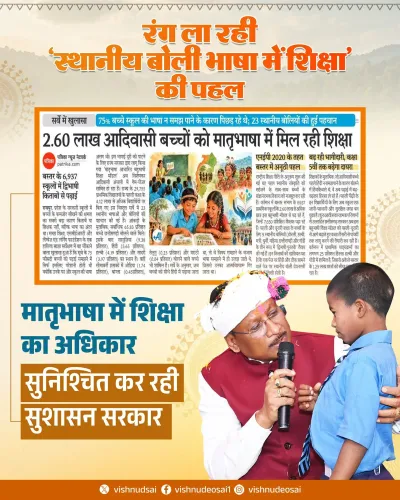
The state carries one of India's largest concentrations of tribal communities, where children frequently begin school with no familiarity with Hindi — let alone English. The gap between the language of instruction and the language of the home has historically been one of the biggest drivers of dropout. Local-language classrooms, if executed well, directly attack that gap.
Skill Development and Technology: The Two Other Pillars
Alongside language, the Sai government's communication emphasises modern technology and skill development as co-equal priorities. Indian states have progressively aligned school curricula with NEP's vocational training provisions since 2021, channelled largely through the Samagra Shiksha umbrella scheme. Chhattisgarh's post-December 2023 government — when Sai took charge following the BJP's state election win — has made these national priorities a consistent thread in its official messaging.
The broader Indian pattern is visible: from Uttar Pradesh to Karnataka, state governments have launched mother-tongue medium blocks, digital classrooms, and school-level vocational modules. Chhattisgarh's positioning within that wave, with its specific tribal-demographic weight, gives the exercise a sharper edge than in more urbanised states.
Who Stands to Gain Most
The stated beneficiaries are school students across the state — and most acutely, tribal children who have historically faced the steepest access barriers. Quality education reaching 'every child,' as the CMO put it, is the ambition. The infrastructure test — trained teachers fluent in local dialects, digital devices in remote schools, vocational labs outside district headquarters — is where stated policy meets daily reality. That rollout is ongoing, and its outcomes will be the true scorecard.
Point of View
Technology) in a single frame. For a BJP government in a state where tribal welfare is an electoral pressure point, emphasising language-inclusive schooling is also deft politics. The real test is institutional: whether teacher training, dialect-appropriate content, and rural infrastructure can convert official resolve into measurable learning outcomes. Until hard data on enrolment, retention, and skill attainment emerges, the policy arc remains a promise in motion.
NationPress
26 Oct 2026
Frequently Asked Questions
What is Chhattisgarh doing under NEP 2020?
Under CM Vishnu Dev Sai, the Chhattisgarh government is implementing NEP 2020 by introducing local-language instruction in schools, integrating modern technology into classrooms, and embedding skill-development modules — with the stated goal of ensuring quality education reaches every child in the state.
What is the National Education Policy 2020?
The National Education Policy 2020 is India's national education framework approved by the Union Cabinet in July 2020. It replaced the 1986 policy and mandates mother-tongue medium instruction in early grades, vocational training from school level, and greater use of technology in learning.
Who is Vishnu Dev Sai?
Vishnu Dev Sai is the Chief Minister of Chhattisgarh, leading the BJP government in the state since December 2023.
Why is local-language education important for Chhattisgarh?
Chhattisgarh has one of India's largest tribal populations, where many children grow up speaking languages and dialects other than Hindi. Teaching in a familiar language in early grades is widely recognised as a key factor in reducing dropout rates and improving learning outcomes for tribal students.
What is the Samagra Shiksha scheme?
Samagra Shiksha is a central government umbrella scheme that funds school education reforms across India, including NEP-aligned initiatives such as mother-tongue medium teaching, digital classrooms, and vocational training programmes at the school level.