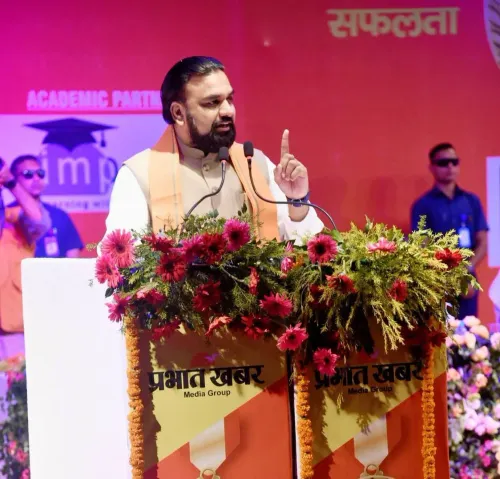
CM Samrat Choudhary at IIT Kharagpur Platinum Jubilee
Synopsis
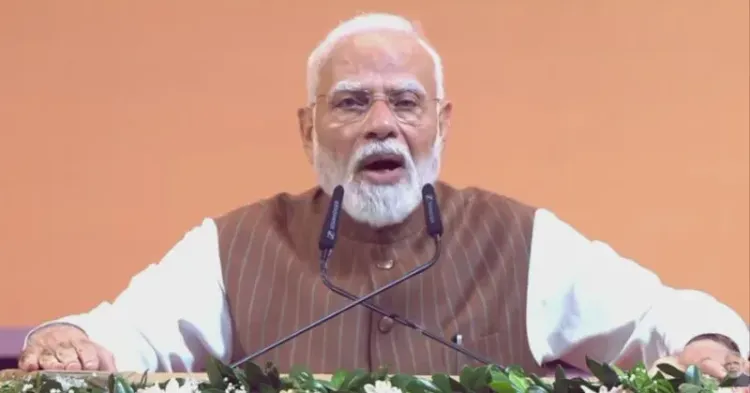
Bihar CM Samrat Choudhary amplified PM Modi's live address at IIT Kharagpur's Platinum Jubilee on 21 November 2026, spotlighting 75 years of India's flagship technical institution and the BJP's higher-education narrative.
Key Takeaways
Bihar CM Samrat Choudhary shared the live stream of PM Modi's address at the IIT Kharagpur Platinum Jubilee on 21 November 2026 .
IIT Kharagpur , founded in 1951 , is India's first IIT and the template for the entire IIT network.
The platinum jubilee marks 75 years of elite technical education that has shaped India's engineering and technology landscape.
Institutional milestone events often serve as platforms for announcements on new academic programmes, research funding, and campus expansions.
The BJP has consistently highlighted technical education expansion as a governance achievement since 2014 .
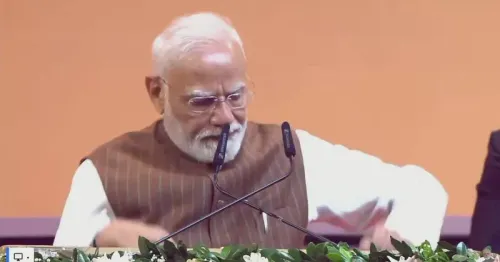
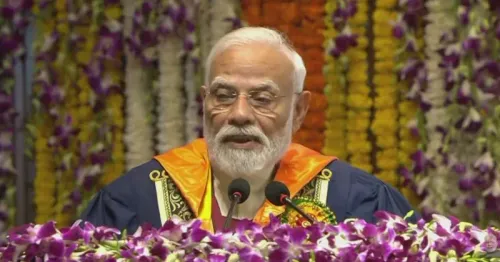
Seventy-five years after India planted its first flag in world-class technical education, Bihar Chief Minister Samrat Choudhary joined a live stream of Prime Minister Narendra Modi addressing the IIT Kharagpur Platinum Jubilee celebrations on Saturday, 21 November 2026 — marking three-quarters of a century for the institution that launched India's IIT revolution.
The institution that started it all
IIT Kharagpur, established in 1951, was not just the first Indian Institute of Technology — it was the founding bet of a newly independent nation that future prosperity would run on engineering and science. Planted on the site of a former British-era detention camp in West Bengal, it transformed into the template every subsequent IIT would follow. Its platinum jubilee is, in a real sense, a seventy-fifth birthday for India's entire elite technical education system.
Modi at the podium, BJP leaders tuning in
CM Choudhary shared the live broadcast on his official X handle, drawing attention to PM Modi's presence at the milestone ceremony. The gesture underlines the BJP's consistent positioning of technical education expansion as a cornerstone of its governance record — from 2014 to the present, the party has presided over significant additions to the IIT network, new research funding streams, and campus infrastructure upgrades across the country.
What a platinum jubilee means for India's STEM ambitions
Institutional milestone events of this scale typically serve as platforms for forward-looking announcements — new academic programmes, enhanced research grants, or campus expansion roadmaps. IIT Kharagpur's seventy-five-year run tracks almost exactly with independent India's own technological arc: from post-independence nation-building through the software boom of the 1990s to the current push into semiconductors, deep tech, and AI research. The anniversary offers a natural stage to frame where that arc heads next.
Point of View
CM Choudhary reinforces the BJP's long-running claim to the technical education narrative — a signal that the party sees STEM investment as an electoral as well as a governance asset. The optics of a Bihar leader spotlighting a West Bengal institution also suggest a deliberate all-India framing, not a regional one. Platinum jubilees rarely stay purely ceremonial in Indian political culture; they typically precede significant policy or funding announcements. If Modi used the occasion to unveil new research or campus commitments, Choudhary's live-share puts Bihar politicians on the right side of that headline.
NationPress
21 Nov 2026
Frequently Asked Questions
When was IIT Kharagpur established?
IIT Kharagpur was established in 1951 , making it the first Indian Institute of Technology and the founding institution of India's IIT network.
What is the IIT Kharagpur Platinum Jubilee?
The Platinum Jubilee marks 75 years since IIT Kharagpur's founding in 1951. The milestone was celebrated on 21 November 2026 with PM Modi addressing a formal ceremony at the campus.
Why did Bihar CM Samrat Choudhary share the IIT Kharagpur event?
CM Choudhary shared the live broadcast on X to highlight PM Modi's participation in a major national education milestone, consistent with the BJP's emphasis on technical education as a governance priority.
Where is IIT Kharagpur located?
IIT Kharagpur is located in Kharagpur, West Bengal , about 120 km from Kolkata. It was built on the site of a former British-era detention camp after independence.
What announcements are expected at IIT Kharagpur's Platinum Jubilee?
Platinum jubilee events at premier institutions typically precede announcements on new academic programmes, expanded research funding, or campus infrastructure upgrades, though specific details from the November 2026 ceremony have not been confirmed.