CM Samrat Choudhary backs ₹10,000 cr SME Growth Fund
Synopsis
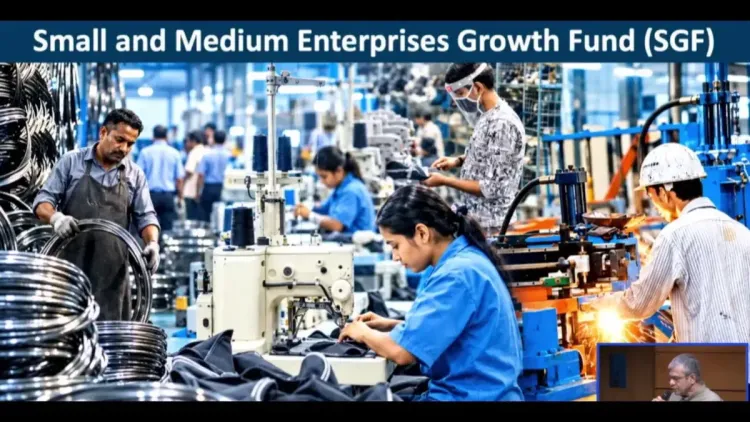
The Union Cabinet has approved a ₹10,000 crore SME Growth Fund to channel long-term capital into high-potential small and medium enterprises. Bihar CM Samrat Choudhary hailed the move as a pillar of PM Modi's Viksit Bharat vision, citing benefits across business expansion, innovation, and global market access.
Key Takeaways
The Union Cabinet approved a ₹10,000 crore SME Growth Fund on 6 October 2026 .
The fund targets SMEs with proven growth potential, providing long-term growth capital — not short-term credit.
Stated goals include business expansion, innovation, new market access, and global opportunity leverage .
Bihar CM Samrat Choudhary linked the scheme to PM Modi's 'Viksit Bharat' national development agenda.
India's MSME sector contributes roughly 30 percent of GDP and is a major source of employment.
The fund addresses the 'missing middle' of enterprise finance where growth-stage SMEs are typically underserved.
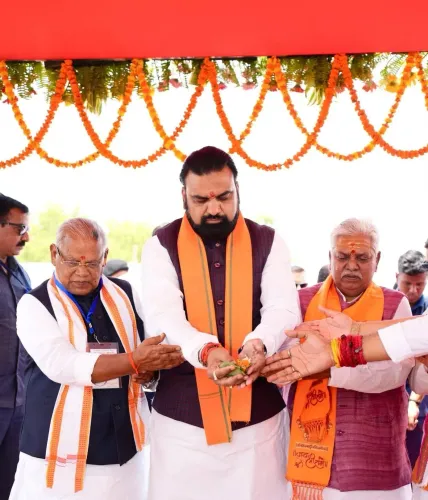
A ₹10,000 crore SME Growth Fund — approved by the Union Cabinet — now stands as one of the most significant injections of long-term growth capital into India's small and medium enterprise ecosystem in recent memory. Bihar Chief Minister Samrat Choudhary welcomed the decision on Tuesday, 6 October 2026, framing it as the foundation on which large industry is inevitably built.
What the ₹10,000 crore fund promises for India's SMEs
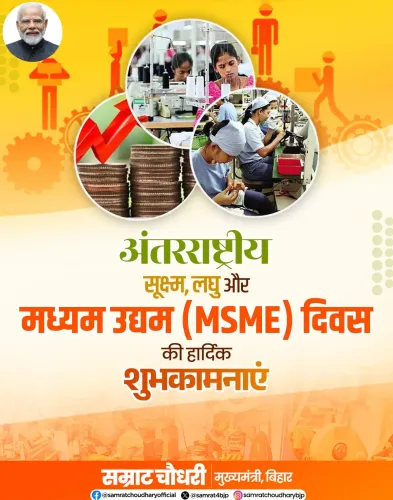
Posting in Hindi, CM Choudhary captured the philosophy behind the initiative in a single line: 'बड़े कारोबार की नींव छोटे उद्यमों से बनती है' — 'the foundation of big business is built by small enterprises.' The SME Growth Fund, he argued, will give those enterprises 'expansion and a new flight.' Concretely, the fund is designed to channel long-term growth capital to SMEs that already demonstrate expansion potential — not survival-stage micro-loans, but patient capital aimed at scale.
The stated objectives span four pillars: business expansion, innovation, access to new markets, and leveraging global opportunities. That last goal is telling. Indian SMEs have long been constrained by domestic demand cycles; a fund explicitly flagging global market access signals an ambition to integrate mid-tier Indian manufacturers and service providers into international supply chains.
Why Bihar's Chief Minister is amplifying a central cabinet call
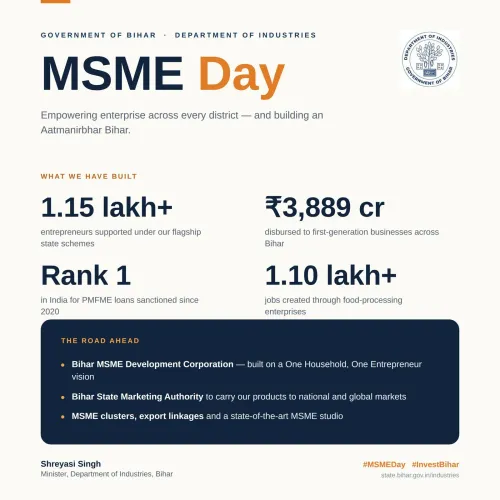
Choudhary's enthusiasm is grounded in Bihar's economic reality. The state has one of the highest concentrations of micro and small enterprises in the Gangetic belt, many operating in agro-processing, handicrafts, and light manufacturing — sectors that are perennially capital-starved at the growth stage. A fund targeting SMEs with scale potential could, in principle, lift some of Bihar's most promising small businesses into the next tier of industry.
The CM tied the announcement explicitly to Prime Minister Narendra Modi's broader 'Viksit Bharat' vision, describing strong MSMEs as 'the new strength of a developed India.' That framing is deliberate: it connects a sectoral financial instrument to a national developmental narrative, positioning the fund not as a subsidy but as a structural lever.
Long-term capital: the gap the fund targets
India's MSME sector — contributing roughly 30 percent of GDP and employing hundreds of millions — has historically struggled not with awareness of opportunity but with access to patient, long-horizon capital. Banks lend short; private equity chases large tickets. The SME Growth Fund, by focusing on long-term growth capital, is designed to plug precisely that middle gap — the 'missing middle' of enterprise finance where promising businesses stall for want of runway.
If structured as an alternative investment fund or a fund-of-funds — a common design for such government-backed vehicles — the ₹10,000 crore corpus could leverage additional private capital, potentially multiplying its real-economy impact several times over.
India's small enterprises have long been told their moment is coming. With ₹10,000 crore now formally approved, the moment has a price tag — and a deadline to deliver.
Point of View
Long-horizon growth capital — a distinction with real economic consequence. By targeting enterprises that already demonstrate expansion potential, the government is betting on a multiplier effect: strengthening the tier of firms most likely to create formal jobs and integrate into export chains. CM Choudhary's vocal endorsement also signals how states with large MSME concentrations, like Bihar, see central capital pools as a substitute for what regional banking networks have failed to deliver. The Viksit Bharat framing ensures the fund doubles as political messaging ahead of any future electoral cycle, but the instrument itself — if efficiently deployed — addresses a gap development economists have long documented.
NationPress
6 Oct 2026
Frequently Asked Questions
What is the SME Growth Fund approved by the Union Cabinet?
The SME Growth Fund is a ₹10,000 crore scheme approved by India's Union Cabinet to provide long-term growth capital to small and medium enterprises that have the potential to expand, innovate, and access new domestic and global markets.
What will the SME Growth Fund be used for?
The fund is intended to support business expansion, innovation, entry into new markets, and leveraging global opportunities for growth-ready SMEs across India.
Why did Bihar CM Samrat Choudhary comment on the SME Growth Fund?
CM Samrat Choudhary welcomed the fund as a major boost to small enterprises, connecting it to PM Modi's 'Viksit Bharat' vision. Bihar has a large concentration of small businesses in agro-processing, handicrafts, and light manufacturing that could benefit from long-term capital.
How does the SME Growth Fund differ from regular MSME loans?
Unlike short-term bank credit, the SME Growth Fund is focused on long-term growth capital for enterprises with demonstrated expansion potential — targeting the 'missing middle' where promising SMEs stall due to lack of patient, longer-horizon funding.
What is the Viksit Bharat vision linked to this fund?
'Viksit Bharat' — meaning 'Developed India' — is PM Narendra Modi's framework for making India a fully developed economy. The SME Growth Fund has been framed as a structural lever within this vision, with strong MSMEs described as a key engine of national economic strength.