CM Samrat Choudhary Backs India-Australia Nuclear Energy Ties
Synopsis
Bihar CM Samrat Choudhary amplified PM Modi's remarks on India's clean-energy roadmap, spotlighting the country's 500 GW renewable target by 2030, a 100 GW nuclear goal by 2047, and Australia's uranium reserves as a strategic asset for India's nuclear journey.
Key Takeaways
Bihar Chief Minister Samrat Choudhary shared PM Modi's remarks on India's nuclear and renewable energy ambitions on 9 July 2026 .
India has set a target of 500 GW of renewable energy by 2030 and net-zero emissions by 2070 , announced at COP26.
The post references the SHANTI Act as having opened India's nuclear sector to private companies for the first time.
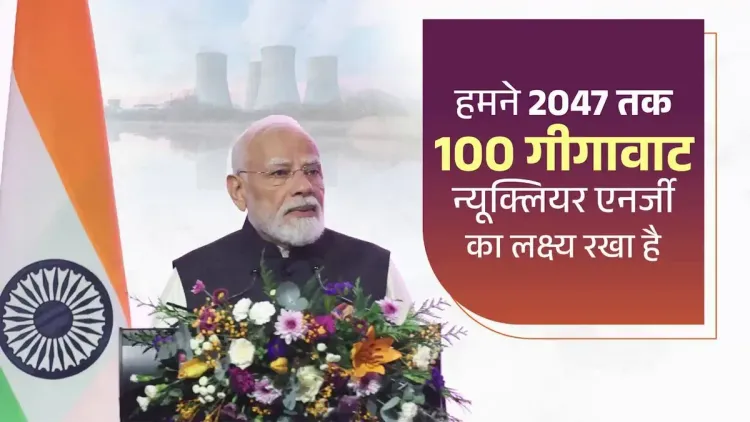
India aims to achieve 100 GW of nuclear energy capacity by 2047 , the centenary of independence.
Australia's uranium reserves are cited as directly linked to India's nuclear energy journey, with 'historic opportunities' for bilateral cooperation.
India and Australia signed a Civil Nuclear Cooperation Agreement in 2014 , laying the groundwork for uranium trade.
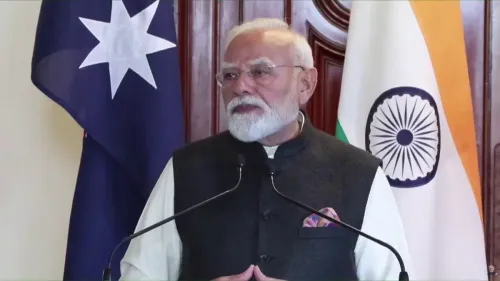
Bihar Chief Minister Samrat Choudhary on Thursday, 9 July 2026, shared remarks attributed to Prime Minister Narendra Modi highlighting India's nuclear energy ambitions and the strategic role of Australia's uranium reserves in fulfilling them, framing the bilateral relationship as a source of 'historic opportunities' for clean-energy cooperation.
Context
The post quotes PM Modi directly, stating: 'ऑस्ट्रेलिया के विशाल यूरेनियम रिजर्व भारत की न्यूक्लियर यात्रा से सीधे रूप से जुड़ते हैं' ('Australia's vast uranium reserves connect directly to India's nuclear journey'). The remarks underscore India's dual-track clean-energy strategy — scaling renewables rapidly while simultaneously expanding nuclear capacity. CM Choudhary amplified the message, signalling broad BJP alignment with the Centre's energy agenda.
Policy Backdrop
At COP26 in 2021, India committed to achieving 500 gigawatts of non-fossil energy capacity by 2030 and reaching net-zero emissions by 2070. The Modi government has since pursued legislative steps to open the nuclear sector — previously a state monopoly — to private companies, with the legislation referred to in the post as the SHANTI Act. The post also cites a target of 100 GW of nuclear energy by 2047, coinciding with India's centenary of independence.
On the bilateral front, India and Australia concluded a Civil Nuclear Cooperation Agreement in 2014, permitting uranium trade for peaceful purposes. Australia holds some of the world's largest uranium reserves, making it a natural long-term fuel partner for India's expanding reactor fleet. The PM's quoted remarks suggest that this foundation is now being positioned for deeper, operationalised engagement.
Stakeholders and Impact
Private energy firms stand to be among the primary beneficiaries if legislative reforms enabling non-state participation in nuclear generation are fully operationalised. Nuclear power developers, equipment suppliers, and fuel-cycle service providers could access a market that has historically been restricted to public-sector entities such as Nuclear Power Corporation of India Limited (NPCIL). For Australia, deeper uranium trade with India would expand its resources export market significantly.
From a consumer and climate standpoint, a larger nuclear fleet would provide stable baseload power to complement intermittent renewable sources — a combination India's grid planners regard as essential to meeting both demand growth and decarbonisation goals by mid-century.
What's Next
Attention will now focus on parliamentary and regulatory steps needed to operationalise private-sector participation in nuclear projects under the framework cited in the post. Equally, follow-up outcomes from India-Australia energy and resources dialogues will determine how quickly uranium supply arrangements can be scaled up. Any formal inter-governmental energy summit or ministerial-level meeting between the two countries is likely to be watched closely as a signal of how fast the bilateral nuclear partnership can move from agreement to active fuel supply.
Point of View
If operationalised, would mark the most significant structural reform in Indian energy policy in decades. The explicit linkage of Australia's uranium reserves to India's 2047 centenary target also frames energy security as an element of national sovereignty, not merely a technical matter.
NationPress
9 Jul 2026
Frequently Asked Questions
What is India's nuclear energy target for 2047?
India has set a target of 100 GW of nuclear energy capacity by 2047 , the year of its centenary of independence, as part of a broader clean-energy strategy alongside 500 GW of renewable capacity by 2030.
What is the SHANTI Act in India?
The SHANTI Act is cited as legislation that opened India's nuclear sector to private companies, ending the historical dominance of state entities. Exact legislative details remain subject to official confirmation.
Why is Australia important for India's nuclear energy plans?
Australia holds some of the world's largest uranium reserves and signed a Civil Nuclear Cooperation Agreement with India in 2014 , enabling uranium trade for peaceful purposes and making it a key potential fuel supplier for India's expanding reactor fleet.
What is India's net-zero target year?
India has committed to achieving net-zero carbon emissions by 2070 , a target announced at the COP26 climate summit in 2021 .
Why did Bihar CM Samrat Choudhary post about nuclear energy?
Bihar CM Samrat Choudhary shared PM Modi's remarks on India's energy goals to signal BJP's unified support for the Centre's clean-energy roadmap, including both renewable expansion and nuclear sector reforms.