CM Samrat Choudhary backs PM Modi's Catch The Rain drive
Synopsis
Bihar Chief Minister Samrat Choudhary on 26 July 2026 amplified PM Modi's Catch The Rain message from Mann Ki Baat, spotlighting a nationwide campaign since 4 July focused on rainwater harvesting, groundwater recharge, water-body revival, and afforestation across India.
Key Takeaways
Bihar CM Samrat Choudhary publicly backed the Catch The Rain campaign on 26 July 2026 via a post quoting PM Modi's Mann Ki Baat address.
The campaign's core message: conserve rainwater at the point where it falls, through local harvesting and storage infrastructure.
A special nationwide drive has been under way since 4 July , covering rainwater collection, groundwater recharge, revival of old water sources, and tree plantation.
Catch The Rain operates under the Jal Shakti Abhiyan , which was first launched in 2019 and initially covered 1,592 water-stressed blocks before nationwide expansion.
Bihar engages with the campaign alongside complementary schemes including the Atal Bhujal Yojana and state Jal Jeevan Mission components.
Post-monsoon groundwater-level data and Union Budget allocations for Jal Shakti are the key metrics to watch in the coming months.
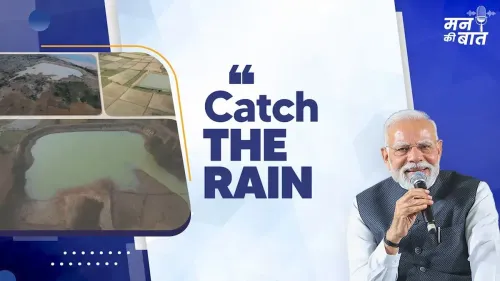
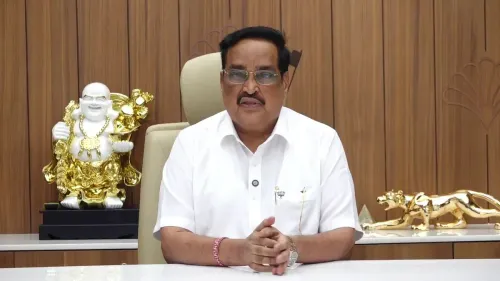
Bihar Chief Minister Samrat Choudhary on Sunday, 26 July 2026 amplified Prime Minister Narendra Modi's Catch The Rain campaign, sharing the Prime Minister's message from Mann Ki Baat and underscoring the nationwide push for rainwater harvesting, groundwater recharge, revival of traditional water bodies, and afforestation.
Context
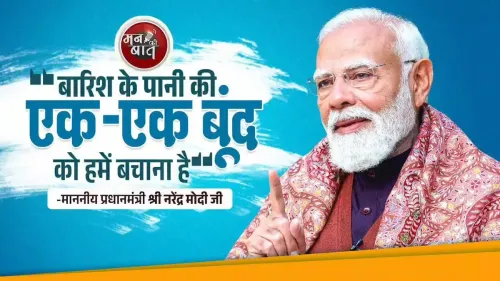
Quoting PM Modi directly, CM Choudhary posted: 'Catch The Rain ka sandesh bahut seedha hai, jahan baarish gire, paani ko waheen sahejiye' — 'The message of Catch The Rain is very simple: wherever rain falls, conserve the water right there.' He noted that a special nationwide campaign has been under way since 4 July, covering rainwater collection, groundwater recharge, revival of old water sources, and tree plantation.
The post was shared in the context of Mann Ki Baat, the Prime Minister's monthly radio programme that has repeatedly highlighted water conservation as a national priority.
Policy Backdrop
The Catch The Rain campaign is a flagship initiative under the Jal Shakti Abhiyan, the Central government's comprehensive water conservation drive first launched in 2019. The Abhiyan initially targeted 1,592 water-stressed blocks across the country before being expanded nationwide, integrating community participation, watershed management, and revival of traditional water bodies.
Bihar participates in the broader Central framework alongside complementary programmes such as the Atal Bhujal Yojana and the state's own Jal Jeevan Mission components. The state's eastern geography makes it particularly sensitive to both monsoon flooding and post-monsoon groundwater depletion, giving local water-body rejuvenation campaigns added urgency.
India's successive national water campaigns reflect a consistent policy response to two converging pressures: erratic monsoon patterns driven by climate variability, and long-term groundwater depletion in agricultural belts. Afforestation, a component highlighted in the current drive, is seen as a complementary tool to improve local water retention and reduce surface run-off.
Stakeholders and Impact
Farmers and rural communities in water-stressed districts stand to benefit most directly from improved groundwater recharge and the rejuvenation of ponds, stepwells, and other traditional water sources. In Bihar, where agriculture remains the primary livelihood for a large share of the population, reliable water access during the dry season is critical to crop planning.
Urban local bodies are also stakeholders, as rainwater harvesting mandates increasingly apply to municipal construction. The afforestation component engages forest departments, panchayats, and voluntary groups, broadening the campaign's community footprint beyond infrastructure works alone.
What's Next
State-level progress reports on water-body rejuvenation and groundwater-table changes are expected after the 2026 monsoon season concludes. Observers will also watch for any revision to Jal Shakti allocations in the next Union Budget as a signal of the Centre's continued commitment to the programme.
For Bihar, CM Choudhary's public amplification of the campaign signals that state machinery is expected to coordinate with district administrations on implementation — a pattern consistent with how previous Jal Shakti Abhiyan phases were rolled out across states.
Point of View
Reinforcing the BJP's governance messaging on environment and water security. The invocation of Mann Ki Baat as the authoritative source signals a top-down communication strategy designed to give national campaigns local visibility. Bihar's participation is also substantively significant: as a state prone to both floods and dry-season water scarcity, water-body rejuvenation has direct electoral and developmental resonance. The pattern fits a broader BJP playbook of using social media amplification by state leaders to extend the reach of Central schemes into regional discourse.
NationPress
26 Jul 2026
Frequently Asked Questions
What is the Catch The Rain campaign?
Catch The Rain is a nationwide rainwater harvesting initiative under the Jal Shakti Abhiyan that urges citizens and local bodies to conserve rainwater at the point where it falls, through storage structures, groundwater recharge, and revival of traditional water bodies.
What did Bihar CM Samrat Choudhary say about Catch The Rain?
On 26 July 2026, CM Choudhary shared PM Modi's Mann Ki Baat message stating that the Catch The Rain campaign's message is simple — conserve water wherever rain falls — and noted a special national drive has been active since 4 July covering harvesting, recharge, water-body revival, and afforestation.
When did the Jal Shakti Abhiyan start?
The Jal Shakti Abhiyan was launched in 2019, initially targeting 1,592 water-stressed blocks across India before being expanded into a nationwide programme.
How does Bihar benefit from the Catch The Rain campaign?
Bihar participates in the campaign alongside schemes like the Atal Bhujal Yojana and Jal Jeevan Mission; the drive supports farmers and rural communities by improving groundwater levels and reviving ponds and other traditional water sources critical during the dry season.
What is Mann Ki Baat and why is it relevant here?
Mann Ki Baat is PM Narendra Modi's monthly radio programme in which he discusses policy initiatives with citizens; CM Choudhary's post quotes the PM's remarks from the programme to highlight the Catch The Rain campaign's national importance.