CM Samrat Choudhary: Bihar Gets ₹2.4L Cr Highway Push

Synopsis
Bihar CM Samrat Choudhary announced 39 NHAI highway projects worth ₹58,340 crore under construction and 11 new projects worth ₹1,85,200 crore proposed, alongside a unique silt-to-roads MoU under the 'Nadi Sanjivani' initiative.
Key Takeaways
39 NHAI projects covering 1,561 km are currently under construction in Bihar at a cost of ₹58,340 crore .
11 new projects spanning 1,982 km are proposed at an estimated ₹1,85,200 crore , bringing the combined pipeline to roughly ₹2.43 lakh crore .
A 'Nadi Sanjivani' MoU between the central and Bihar governments will channel reservoir silt into road construction material.
The silt initiative aims to simultaneously reduce flood-risk sedimentation in Bihar's water bodies and lower road-building material costs.
The highway push is framed within Bharatmala Pariyojana , the central government's flagship highway programme launched in 2015 .
CM Choudhary positions better road connectivity as the key driver of Bihar's industrial and economic growth potential.
Fifty thousand crore rupees already under a shovel, and nearly double that queued up behind it — Bihar Chief Minister Samrat Choudhary has laid out the most detailed public accounting yet of his state's road-infrastructure pipeline, and the numbers demand attention.
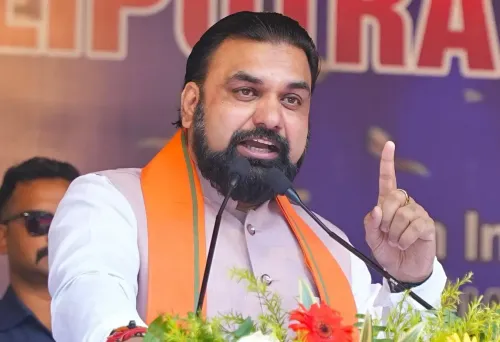
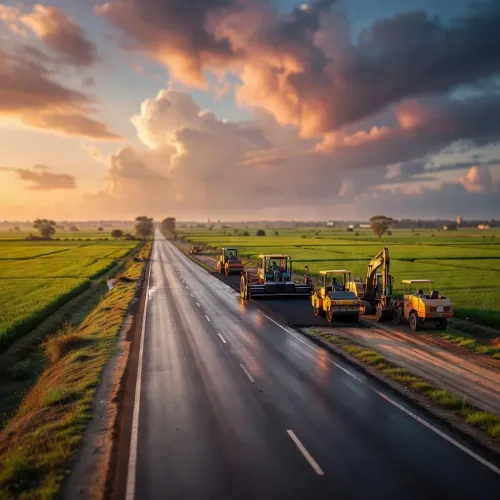
Posting on Tuesday, 3 November 2026, CM Choudhary outlined that 39 NHAI projects spanning 1,561 kilometres are currently under construction across Bihar at a cost of ₹58,340 crore. Stacked on top of that is a second tier of ambition: 11 new projects covering 1,982 kilometres, proposed at an estimated ₹1,85,200 crore — a figure that would rank among the largest state-level highway investment packages in eastern India.
₹2.43 Lakh Crore and 3,543 km: Bihar's Highway Math
Add the active and proposed pipelines together and the combined outlay reaches roughly ₹2.43 lakh crore across 3,543 kilometres of national highway. That corridor, if executed on schedule, would effectively stitch together Bihar's major economic corridors — and the CM's post frames the push explicitly as an unlock for 'economic and industrial possibilities' in a state that has historically lagged in logistics infrastructure.
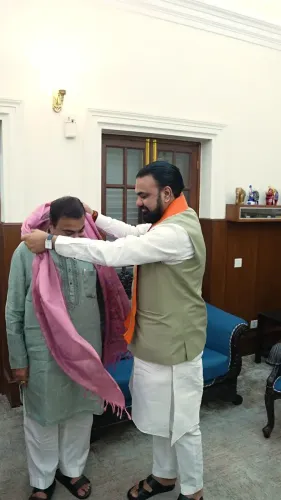
The credit architecture in the post is deliberate: Prime Minister Narendra Modi's 'visionary vision' and Union Minister Nitin Gadkari's guidance are cited as the driving forces. The framing places Bihar's highway story squarely inside the central government's decade-long national highway expansion — a push anchored by the Bharatmala Pariyojana, launched in 2015, which prioritised eastern states as critical connectivity gaps in the national logistics network.
'Nadi Sanjivani': When River Silt Becomes Road Material
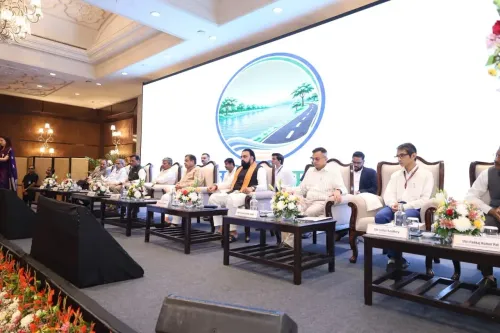
Beyond the headline kilometres and crores, the post flags a genuinely novel policy instrument. Under the 'Nadi Sanjivani: Nadi Punarjeevan Sadak Navnirman' initiative — loosely, 'River Rejuvenation, Road Renewal' — the Government of India and the Bihar government have signed a Memorandum of Understanding to use silt accumulated around reservoirs as raw material for road construction.
The logic is elegant: Bihar's rivers and reservoirs are chronically silt-choked, a problem that reduces water-holding capacity and raises flood risk. Road construction, meanwhile, is a voracious consumer of fill material. The MoU turns one state's environmental headache into another sector's supply-chain solution. If the model scales, it could lower construction costs, reduce the ecological pressure of quarrying, and simultaneously improve reservoir health — three policy wins from a single agreement.
Why Bihar's Road Gap Has Always Been an Economic Argument
Bihar is India's third-most-populous state, yet its per-capita income and industrial output have historically sat well below the national average. Infrastructure economists have long identified poor road connectivity — particularly the last-mile links between rural production zones and state or national highways — as a key constraint on private investment flowing into the state.
The NHAI's current Bihar portfolio, spanning projects across multiple districts, is designed to change that calculus. Faster freight movement lowers logistics costs; lower logistics costs make Bihar more competitive for manufacturing investment; more manufacturing means jobs. The CM's framing of roads as 'doors to new possibilities' is not just rhetorical — it maps directly onto that economic chain.
The next hard test will be execution speed. Sanction and tendering of the 11 proposed projects, and the ground-level rollout of the silt-utilisation MoU, are the milestones to watch. Bihar has seen ambitious project announcements before; what converts announcements into arteries is sustained delivery on the ground.
Point of View
Kilometre lengths, and rupee values, he anchors Bihar's development narrative to verifiable central-government investment rather than state-budget promises alone. The 'Nadi Sanjivani' MoU is the most interesting detail — it layers an environmental dividend onto a connectivity project, a framing style increasingly favoured by the central government to broaden constituency appeal for infrastructure spending. The timing, ahead of any potential Bihar electoral cycle, also reinforces the ruling alliance's 'vikas' (development) argument. The real credibility test, as always in Bihar infrastructure, will be project execution timelines rather than sanction announcements.
NationPress
4 Nov 2026
Frequently Asked Questions
How many NHAI highway projects are currently under construction in Bihar?
39 NHAI projects spanning 1,561 kilometres are currently under construction in Bihar at a total cost of ₹58,340 crore , according to Bihar CM Samrat Choudhary's post on 3 November 2026.
What is the 'Nadi Sanjivani' initiative in Bihar?
The 'Nadi Sanjivani: Nadi Punarjeevan Sadak Navnirman' initiative is an MoU between the Government of India and the Bihar government under which silt accumulated around reservoirs will be used as material for road construction, reducing sedimentation in water bodies while supplying road-building fill.
What is the total estimated cost of Bihar's proposed new NHAI highway projects?
The 11 new NHAI projects proposed for Bihar are estimated to cost ₹1,85,200 crore and would cover 1,982 kilometres of new highway.
What is Bharatmala Pariyojana and how does it relate to Bihar?
Bharatmala Pariyojana , launched in 2015 , is the central government's flagship national highway development programme. Bihar's NHAI project pipeline is part of this broader push to improve connectivity in eastern India.
Who is overseeing Bihar's national highway expansion?
The highway expansion in Bihar is being executed by NHAI under the Ministry of Road Transport and Highways, led by Union Minister Nitin Gadkari , with overall policy direction from Prime Minister Narendra Modi .