CM Samrat Choudhary Congratulates India's IBO Medal Winners
Synopsis
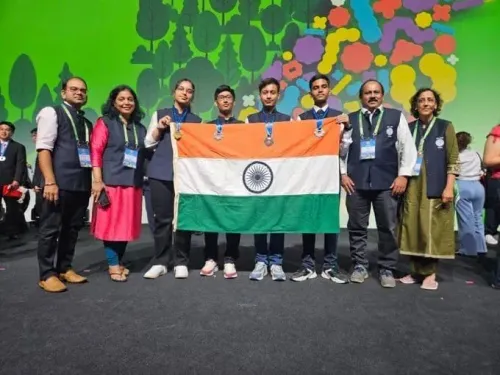
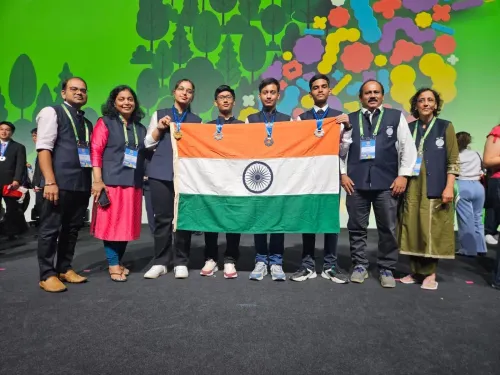
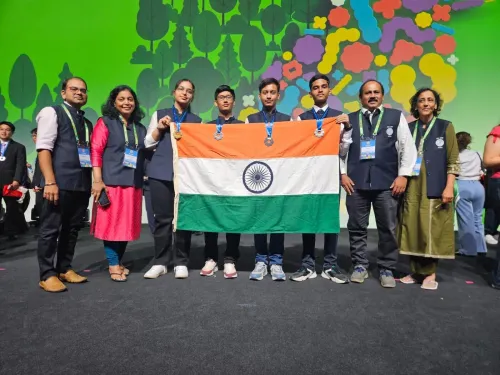
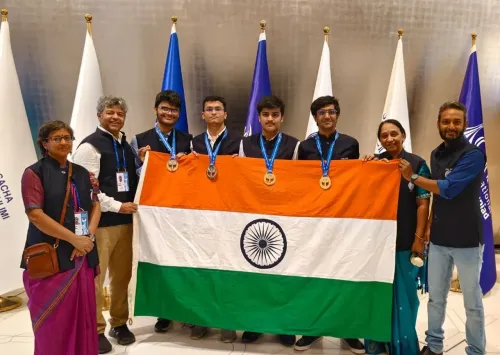
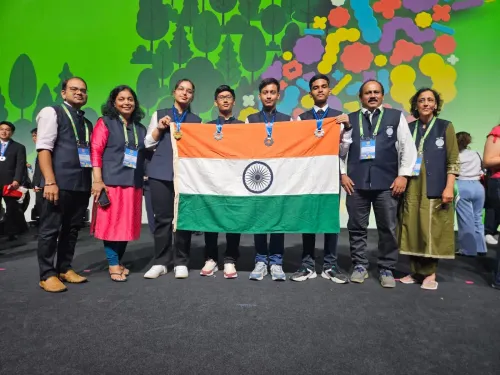
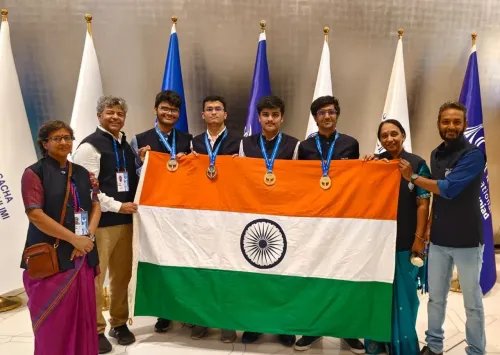
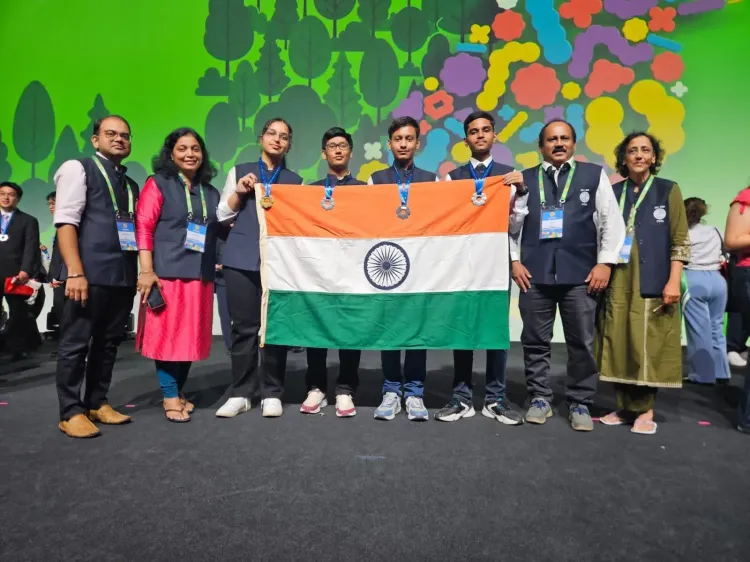
Bihar Chief Minister Samrat Choudhary congratulated all four Indian students — Bhavya Gunwal, Saumil Maiti, Nishit Kalani, and Anmol Kumar — for winning medals at the 37th International Biology Olympiad in Lithuania, calling it a landmark achievement for India's scientific youth.
Key Takeaways
Bihar CM Samrat Choudhary publicly congratulated India's four-member team at the 37th International Biology Olympiad via X on 19 July 2026 .
All four Indian students — Bhavya Gunwal , Saumil Maiti , Nishit Kalani , and Anmol Kumar — won medals at the competition held in Lithuania .
The IBO is one of the most prestigious annual international science competitions for high-school students globally.
National Education Policy 2020 had called for strengthening school-level talent identification and olympiad preparation.
Indian teams have maintained a consistent multi-medal record across international science olympiads over the past two decades.
Choudhary expressed hope that the students' success would inspire greater scientific curiosity and innovation among India's youth.
Bihar Chief Minister Samrat Choudhary on Sunday, 19 July 2026, took to X to congratulate the four Indian students who won medals at the 37th International Biology Olympiad (IBO) held in Lithuania, calling their achievement a reflection of India's young talent, scientific thinking, and relentless hard work.
Context
In his post, Choudhary named the four medal-winning students — Bhavya Gunwal, Saumil Maiti, Nishit Kalani, and Anmol Kumar — and extended his heartfelt wishes to each of them. He wrote, 'vishwa manch par Bharatiya pratibha ne ek baar phir apni utkrishthata ka parichay diya hai' ('On the world stage, Indian talent has once again demonstrated its excellence'). The fact that all four members of the Indian contingent returned with medals made the result particularly noteworthy.
The International Biology Olympiad is one of the most prestigious annual science competitions for high-school students globally. India fields a team of four students each year, selected through a rigorous multi-stage national screening process.
Policy Backdrop
India's sustained performance at international science olympiads is underpinned by a long-standing national talent identification and mentoring pipeline. The National Education Policy 2020 explicitly called for strengthening school-level talent identification and preparation for international science competitions, framing such contests as a key pathway to building future research and innovation capacity.
Over the past two decades, Indian teams have maintained a consistent record of multiple medals across biology, physics, chemistry, and mathematics olympiads. State governments and senior political leaders routinely acknowledge these results publicly, reinforcing a national narrative that links academic excellence in STEM to broader development goals.
Stakeholders and Impact
Choudhary emphasised that the students' success would 'awaken curiosity, innovation, and a spirit of excellence towards science among the youth of the country.' For lakhs of school students across India preparing for competitive science examinations and olympiad pathways, such high-profile recognition from senior political leaders adds visibility and social prestige to STEM pursuits.
The acknowledgment also carries significance for science educators and olympiad coaching programmes, who argue that consistent government-level recognition encourages more students — particularly from smaller towns and states — to aspire to international competition.
What's Next
Attention will now turn to India's performance at the remaining 2026 international science olympiads, including those in physics, chemistry, and mathematics. Any follow-up announcements from the Bihar government on state-level science mentoring or scholarship schemes for olympiad aspirants will be closely watched. The four medal winners are also expected to be received and felicitated by educational authorities in the coming weeks.
Point of View
The statement goes beyond ceremonial acknowledgment and personalises the achievement for a public audience. This fits a wider pattern where state-level leaders use international academic wins to reinforce the government's education reform credentials, particularly in the context of NEP 2020. The post also signals Bihar's aspiration to be seen as a contributor to India's science talent ecosystem, not merely a recipient of central education policy.
NationPress
20 Jul 2026
Frequently Asked Questions
Who are the Indian students who won medals at the 37th International Biology Olympiad?
The four Indian medal winners at the 37th IBO are Bhavya Gunwal , Saumil Maiti , Nishit Kalani , and Anmol Kumar , as named by Bihar CM Samrat Choudhary in his congratulatory post.
Where was the 37th International Biology Olympiad held?
The 37th International Biology Olympiad was held in Lithuania .
What did Bihar CM Samrat Choudhary say about India's IBO performance?
Choudhary called the achievement a reflection of India's young talent, scientific thinking, and relentless hard work, and expressed hope that it would inspire curiosity and innovation in science among the country's youth.
How does India perform at the International Biology Olympiad?
India has maintained a consistent record of winning multiple medals at the IBO and other international science olympiads over the past two decades, with students selected through a rigorous national-level screening process.
What is the International Biology Olympiad?
The International Biology Olympiad (IBO) is an annual global science competition for high-school students in biology, widely regarded as one of the most prestigious academic contests at the pre-university level.