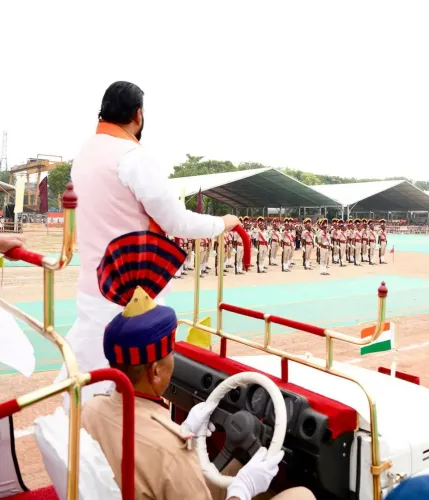
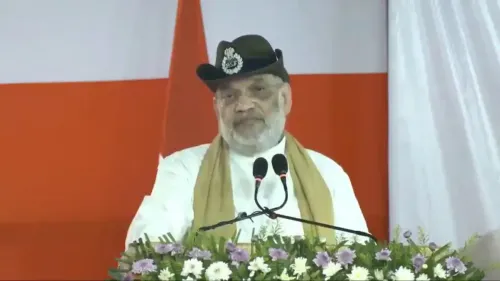
CM Samrat Choudhary credits CAPF for poll violence-free India
Synopsis
Bihar CM Samrat Choudhary amplified Amit Shah's declaration that CAPF jawans have ended electoral violence across Uttar Pradesh, Bihar, and West Bengal, claiming the entire country is now free of poll-day violence.
Key Takeaways
Bihar Chief Minister Samrat Choudhary shared a statement by Union Home Minister Amit Shah on October 21, 2026 .
Shah credited CAPF jawans with ending electoral violence in Uttar Pradesh , Bihar , and West Bengal .
The claim extends to the entire country, with Shah declaring India is now free of electoral violence .
CAPF battalions were previously deployed in Bihar's 2020 assembly elections and UP's 2022 assembly elections to counter booth-capturing and clashes.
West Bengal's inclusion is politically significant given its history as one of India's most violence-prone electoral states.
The messaging fits a broader BJP narrative of central security oversight transforming election conduct since 2014 .
From the booths of Bihar to the lanes of West Bengal, electoral violence — once an accepted fact of Indian democracy — is now being declared a thing of the past. Bihar Chief Minister Samrat Choudhary on Wednesday, October 21, 2026, shared remarks by Union Home and Cooperation Minister Amit Shah crediting the Central Armed Police Forces (CAPF) for delivering a country finally free of poll-day violence.
Shah's claim: three states, one transformation
Quoting Amit Shah directly, CM Choudhary wrote: 'Uttar Pradesh, Bihar aur ab Paschim Bengal se chunavi hinsa samapt karne ka shrey CAPF ke jawanon ko jaata hai' — 'The credit for ending electoral violence in Uttar Pradesh, Bihar, and now West Bengal goes to the CAPF jawans.' Shah's statement goes further, declaring that 'today, the entire country has become free of electoral violence.'
The quote, shared and amplified by the Bihar Chief Minister, positions the achievement as a milestone for the BJP-led central government — and for the uniformed personnel who made it possible on the ground.
CAPF deployments: a decade of building toward this moment
The role of central forces in sensitive state elections is not new. During Bihar's 2020 assembly polls, the Election Commission of India deployed multiple CAPF battalions to counter booth-capturing and faction clashes that had scarred previous cycles. Uttar Pradesh's 2022 assembly elections followed the same template, with heavy central force presence credited for a comparatively peaceful voting process across its 403 constituencies.
West Bengal, historically among the most violence-prone electoral battlegrounds in India, represents the sharpest edge of this claim. Adding Bengal to the list — alongside UP and Bihar — is a pointed political statement, given the state's fraught history of poll-day clashes and booth management disputes.
Why a Bihar CM is amplifying a Bengal story
Samrat Choudhary's decision to share and headline Shah's words is itself a signal. As a senior BJP leader from a state where central force deployments were pioneered, he has a direct stake in the narrative that CAPF-backed elections represent a governance success story — one that began in his own backyard and has now, the party argues, gone national.
The broader BJP messaging since 2014 has consistently framed enhanced central oversight of state-level polling security as a democratic safeguard rather than an encroachment on federal autonomy. Each state where violence reportedly subsides becomes another data point in that argument.
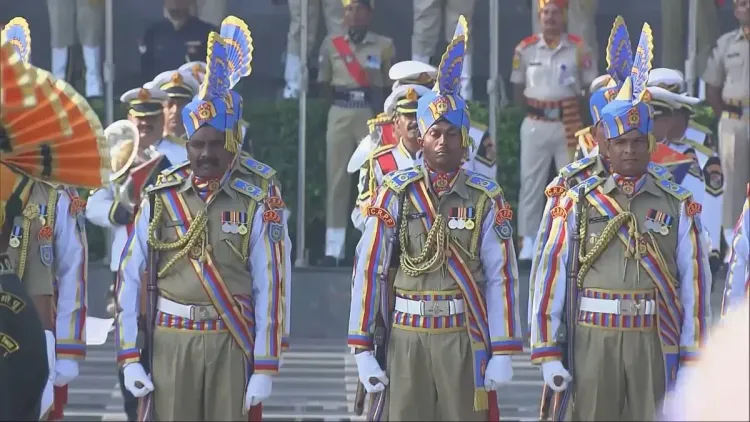
The CAPF jawans Shah — and Choudhary — are saluting today are the same forces that stood at isolated polling stations through Bihar's floods, UP's summer heat, and Bengal's charged political geography. If the claim holds, their boots on the ground may have rewritten one of Indian democracy's most stubborn chapters.
Point of View
Amplified by a BJP Chief Minister, is a carefully constructed political milestone — it ties together three states with distinct electoral histories and presents central security architecture as the unifying solution. Adding West Bengal to the list is the boldest move, given the state's charged political geography and the BJP's ongoing contest with the Trinamool Congress for narrative dominance there. The broader arc here is the gradual normalisation of CAPF presence as a permanent feature of Indian elections — a shift that secures cleaner polling but also raises long-term questions about the balance between central oversight and state election management.
NationPress
21 Oct 2026
Frequently Asked Questions
What did Amit Shah say about electoral violence in India?
Amit Shah credited CAPF jawans with ending electoral violence in Uttar Pradesh, Bihar, and West Bengal, and declared that the entire country is now free of poll-day violence.
What is CAPF and what role does it play in Indian elections?
CAPF stands for Central Armed Police Forces, a group of central paramilitary organisations deployed by the Union government to provide election security in sensitive states, particularly to prevent booth-capturing and political clashes.
Why is West Bengal significant in this election violence context?
West Bengal has historically been one of India's most violence-prone electoral states, making its inclusion in Shah's 'violence-free' list a major political claim and a pointed message in the BJP's contest with the ruling party there.
Who is Samrat Choudhary and why did he share this statement?
Samrat Choudhary is the Chief Minister of Bihar and a senior BJP leader. He shared Amit Shah's statement to highlight the CAPF's success in his own state and to amplify the party's broader election-security narrative.
When were CAPF forces first heavily deployed for Indian state elections?
CAPF battalions were notably deployed in Bihar's 2020 assembly elections and Uttar Pradesh's 2022 assembly elections to counter booth-capturing and factional violence, establishing a template later applied in other states.