CM Samrat Choudhary Hails India's 300 GW Clean Energy Milestone
Synopsis
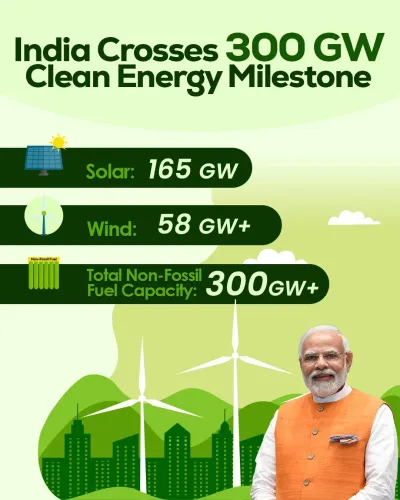
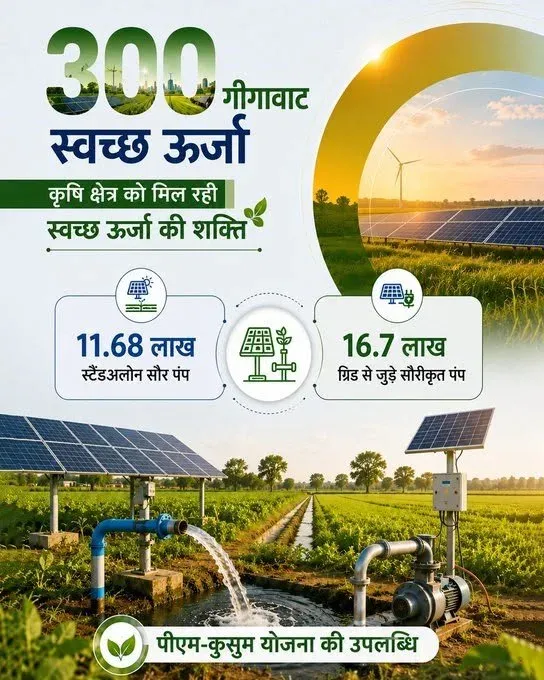
Bihar Chief Minister Samrat Choudhary on August 10, 2026 hailed India crossing 300 GW of non-fossil fuel electricity capacity — a milestone on the path to the 500 GW target pledged at COP26 in 2021, underscoring India's accelerating clean energy transition.
Key Takeaways
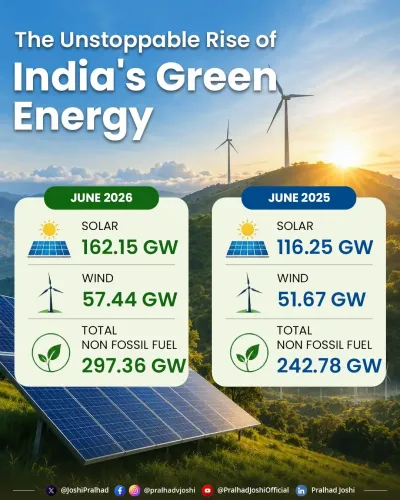
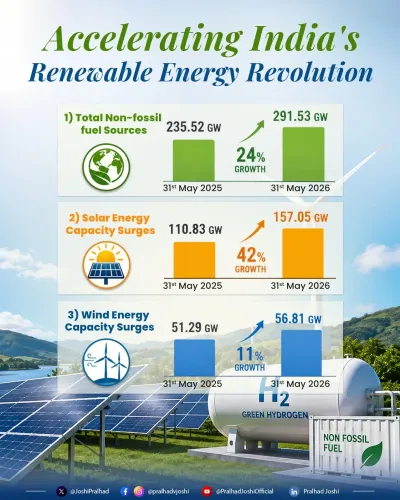
India's non-fossil fuel based electricity generation capacity has crossed 300 gigawatts , as highlighted by Bihar CM Samrat Choudhary on August 10, 2026 .
The milestone represents more than 60 percent of India's 500 GW non-fossil capacity target by 2030 , pledged at COP26 in Glasgow in 2021 .
India's 500 GW target was an update to its earlier 175 GW renewable energy goal set at the Paris Climate Summit in 2015 .
Growth has been led by solar and wind energy , backed by government auctions and the Production Linked Incentive scheme for domestic manufacturing.
India also committed to net-zero emissions by 2070 at COP26, with clean energy capacity expansion forming the foundation of that long-term goal.
India's clean energy story just crossed a landmark threshold — and Bihar Chief Minister Samrat Choudhary is marking the moment. On Monday, August 10, 2026, Choudhary took to X to celebrate India's non-fossil fuel based electricity generation capacity surpassing 300 gigawatts, calling it a new chapter in the country's green energy journey.
In his post, Choudhary wrote: 'भारत की स्वच्छ ऊर्जा यात्रा ने रचा नया इतिहास' ('India's clean energy journey has created new history'), framing the 300 GW milestone as proof of the country's firm resolve toward a greener future and its march toward the 500 GW non-fossil capacity target by 2030.
From Glasgow Pledge to 300 GW Reality
The 500 GW target was not always on the books. At COP26 in Glasgow in November 2021, Prime Minister Narendra Modi announced a sweeping set of climate commitments — among them, achieving 500 GW of non-fossil fuel based electricity capacity by 2030 and reaching net-zero emissions by 2070. That pledge updated India's earlier 175 GW renewable target set at the Paris Climate Summit in 2015, itself a stretch goal at the time.
The 300 GW figure now places India well past the halfway point of that 2030 ambition. Growth has been driven primarily by solar and wind, turbocharged by falling global technology costs and a steady pipeline of government auctions. The Ministry of New and Renewable Energy has anchored this expansion through policy incentives, including the Production Linked Incentive scheme for domestic manufacturing — a push to make India not just a consumer but a maker of clean energy hardware.
What 300 GW Means for Atmanirbhar Bharat
Choudhary explicitly linked the milestone to two of the government's flagship frames: Atmanirbhar Bharat (self-reliant India) and sustainable development. The connection is deliberate — energy self-sufficiency reduces import dependence on fossil fuels, which carry both price volatility and geopolitical risk. A domestic clean energy base hedges against both.
Under the Paris Agreement, India submits Nationally Determined Contributions (NDCs) that chart its emission-reduction roadmap. The 300 GW non-fossil capacity mark strengthens India's standing in that global accounting, arriving well ahead of the decade's end. The next test: whether state-level grid integration and new central tenders can sustain the pace needed to close the remaining 200 GW gap before 2030.
India is not just building capacity — it is building credibility on the world's climate stage. At 300 GW and climbing, the argument is getting harder to dismiss.
Point of View
Making this a strategically timed data point for the ruling establishment. For BJP leaders like Samrat Choudhary, amplifying the achievement ties state-level political capital to a national green narrative that resonates both domestically and internationally. The real policy test, however, lies not in capacity addition alone but in grid integration, storage infrastructure, and whether state utilities can absorb this surge without reliability trade-offs. If India sustains this pace, the 500 GW target shifts from aspiration to expectation — and with it, India's leverage in future climate negotiations.
NationPress
10 Aug 2026
Frequently Asked Questions
Has India crossed 300 GW of renewable energy capacity?
Yes, India's non-fossil fuel based electricity generation capacity has crossed 300 gigawatts , a milestone celebrated by leaders including Bihar CM Samrat Choudhary in August 2026 . This includes solar, wind, and other non-fossil sources.
What is India's clean energy target by 2030?
India has pledged to achieve 500 GW of non-fossil fuel based electricity capacity by 2030 . This commitment was made by Prime Minister Narendra Modi at the COP26 climate summit in Glasgow in November 2021 .
What did India promise at COP26?
At COP26 in Glasgow in 2021 , India committed to 500 GW non-fossil electricity capacity by 2030 , sourcing 50 percent of energy from renewables by 2030 , and achieving net-zero emissions by 2070 .
What is India's original renewable energy target from the Paris Agreement?
At the Paris Climate Summit in 2015 , India set a target of 175 GW of renewable energy capacity by 2022 . This was later scaled up to the 500 GW non-fossil target by 2030 announced at COP26.
Why is Samrat Choudhary talking about clean energy?
Bihar Chief Minister Samrat Choudhary , a senior BJP leader, posted on X on August 10, 2026 to celebrate India crossing the 300 GW clean energy milestone , linking it to the government's Atmanirbhar Bharat and sustainable development goals.