CM Samrat Choudhary Hands Appointment Letters to 2,446 JEEViKA Recruits
Synopsis
Bihar Chief Minister Samrat Choudhary handed appointment letters to 2,446 JEEViKA recruits in Patna on 21 July 2026, citing 10.49 lakh SHGs, 1.11 crore women members, and over 30 lakh Lakhpati Didis as markers of the state's rural livelihoods push.
Key Takeaways
2,446 candidates received appointment letters under JEEViKA at Urja Auditorium, Patna, on 21 July 2026 .
Bihar CM Samrat Choudhary presided over the ceremony and extended congratulations to all new recruits.
Bihar currently has 10.49 lakh self-help groups with more than 1.11 crore women members enrolled under JEEViKA.
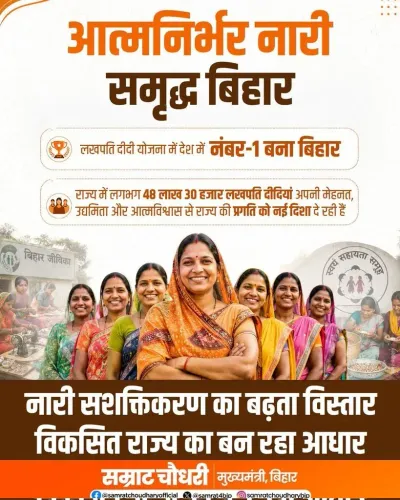
Over 30 lakh women have been designated Lakhpati Didis , having crossed the Rs 1 lakh annual household income mark.
JEEViKA , established in 2007, serves as Bihar's delivery arm for the Central government's National Rural Livelihoods Mission (NRLM) .
The government has pledged further recruitment tranches and income assessments to sustain momentum in rural women's economic empowerment.
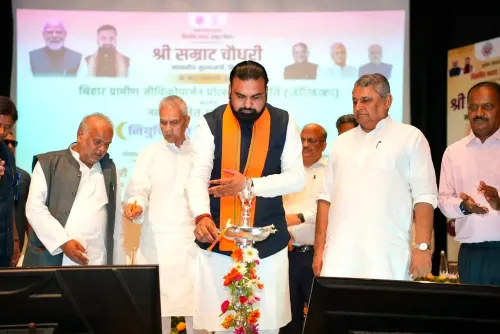
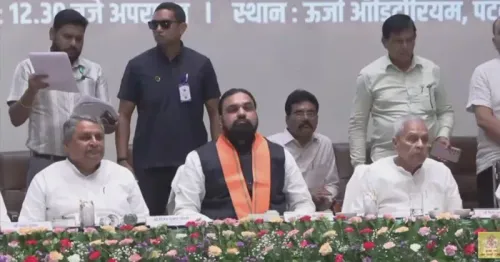
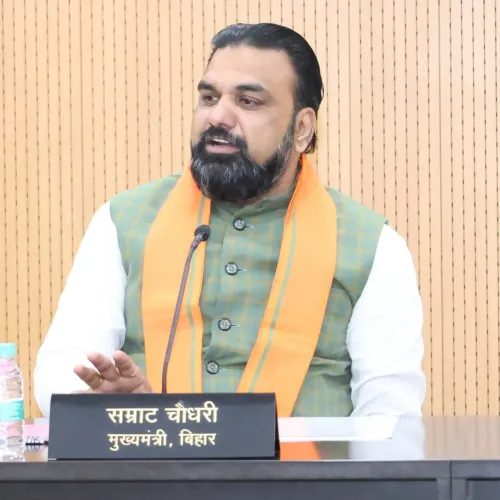
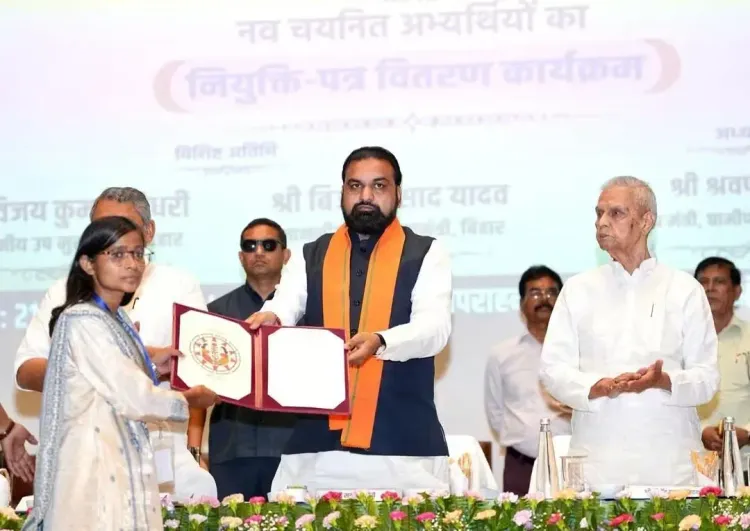
Bihar Chief Minister Samrat Choudhary distributed appointment letters to 2,446 newly selected candidates for various posts under the Bihar Rural Livelihoods Promotion Society (JEEViKA) at a ceremony held at Urja Auditorium, Patna, on Tuesday, 21 July 2026. The event marked one of the largest single-day recruitment drives under the state's flagship rural livelihoods mission.
Context
Posting on X, CM Choudhary said the appointments would secure the futures of young people and bring 'skaratmak badlaav' (positive change) to thousands of families connected to them. He extended his congratulations and best wishes to all newly appointed candidates. The ceremony at Patna's Urja Auditorium was attended by officials and recruits from across the state.
The Chief Minister also cited the current scale of JEEViKA's reach, stating that 10.49 lakh self-help groups (SHGs) in Bihar now connect more than 1.11 crore women, and that over 30 lakh women have become 'Lakhpati Didis' — a designation for SHG members who have achieved annual household incomes of at least Rs 1 lakh.
Policy Backdrop
JEEViKA was established in 2007 as the Bihar Rural Livelihoods Project to organise rural households into self-help groups for sustainable income generation. It functions as Bihar's primary delivery structure under the National Rural Livelihoods Mission (NRLM), launched by the Central government in 2011 to scale SHG-based poverty reduction across India.
The Lakhpati Didi initiative — a joint Central and state scheme — aims to enable women SHG members to cross the Rs 1 lakh annual income threshold through skill-linked livelihood support. Bihar's claim of over 30 lakh such beneficiaries positions the state among the leading performers on this metric nationally.
Stakeholders and Impact
The 2,446 recruits will be deployed across JEEViKA's field and administrative structure, reinforcing the institutional backbone that supports over a crore rural women. Large-scale institutional hiring of this kind is designed to reduce the staff-to-SHG ratio, allowing closer monitoring of livelihood plans and income outcomes at the village level.
For the recruits — drawn largely from Bihar's youth — the appointments represent formal public-sector-adjacent employment in a state where job creation has been a persistent political and policy priority. CM Choudhary framed the drive as part of the government's commitment: 'employment for every poor family, dignity for every woman, and new development opportunities for every village.'
What's Next
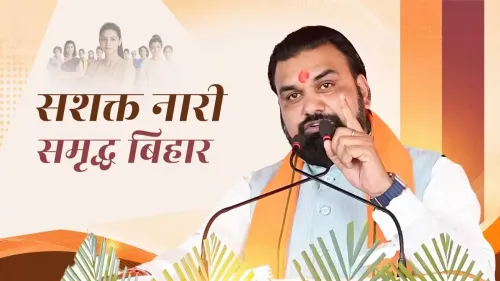
The government is expected to roll out further tranches of JEEViKA appointments as the mission expands its SHG network. Periodic income assessments of Lakhpati Didi households will be a key metric for evaluating whether the expanded workforce translates into measurable gains at the grassroots. Bihar's rural economy model — anchored in women-led SHGs and state-backed livelihoods infrastructure — is increasingly being positioned as a template for 'Samridh Bihar' (Prosperous Bihar), a political and developmental goal the ruling dispensation has made central to its narrative ahead of future electoral cycles.
Point of View
The state is attempting to convert a social programme into an employment pipeline — a model that mirrors NRLM's ambitions nationally but which Bihar has pursued at unusual scale. For CM Choudhary, the optics of handing letters to nearly 2,500 recruits in one sitting serve a dual purpose: demonstrating governance delivery to a young, job-seeking electorate while reinforcing the 'Samridh Bihar' brand. The Lakhpati Didi figures, if sustained under independent verification, would represent a meaningful shift in rural household income — but the political and policy test will be whether institutional expansion translates into measurable income gains rather than headcount metrics alone.
NationPress
21 Jul 2026
Frequently Asked Questions
What is JEEViKA in Bihar?
JEEViKA is the Bihar Rural Livelihoods Promotion Society, established in 2007 to organise rural households — especially women — into self-help groups for sustainable income generation. It is Bihar's implementing body for the Central government's National Rural Livelihoods Mission (NRLM).
How many people got appointment letters at the JEEViKA ceremony on 21 July 2026?
A total of 2,446 newly selected candidates received appointment letters for various posts under JEEViKA at Urja Auditorium, Patna, on 21 July 2026, with Bihar CM Samrat Choudhary presiding.
What is Lakhpati Didi and how many are there in Bihar?
Lakhpati Didi is a Central and state initiative that supports women in self-help groups to achieve annual household incomes of at least Rs 1 lakh. Bihar CM Samrat Choudhary stated that over 30 lakh women in the state have attained this status.
How many self-help groups and women are part of JEEViKA in Bihar?
According to CM Samrat Choudhary's statement on 21 July 2026, Bihar has 10.49 lakh self-help groups under JEEViKA, with more than 1.11 crore women enrolled across the network.
What is Samrat Choudhary's role in Bihar's rural development?
Samrat Choudhary is the Chief Minister of Bihar and a senior BJP leader. He oversees state policy on rural livelihoods, women's empowerment, and employment, including the expansion of JEEViKA and schemes like Lakhpati Didi.