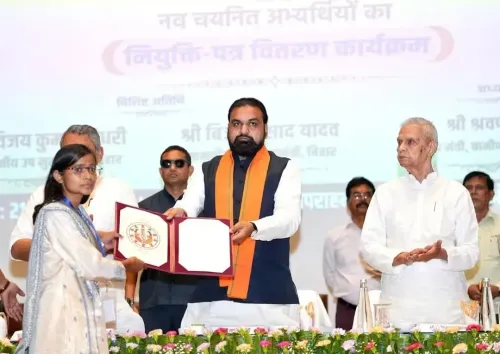
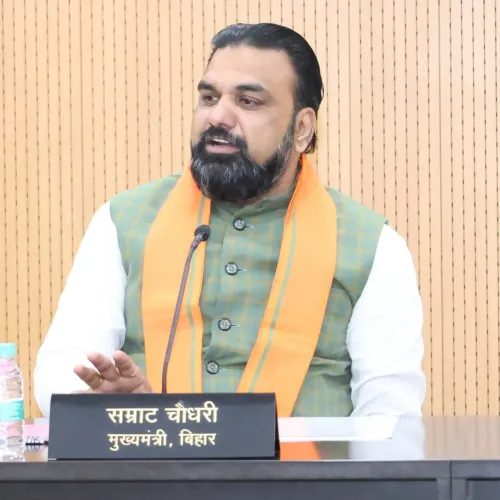
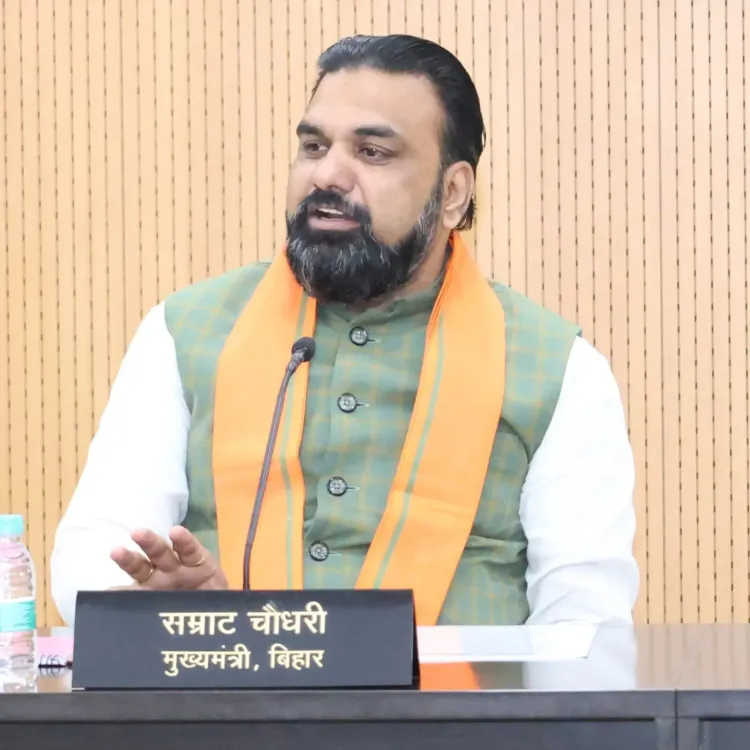
CM Samrat Choudhary: Bihar to hire 1 lakh teachers in 5 years
Synopsis
Bihar CM Samrat Choudhary has announced 1 lakh teacher appointments over five years with annual July recruitment drives, a near-home transfer policy for teachers, and uniform supply through Jeevika SHGs — all directed at a high-level education review meeting on 22 May 2026.
Key Takeaways
1 lakh teachers to be recruited over five years , with at least 20,000 appointments per year .
Recruitment advertisements will be issued every July , creating a fixed annual hiring calendar.
Female teachers to be posted near their home panchayat; male teachers near their home block — both within their home district.
School uniforms for all government school students to be supplied through Jeevika women's self-help groups.
The directives emerged from a high-level review meeting of the Bihar Education Department chaired by CM Samrat Choudhary on 22 May 2026 .
The Jeevika channel is expected to improve both timely delivery of uniforms and women's economic self-reliance across rural Bihar .
Bihar Chief Minister Samrat Choudhary on Friday, 22 May 2026, announced a sweeping set of directives for the state's education sector following a high-level review meeting of the Bihar Education Department. The announcements cover large-scale teacher recruitment, a revamped transfer policy, and a new uniform-supply mechanism linked to the state's women's livelihood network.
Context
Posting on X, CM Choudhary stated: 'राज्य के सभी बच्चों को अच्छी और गुणवतापूर्ण शिक्षा मिले, इसे लेकर हमारी सरकार लगातार प्रयासरत है' ['Our government is continuously working to ensure all children in the state receive good and quality education']. He listed three specific directives issued at the meeting, signalling a structured push to address longstanding gaps in Bihar's government school system.
The review meeting's directives are notable for their specificity: an annual recruitment calendar anchored to July each year, a near-home transfer formula for teachers, and a supply-chain reform for school uniforms. Each directive targets a distinct administrative bottleneck that has historically slowed education delivery in the state.
Policy Backdrop
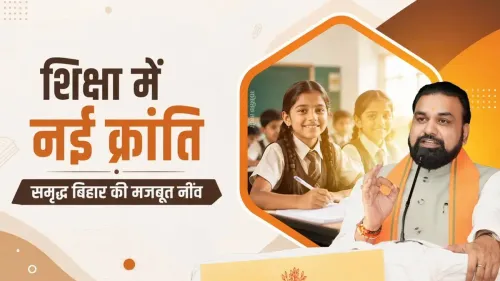
The headline directive commits to recruiting 1 lakh teachers over five years, with a minimum of approximately 20,000 appointments every year. Recruitment advertisements will be issued each July, introducing a predictable annual cycle. Bihar has historically run periodic but irregular teacher recruitment drives since the mid-2000s to fill chronic vacancies, and the new calendar-based approach is designed to reduce gaps between drives.
On transfers, the Bihar Education Department has been directed to frame a policy under which female teachers are posted to a panchayat adjacent to their home panchayat within their home block, while male teachers are transferred to a block adjacent to their home block — both within their home district. The stated aim is to make transfers 'transparent and convenient' (pारदर्शी एवं सुगम), reducing scope for administrative discretion.
For school uniforms, the directive mandates that all government school students across the state receive their uniforms through Jeevika, Bihar's rural livelihoods project that has supported women's self-help groups since 2007. The government argues this will ensure timely supply while simultaneously strengthening women's economic self-reliance (महिला स्वावलंबन).
Stakeholders and Impact
The primary beneficiaries are Bihar's government school students, who stand to gain from reduced teacher vacancies and more reliable uniform supply. Teachers — both prospective recruits and serving staff — benefit from a predictable hiring calendar and a transfer framework that limits arbitrary postings far from home.
Jeevika self-help groups, predominantly rural women, are positioned as a key delivery partner for the uniform supply chain. Routing procurement through these groups is consistent with Bihar's broader policy of linking welfare delivery with women's livelihood programmes, potentially expanding income for thousands of SHG members across the state.
What's Next
The immediate marker to watch is the release of the first recruitment advertisement in July 2026, which will test whether the annual calendar commitment translates into action. Separately, the Bihar Education Department must formally draft and notify the revised transfer policy before it takes effect across districts.
If implemented as announced, the five-year recruitment drive would represent one of the largest sustained teacher-hiring programmes in Bihar's recent history, with direct implications for pupil-teacher ratios in rural and semi-urban schools that have long been stretched thin.
Point of View
Reinforcing the BJP-led government's narrative of convergence between welfare delivery and women's empowerment. The announcements also carry electoral optics: with large numbers of teacher vacancies and transfer grievances perennially mobilising voters in Bihar, a credible commitment to annual recruitment and transparent postings addresses a persistent pressure point. The real test will be whether the first July 2026 advertisement materialises on schedule and whether the transfer policy is formally notified — execution will determine whether this review meeting is remembered as a policy milestone or a routine announcement.
NationPress
8 Oct 2026
Frequently Asked Questions
How many teachers will Bihar recruit in the next five years?
Bihar plans to recruit 1 lakh (100,000) teachers over five years , with a minimum of approximately 20,000 appointments each year . Recruitment advertisements will be issued every July .
What is the new transfer policy for Bihar government teachers?
Under the proposed policy, female teachers will be transferred to a panchayat adjacent to their home panchayat within their home block, while male teachers will be posted to a block adjacent to their home block — both within their home district — to keep postings close to home.
What is Jeevika and why will it supply school uniforms?
Jeevika is Bihar 's rural livelihoods project, active since 2007 , that supports women's self-help groups. The government has directed that school uniforms be supplied through Jeevika to ensure timely delivery and to boost income for rural women's groups.
When did Bihar CM Samrat Choudhary announce the education directives?
CM Samrat Choudhary announced the directives on 22 May 2026 following a high-level review meeting of the Bihar Education Department , and shared them publicly on X.
Why does Bihar need to recruit so many teachers?
Bihar has long faced high pupil-teacher ratios and chronic vacancies in government schools despite multiple recruitment cycles since the mid-2000s. The new five-year plan with an annual calendar is intended to address this persistent shortfall in a structured way.