CM Samrat Choudhary: Wangchuk ends fast after minister talks
Synopsis
Bihar CM Samrat Choudhary hailed the end of Sonam Wangchuk's fast after Union Ministers JP Nadda and Dr. Jitendra Singh visited him at Medanta Hospital, Gurugram, pledging zero tolerance on paper leaks and systemic exam reforms to protect student interests.
Key Takeaways
Union Ministers JP Nadda and Dr.
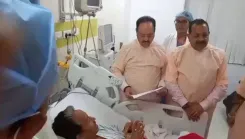
Jitendra Singh met Sonam Wangchuk at Medanta Hospital, Gurugram on 24 July 2026 to convey the government's position on student issues.
Sonam Wangchuk decided to end his fast following the ministerial meeting.
Bihar CM Samrat Choudhary publicly endorsed the outreach, calling student welfare the government's 'highest priority.' The government reaffirmed a zero-tolerance policy on paper leaks and pledged the strictest action against those found guilty.
The Public Examinations (Prevention of Unfair Means) Act, 2024 remains the key legislative instrument backing these commitments.
Attention now turns to the actual rollout of exam-system reforms and follow-up regulatory action.
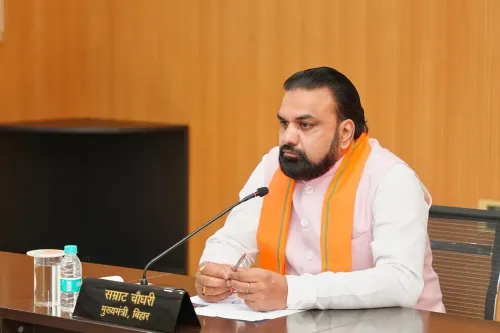
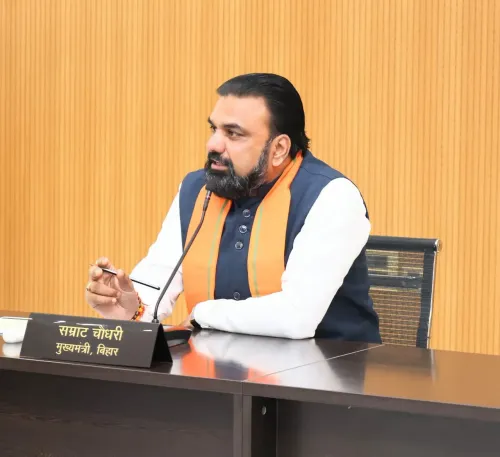
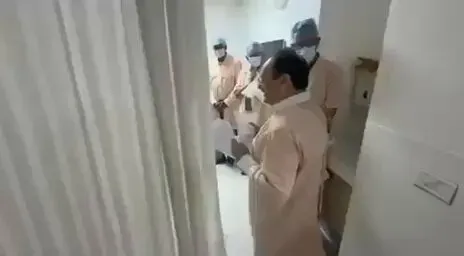
Bihar Chief Minister Samrat Choudhary on Friday, 24 July 2026, welcomed the end of activist Sonam Wangchuk's fast, crediting a high-level ministerial outreach at Medanta Hospital, Gurugram, where Union Ministers JP Nadda and Dr. Jitendra Singh met Wangchuk and conveyed the government's firm commitment to resolving student-related concerns.
In his post, Choudhary stated — 'श्री वांगचुक जी ने अपना अनशन समाप्त करने का निर्णय लिया' ['Wangchuk ji decided to end his fast'] — following the meeting in which the ministers outlined the government's clear stance and pledged concrete solutions on issues affecting students.
Context
Sonam Wangchuk, the Ladakhi innovator and education activist widely recognised for leading public fasts on regional and youth issues, had been on a hunger strike pressing the government on student-related matters. The fast drew national attention, prompting a direct ministerial intervention at the hospital where Wangchuk was being monitored.
JP Nadda, a senior Union Minister and BJP leader, and Dr. Jitendra Singh, Minister of State, personally visited Wangchuk at Medanta Hospital in Gurugram to communicate the government's position and its readiness to act on student grievances.
Policy Backdrop
The government's outreach comes in the context of sustained public pressure over examination integrity. The Public Examinations (Prevention of Unfair Means) Act, 2024 introduced stricter penalties and centralised oversight to address paper leaks and malpractice in national-level competitive exams, following high-profile incidents in tests including NEET.
Choudhary's post reiterates the administration's stated policy of zero tolerance on paper leaks, pledging to make the examination system 'more transparent, impartial, and credible' — 'परीक्षा प्रणाली को अधिक पारदर्शी, निष्पक्ष एवं विश्वसनीय' — and to ensure the 'strictest possible action against those found guilty.'
Stakeholders and Impact
The immediate beneficiaries of any reform are millions of competitive exam aspirants across India who depend on national-level tests for government jobs, medical admissions, and academic placements. Repeated paper-leak incidents in recent years have eroded trust in the examination ecosystem and fuelled student protests.
Civil society figures like Wangchuk have amplified these grievances beyond regional audiences, making the government's response a matter of broader political significance. The Bihar Chief Minister's endorsement of the central government's position signals unified messaging within the ruling alliance on the issue of youth welfare and exam reform.
What's Next
Attention now shifts to the rollout of proposed exam-system reforms and any follow-up legislative or regulatory actions on paper-leak prevention. The government has committed to implementing 'necessary reforms effectively' — a pledge that observers and student groups will track closely through parliamentary sessions and regulatory announcements.
Choudhary's post frames protecting 'the dreams of the youth' and 'building their bright future' as the administration's 'highest priority,' setting a benchmark against which upcoming policy actions on examination integrity will be measured.
Point of View
Seen repeatedly after exam-integrity controversies, pairs high-visibility outreach with legislative references like the 2024 anti-paper-leak law to signal seriousness without making specific new commitments. The broader arc points to the ruling alliance seeking to consolidate support among competitive exam aspirants, a politically significant demographic, ahead of state and national electoral cycles. Whether the pledges translate into measurable reform will define the credibility of this outreach.
NationPress
24 Jul 2026
Frequently Asked Questions
Why did Sonam Wangchuk end his fast?
Sonam Wangchuk ended his fast after Union Ministers JP Nadda and Dr. Jitendra Singh met him at Medanta Hospital in Gurugram and conveyed the government's clear position and commitment to resolving student-related concerns, according to Bihar CM Samrat Choudhary's post on 24 July 2026.
What did JP Nadda and Dr. Jitendra Singh discuss with Sonam Wangchuk?
The ministers communicated the government's stance on student issues and its firm commitment to solutions, including zero tolerance on paper leaks and making the examination system more transparent and credible.
What is India's policy on exam paper leaks?
The central government enacted the Public Examinations (Prevention of Unfair Means) Act, 2024, which introduced stricter penalties and centralised oversight to prevent paper leaks and malpractice in national competitive exams.
Where did the ministers meet Sonam Wangchuk?
The meeting took place at Medanta Hospital in Gurugram, where Wangchuk was being monitored during his fast.
What is Bihar CM Samrat Choudhary's role in this development?
Bihar Chief Minister Samrat Choudhary, a senior BJP leader, publicly welcomed the ministerial outreach and Wangchuk's decision to end his fast, reiterating the Modi government's commitment to exam integrity and student welfare.