CM Samrat Choudhary Launches Four-Point Bihar Education Overhaul
Synopsis
Bihar Chief Minister Samrat Choudhary announced four simultaneous education reforms on 9 August 2026: a state quality committee, an AI-focused exam reform panel, student consultation camps, and new welfare directorates — signalling a coordinated overhaul of the state's school system.
Key Takeaways
A state-level quality education committee will work to make every Bihar school a centre of excellence with continuous learning improvement.
A state-level Examination Reform Committee will recommend using AI and technology for fairer, more modern board, competitive, and classroom assessments.
Special cooperation camps will bring the Chief Minister, ministers, MPs, and MLAs into direct dialogue with students on education problems and solutions.
Directorates will be created across all relevant departments to improve coordination and implementation of student welfare schemes.
The reforms align with the National Education Policy 2020 framework on technology integration and student-centric evaluation.
Committee compositions, mandates, and operational timelines are yet to be detailed in official notifications.
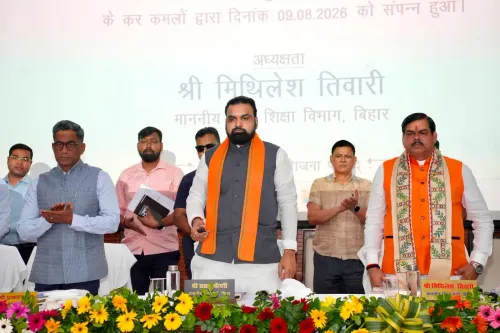
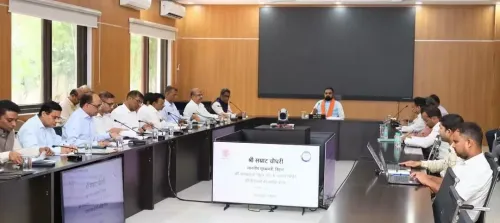
Four structural decisions — announced together, in writing, with no ambiguity — signal that Bihar Chief Minister Samrat Choudhary is moving the state's education system onto a reform footing in one deliberate push. The announcements, shared on Sunday, 9 August 2026, cover quality oversight, exam modernisation, student consultation, and welfare coordination simultaneously.
A State-Level Quality Committee for Every School
The first announcement establishes a state-level committee for quality education, tasked with ensuring that every government school in Bihar becomes, in the CM's words, 'utkrishtta ka kendra' — a centre of excellence. The mandate is continuous improvement in student learning levels, not a one-time audit. Bihar's school system, which expanded dramatically after 2005 in enrollment and infrastructure, has long faced the harder challenge of translating access into measurable learning outcomes. This committee is positioned as the mechanism to close that gap.
AI and Technology to Reshape Bihar's Exam Architecture
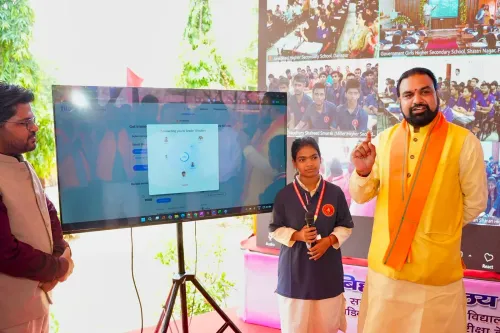
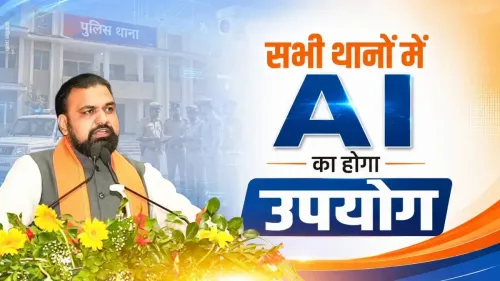
The second — and arguably most consequential — announcement creates a state-level Examination Reform Committee. Its scope runs from board and competitive examinations all the way down to classroom-based assessment. Critically, the committee is directed to recommend the use of technology and artificial intelligence to evaluate students' knowledge, comprehension, and analytical ability more accurately. The Bihar School Examination Board, which conducts secondary examinations for millions of students, would be among the primary institutions affected by whatever the committee recommends. The framing — transparency, fairness, and modernity — is a direct acknowledgement that the current system has structural weaknesses.
Special Camps to Bring Students Into the Reform Conversation
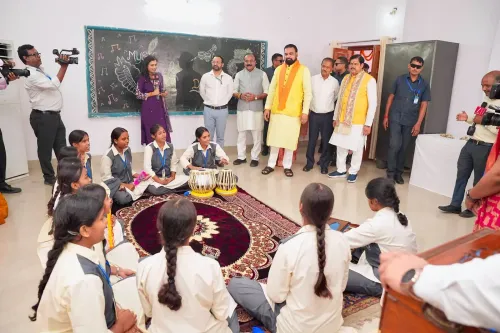
The third announcement breaks from the committee-formation pattern: special cooperation camps will be held at which the Chief Minister, ministers, Members of Parliament, and legislators will directly hear students' suggestions and problems. It is a rare structural commitment to student voice in a state-level policy process, and it puts elected officials — not just bureaucrats — in the room with the people most affected by the reforms.
A New Directorate Architecture for Student Welfare
The fourth announcement addresses the chronic problem of inter-departmental fragmentation. Directorates will be formed across all relevant departments to improve coordination and effective implementation of student welfare work. Without a single nodal structure, welfare schemes — scholarships, mid-day meals, uniforms, cycle distribution — often stall between departments. The new directorate layer is designed to fix that execution gap.
Bihar's four-part announcement tracks closely with the ambitions of the National Education Policy 2020, which pushed states to integrate technology into assessments and shift evaluation toward competency rather than rote recall. Several states have moved in this direction since 2020; Bihar is now formally joining that wave — but with a notably wider scope, running quality reform, exam reform, democratic consultation, and welfare coordination in parallel. Whether the committees translate into operational change will depend on the timelines and mandates that official notifications carry. Those details are the next thing to watch.
Bihar has committed to quality education, a better examination system, and the building of a brighter future for its students. The architecture is now on paper. Execution is the test.
Point of View
Rather than sequential reform, can compress Bihar's education modernisation timeline. Placing AI-driven assessment reform on the agenda is politically significant — it signals alignment with the Centre's NEP 2020 vision while giving the state government ownership of implementation. The student consultation camps are an unusual democratic gesture that could build public legitimacy for reforms that often face teacher-union resistance. The real test will be whether the directorates and committees receive clear mandates and deadlines, or remain on paper — a distinction Bihar's past reform cycles have not always managed well.
NationPress
23 Sept 2026
Frequently Asked Questions
What education reforms did Bihar CM Samrat Choudhary announce?
Bihar CM Samrat Choudhary announced four reforms on 9 August 2026: a state-level quality education committee, an Examination Reform Committee recommending AI and technology use in assessments, special student consultation camps involving elected officials, and new directorates across departments for student welfare coordination.
How will AI be used in Bihar's exam system?
The newly formed Examination Reform Committee will suggest ways to use technology and artificial intelligence to better evaluate students' knowledge, comprehension, and analytical ability in board exams, competitive exams, and classroom-based assessments.
What are the special cooperation camps announced by Bihar CM?
Special cooperation camps are planned sessions where the Chief Minister, ministers, MPs, and MLAs will directly interact with students to hear their suggestions and problems related to education — making student voice a formal part of the reform process.
What is the Bihar Student Welfare Directorate?
Bihar plans to form directorates across all departments related to student welfare to improve inter-departmental coordination and ensure effective implementation of welfare schemes for students.
How do Bihar's education reforms relate to the National Education Policy 2020?
Bihar's reforms closely mirror NEP 2020 priorities — technology integration in assessments, student-centric evaluation, and quality improvement in every school — placing Bihar among states actively translating the central policy framework into state-level institutional action.