CM Sawant lauds Goa teacher's water project featured on Mann Ki Baat
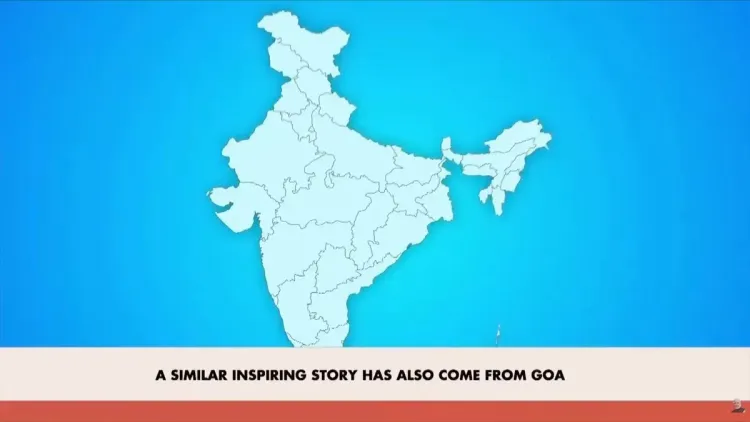
Synopsis
Goa Chief Minister Pramod Sawant celebrated retired teacher Balkrishna Ayya's community-led pipeline project in Muddi-Tolop after Prime Minister Modi spotlighted it on Mann Ki Baat, calling the national recognition a proud moment for Goa and an example of local initiative solving water scarcity.
Key Takeaways
Goa CM Pramod Sawant publicly praised retired teacher Balkrishna Ayya on 31 May 2026 after PM Modi featured his work on Mann Ki Baat .
Balkrishna Ayya led a community-driven pipeline project in the Muddi-Tolop area, bringing piped water to households that had faced prolonged water scarcity.
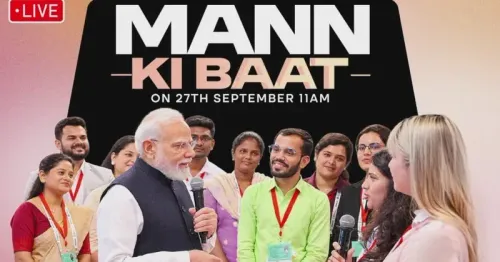
Mann Ki Baat , launched in October 2014 , is PM Modi's monthly radio programme that regularly spotlights grassroots citizen achievements across India.
The initiative aligns with the Jal Jeevan Mission (launched 2019 ), which promotes community participation in delivering rural piped water connections.
CM Sawant described the national recognition as 'a proud moment for Goa,' linking local problem-solving to the broader citizen-driven governance model.
The story could serve as a replicable model for community-led water access solutions in other rural areas across India.
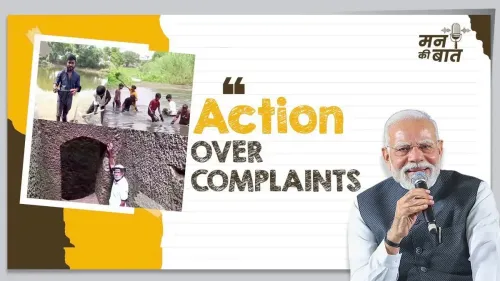
Goa Chief Minister Pramod Sawant on Sunday, 31 May 2026, praised retired teacher Balkrishna Ayya after Prime Minister Narendra Modi highlighted Ayya's community-driven pipeline project in the monthly radio programme Mann Ki Baat, calling it a proud moment for the state. Ayya had led a grassroots effort to bring piped water to several households in the Muddi-Tolop area of Goa, ending years of water scarcity for the families there.
Context
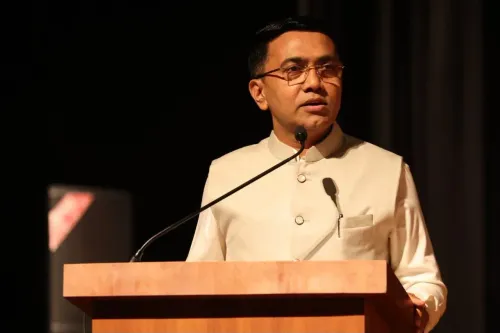
In his post, CM Sawant described how Balkrishna Ayya, a retired teacher, took the initiative to organise a community-led pipeline project in the Muddi-Tolop locality, which had struggled with water scarcity for years. Sawant wrote that the effort represented 'a story of local initiative, community participation and transformational change' that had now been 'showcased before the entire nation.'
The recognition came through Mann Ki Baat, Prime Minister Modi's monthly nationwide radio address, which regularly features citizen-led achievements from across India to inspire replication at scale.
Policy Backdrop
Mann Ki Baat was launched in October 2014 as a platform for the Prime Minister to communicate directly with citizens and spotlight grassroots success stories spanning health, education, environment, and basic services. Over successive episodes, the programme has consistently featured individual and community-led solutions to drinking water challenges.
The broader national context is the Jal Jeevan Mission, launched in 2019, which aims to provide piped water connections to rural households through community participation. Ayya's pipeline initiative in Muddi-Tolop reflects precisely the citizen-driven model that the mission seeks to encourage and institutionalise across rural India.
Stakeholders and Impact
The most immediate beneficiaries are the rural households in the Muddi-Tolop area who now have access to piped water after years without a reliable supply. Community volunteers who participated alongside Balkrishna Ayya in building the pipeline are also central to the story, demonstrating that local problem-solving can deliver results where formal infrastructure has lagged.
For Goa as a state, the national spotlight via Mann Ki Baat elevates a relatively small locality's achievement to a model that other communities across India may look to replicate. CM Sawant's public acknowledgement also reinforces the state government's alignment with centrally promoted citizen-participation frameworks.
What's Next
Subsequent episodes of Mann Ki Baat will be watched to see whether additional stories from Goa receive national recognition, a pattern that state governments have increasingly sought to cultivate. At the state level, progress on rural water connection targets under ongoing central and state schemes will indicate whether community-led models like Ayya's are being formally integrated into policy delivery.
The visibility generated by the Prime Minister's mention could also prompt local administrators in Goa and other states to document and scale similar grassroots water projects, turning a single teacher's initiative into a replicable template for rural water access.
Point of View
Reinforcing the narrative that communities — not only the state — can solve infrastructure gaps. By amplifying the moment, CM Sawant is simultaneously aligning Goa's governance story with the Centre's outreach platform, a pattern seen across BJP-governed states seeking to demonstrate policy convergence. The episode also carries implicit messaging around the Jal Jeevan Mission, framing grassroots water projects as proof of the mission's philosophy in action. In a state where rural water access remains a live issue, the national spotlight on a single retired teacher's effort could generate both administrative momentum and public pressure to document and scale similar initiatives.
NationPress
15 Oct 2026
Frequently Asked Questions
Who is Balkrishna Ayya and what did he do in Goa?
Balkrishna Ayya is a retired teacher from Goa who organised a community-driven pipeline project in the Muddi-Tolop area, bringing piped water to households that had struggled with water scarcity for years. His grassroots effort earned national recognition when PM Modi mentioned it on Mann Ki Baat .
Why did PM Modi mention Balkrishna Ayya on Mann Ki Baat?
PM Narendra Modi highlighted Balkrishna Ayya's community pipeline project on Mann Ki Baat as an inspiring example of local initiative and citizen-driven problem-solving in addressing rural water scarcity, consistent with the programme's focus on grassroots achievers.
What is Mann Ki Baat and when did it start?
Mann Ki Baat is a monthly nationwide radio programme launched by Prime Minister Narendra Modi in October 2014 . It features citizen success stories, policy outreach, and grassroots achievements from across India to inspire community participation.
What is the Jal Jeevan Mission and how does it relate to this story?
The Jal Jeevan Mission was launched in 2019 to provide piped water connections to rural households through community participation. Balkrishna Ayya's pipeline initiative in Muddi-Tolop exemplifies the citizen-driven model the mission promotes.
What did Goa CM Pramod Sawant say about the Mann Ki Baat feature?
CM Pramod Sawant called it 'a proud moment for Goa,' saying the story of 'local initiative, community participation and transformational change' had been showcased before the entire nation through PM Modi's Mann Ki Baat .