CM Sawant Highlights Goa Couple's ₹1.5 Lakh/Month Cage Fish Farm
Synopsis
Goa Chief Minister Pramod Sawant has highlighted how Agnelo Luis and his wife from Curtorim built a cage fish farming enterprise with PMMSY support, now earning over ₹1.5 lakh monthly — a model the CM links to the Swayampurna Goa and Viksit Bharat visions.
Key Takeaways
Agnelo Luis and his wife from Curtorim, Goa built a cage fish farming unit with support from the Pradhan Mantri Matsya Sampada Yojana .
The farm now generates an income of over ₹1.5 lakh per month , according to CM Pramod Sawant's post dated 18 July 2026 .
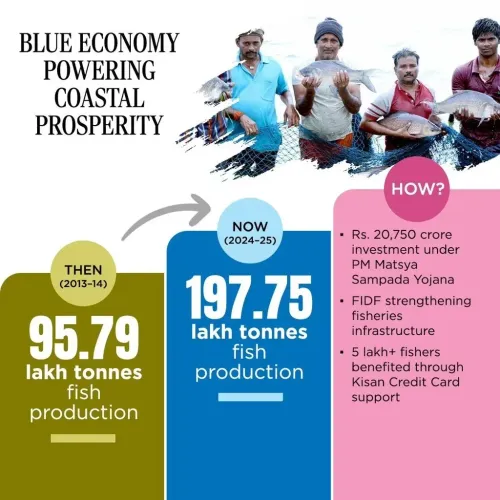
PMMSY was launched in May 2020 with a national outlay of ₹20,050 crore to modernise India's fisheries sector.
Goa has integrated PMMSY with its Swayampurna Goa self-reliance mission and the national Viksit Bharat 2047 framework.
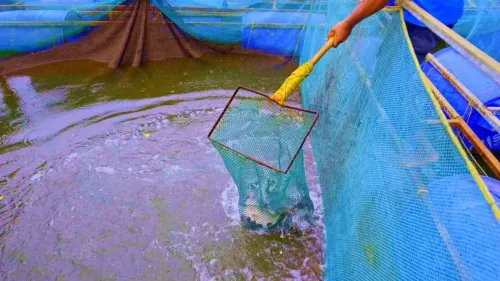
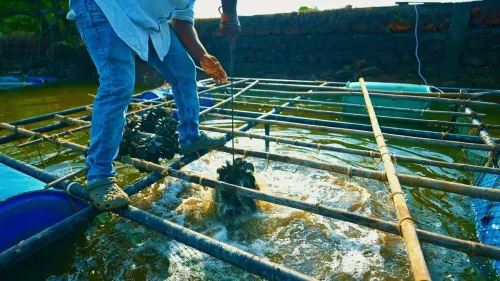
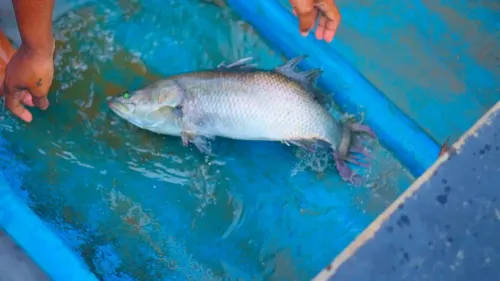
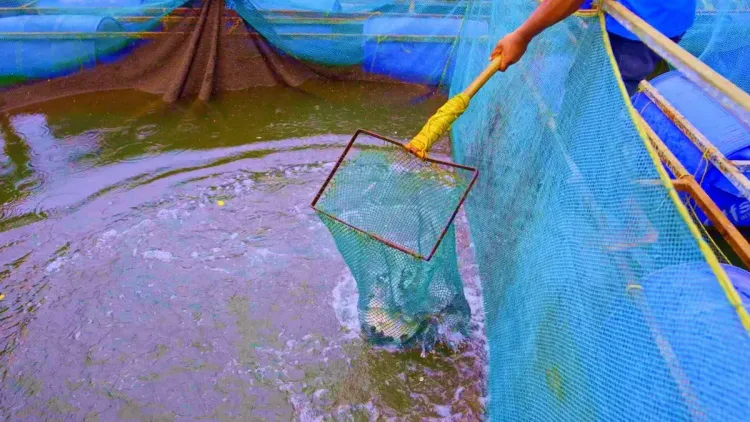
Cage fish farming is suited to Goa's river and estuarine geography, offering a replicable low-land, high-yield model for rural households.
Goa Chief Minister Pramod Sawant on Saturday, 18 July 2026, spotlighted a cage fish farming success story from Curtorim, citing how central government support through the Pradhan Mantri Matsya Sampada Yojana (PMMSY) has helped a local couple build a sustainable aquaculture enterprise generating over ₹1.5 lakh per month.
Context
Agnelo Luis and his wife, residents of Curtorim in South Goa, leveraged PMMSY support to establish a cage fish farming unit that now yields a monthly income exceeding ₹1.5 lakh. CM Sawant described their journey as 'an inspiring example of how entrepreneurship in the fisheries sector is creating a prosperous economy.' The post, shared on the Chief Minister's official X account, is part of a broader state effort to showcase on-ground outcomes of centrally funded welfare schemes.
Policy Backdrop
The Pradhan Mantri Matsya Sampada Yojana was launched by the Government of India in May 2020 with a total outlay of ₹20,050 crore, replacing the earlier Blue Revolution scheme. Its mandate covers increased fish production, modernisation of aquaculture infrastructure, and employment generation across the fisheries value chain. Goa has aligned PMMSY implementation with its own Swayampurna Goa self-reliance mission, directing funds toward cage culture and value-chain enterprises in coastal and riverine villages.
The scheme operates within India's broader Blue Economy framework, which seeks to integrate central fisheries programmes with state-level entrepreneurship drives to raise both inland and marine fish output. Cage fish farming — where fish are reared in submerged net enclosures in water bodies — has emerged as a low-land, high-yield method suited to Goa's river and estuarine geography.
Stakeholder Impact
For aquaculture farmers and coastal fishing communities in Goa, the Curtorim case represents a replicable model: a household unit scaling from subsistence to a commercially viable enterprise with structured government support. CM Sawant framed the outcome explicitly within the dual vision of Swayampurna Goa — the state's self-reliance programme — and the national Viksit Bharat 2047 goal of a developed India. The story also signals the state government's intent to position fisheries entrepreneurship alongside tourism and mining as a pillar of Goa's rural economy.
Beneficiaries of PMMSY typically receive capital subsidies on infrastructure such as cages, feed, fingerlings, and boats, reducing the entry cost for small and marginal fish farmers. When channelled effectively, these subsidies can compress the break-even timeline for household-scale enterprises significantly.
What's Next
Attention will now turn to Goa's state budget allocations for fisheries infrastructure and the utilisation reports the state submits periodically to the Union Department of Fisheries under PMMSY norms. A higher utilisation rate would strengthen the state's case for increased central allocations in subsequent tranches. CM Sawant's amplification of individual beneficiary stories also suggests a communications strategy ahead of the scheme's periodic review, positioning Goa as a model for small-state PMMSY implementation within the national Blue Economy agenda.
Point of View
Validating PMMSY's on-ground reach in a small coastal state while reinforcing the Swayampurna Goa brand ahead of potential budget and scheme-review cycles. Framing a ₹1.5 lakh monthly income as emblematic of 'Viksit Goa' also anchors state-level ambition firmly within the national Viksit Bharat 2047 narrative, a pattern seen across BJP-governed states seeking to align local outcomes with the Centre's long-term vision. The political utility is clear: fisheries success stories humanise what are otherwise opaque subsidy pipelines.
NationPress
18 Jul 2026
Frequently Asked Questions
What is the Pradhan Mantri Matsya Sampada Yojana?
The Pradhan Mantri Matsya Sampada Yojana (PMMSY) is a central government scheme launched in May 2020 with an outlay of ₹20,050 crore to modernise India's fisheries sector, increase fish production, and generate employment across the aquaculture value chain.
Who are Agnelo Luis and his wife from Curtorim?
Agnelo Luis and his wife are residents of Curtorim in Goa who, with support from PMMSY, established a cage fish farming enterprise that now earns over ₹1.5 lakh per month, as highlighted by Goa CM Pramod Sawant.
What is cage fish farming and why is it suitable for Goa?
Cage fish farming involves rearing fish in submerged net enclosures placed in rivers, estuaries, or coastal waters. Goa's extensive river and estuarine geography makes it well-suited to this low-land, high-yield aquaculture method.
What is Swayampurna Goa?
Swayampurna Goa is the Goa state government's self-reliance mission, which seeks to reduce dependence on external support by promoting local entrepreneurship and integrating central scheme benefits — including PMMSY — at the village level.
How does PMMSY support fish farmers financially?
Under PMMSY, eligible beneficiaries can receive capital subsidies on infrastructure such as fish cages, feed, fingerlings, and boats, significantly reducing the upfront cost for small and marginal aquaculture farmers.