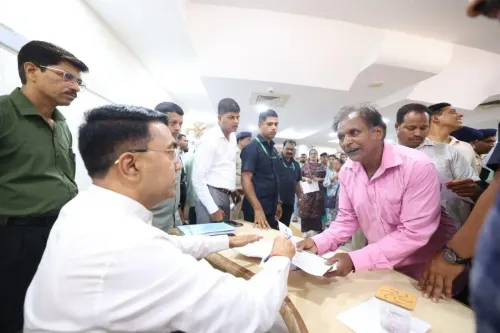
CM Sawant Reviews Nisargruna Composting Tech at Bicholim MRF
Synopsis
Goa Chief Minister Pramod Sawant visited the MRF Centre in Bicholim on 3 July 2026 to review the Nisargruna Rapid Composting Technology, a decentralised system that processes biodegradable waste in 48 hours, launched in partnership with Sampurnearth and IndiGo Airlines under the Green Goa, Clean Goa vision.
Key Takeaways
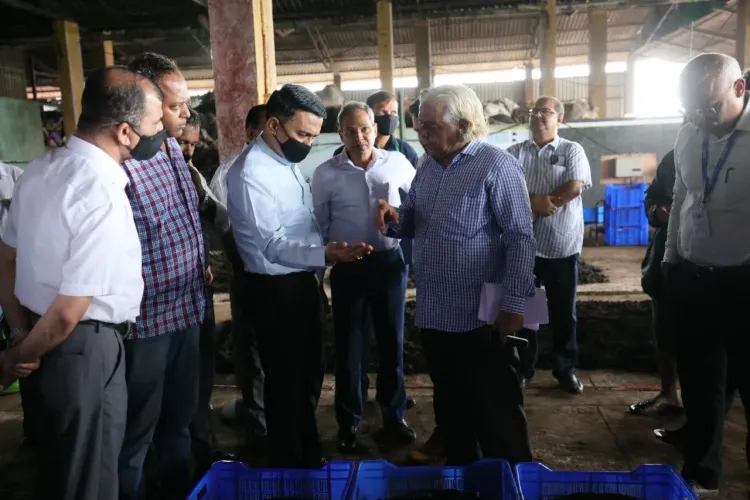
Goa CM Pramod Sawant visited the MRF Centre, Bicholim on 3 July 2026 to witness a live demonstration of the Nisargruna Rapid Composting Technology.
The technology processes biodegradable waste in 48 hours using a decentralised model, reducing landfill dependence.
The initiative is a tripartite partnership between the Government of Goa , Sampurnearth , and IndiGo Airlines .
Key benefits cited include reduced transportation costs, lower fuel consumption, and decreased greenhouse gas emissions.
The project aligns with the national Swachh Bharat Mission and Goa's own State Solid Waste Management Policy .
Expansion to other Goa municipalities and publication of waste-diversion performance data are the key next steps to watch.
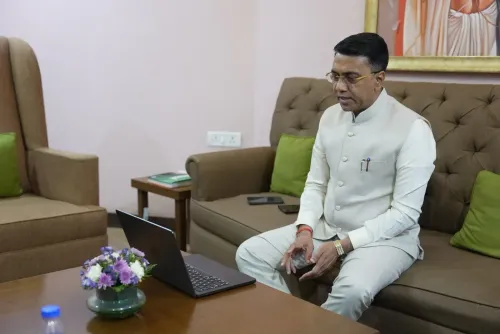
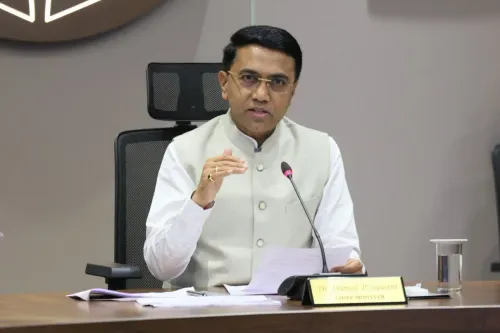
Goa Chief Minister Pramod Sawant on Friday, 3 July 2026, visited the MRF Centre in Bicholim to witness a live demonstration of the Nisargruna Rapid Composting Technology, launched by the Government of Goa in partnership with Sampurnearth and IndiGo Airlines. The technology promises to process biodegradable waste in as little as 48 hours using a decentralised model, positioning Goa as a frontrunner in scientific solid waste management.
Context
The Chief Minister's visit to the Bicholim facility underscored the state government's push to move beyond conventional landfill-dependent waste disposal. Sawant observed the technology in action and described it as 'an important step towards sustainable waste management, circular economy practices and the vision of a Green Goa, Clean Goa.' The demonstration was attended by officials from Sampurnearth and representatives of IndiGo Airlines, which has partnered with the government as part of its corporate sustainability commitments.
Nisargruna, originally developed by the Bhabha Atomic Research Centre (BARC), is a biogas-based composting system adapted for municipal and institutional use. The Goa government's adoption of the technology marks one of its more visible deployments in a coastal, tourism-intensive state.
Policy Backdrop
The initiative sits within a layered policy framework. At the national level, the Swachh Bharat Mission, launched in 2014, mandated scientific solid waste management and incentivised decentralised processing across Indian states. Goa followed with its own State Solid Waste Management Policy around 2019–2020, which emphasised source segregation and a reduction in landfill dependence.
Decentralised composting directly addresses two chronic problems in Goa's waste chain: the high cost of transporting wet waste across the state's hilly and coastal terrain, and the methane emissions generated by organic matter rotting in open dumps. By processing biodegradable waste at or near the point of generation, the Nisargruna model aims to cut fuel consumption, lower greenhouse gas emissions, and reduce pressure on centralised disposal sites.
Stakeholders and Impact
Local bodies, residential communities, hotels, and institutions are the primary intended beneficiaries of the technology rollout. For Goa's tourism sector — which generates significant volumes of food and organic waste — a scalable, fast-turnaround composting solution could meaningfully reduce operational waste costs and environmental liability.
Sampurnearth brings waste-to-resource expertise to the partnership, while IndiGo Airlines — India's largest carrier by market share — lends both CSR financing and visibility to the project. The public-private structure mirrors a broader national pattern in which corporates co-fund green infrastructure demonstrations in exchange for sustainability credentials, particularly in regions with high reputational stakes such as coastal tourism destinations.
What's Next
The immediate question is whether the Bicholim MRF pilot will be replicated across other Goa municipalities. The Chief Minister's direct inspection signals political will, but the pace of expansion will depend on budgetary allocations to local bodies and the availability of trained operators for the units. Independent performance data on waste diversion rates and actual emissions reductions — not yet publicly available — will be critical in evaluating the technology's real-world impact at scale.
If the rollout proceeds as signalled, Goa could become a reference model for other coastal and tourist states seeking to brand green infrastructure as both an environmental and economic asset, aligning with India's broader circular economy and net-zero commitments.
Point of View
Particularly as coastal states compete to attract sustainability-conscious tourism investment. The IndiGo Airlines tie-up is notable: it brings a high-profile corporate name to what might otherwise be a routine municipal waste project, lending it national visibility. The Nisargruna model, with its BARC lineage, also allows the government to frame a local initiative within India's broader science-and-technology narrative. The real test, however, will be whether the technology scales beyond a single demonstration centre to deliver measurable waste diversion across Goa's diverse local body landscape.
NationPress
2 Oct 2026
Frequently Asked Questions
What is Nisargruna Rapid Composting Technology?
Nisargruna is a decentralised biogas-based composting system, originally developed by the Bhabha Atomic Research Centre (BARC), that processes biodegradable waste in approximately 48 hours. The Government of Goa has adopted it for municipal and institutional use in partnership with Sampurnearth and IndiGo Airlines.
Where is the Nisargruna composting unit in Goa located?
The demonstration unit is located at the MRF (Material Recovery Facility) Centre in Bicholim, a town in North Goa, which Goa CM Pramod Sawant visited on 3 July 2026.
What is IndiGo Airlines' role in the Goa composting initiative?
IndiGo Airlines is a corporate partner in the project, contributing through its CSR and sustainability commitments. The airline has joined the Government of Goa and waste-tech firm Sampurnearth in launching the Nisargruna Rapid Composting Technology.
How does decentralised composting help Goa reduce waste?
By processing biodegradable waste at or near its source within 48 hours, the system reduces the need to transport wet waste across Goa's terrain, cutting fuel costs and greenhouse gas emissions while lowering pressure on centralised landfills.
What is the Green Goa Clean Goa initiative?
Green Goa, Clean Goa is a vision articulated by the Goa state government to promote eco-friendly, scalable waste management and circular economy practices for local bodies, institutions, and communities across the state.