CM Shivakumar Inspects Jayanagar Footpaths, Flags Pedestrian Access
Synopsis
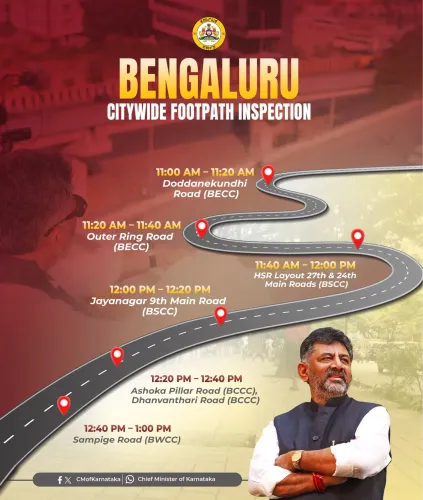
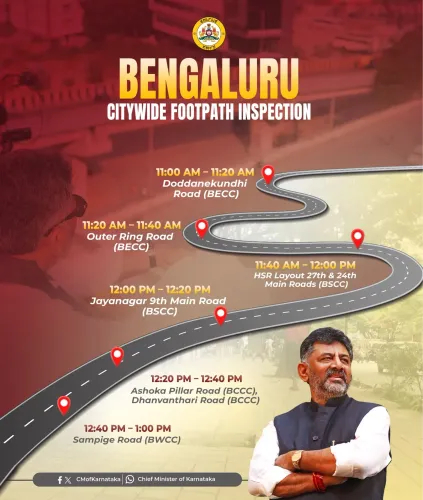
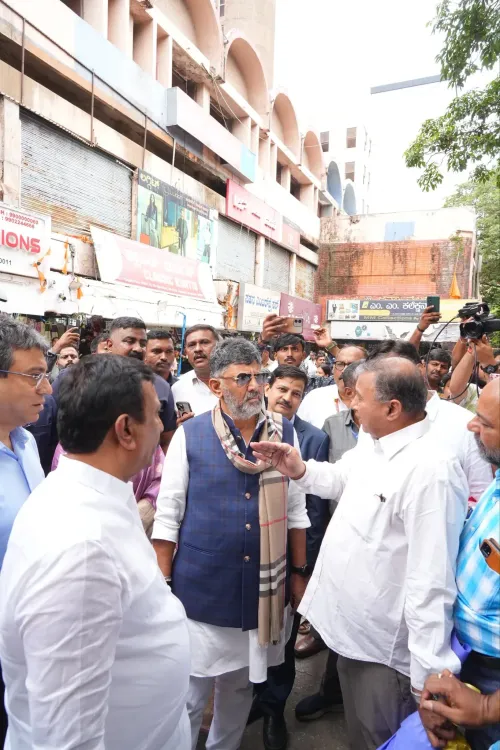
Chief Minister D.K. Shivakumar walked the footpaths of Jayanagar 4th Block in Bengaluru on 10 July 2026, alongside Greater Bengaluru Development Minister Krishna B. Gowda, stressing that pedestrian pathways must remain clear and safe for residents of this busy south Bengaluru locality.
Key Takeaways
Shivakumar personally inspected footpaths at Jayanagar 4th Block , Bengaluru, on 10 July 2026 .
Greater Bengaluru Development Minister Krishna B.
Gowda and senior officials accompanied the Chief Minister during the walkthrough.
The CM stressed keeping pedestrian pathways 'clear and accessible' to ensure ease and safety of movement.
Jayanagar 4th Block is a well-established south Bengaluru locality known for high pedestrian footfall and active public spaces.
The inspection aligns with ongoing BBMP and AMRUT -linked efforts to improve walkability and non-motorised transport infrastructure across Bengaluru.
Follow-up civic action, including potential encroachment removal and footpath upgrades in nearby wards, is expected.
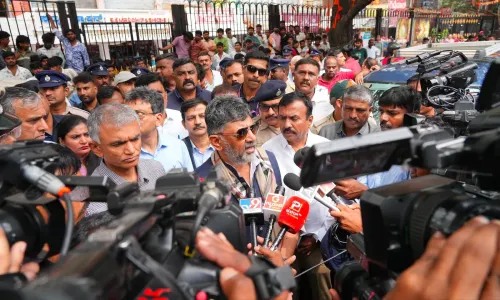
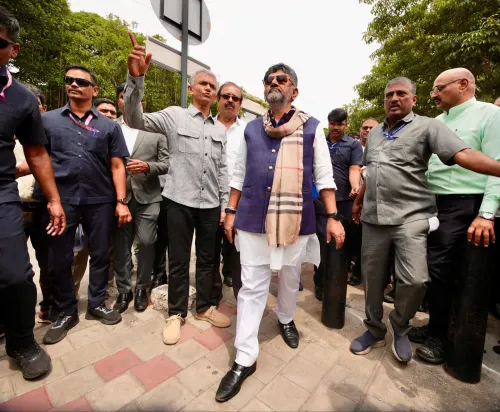
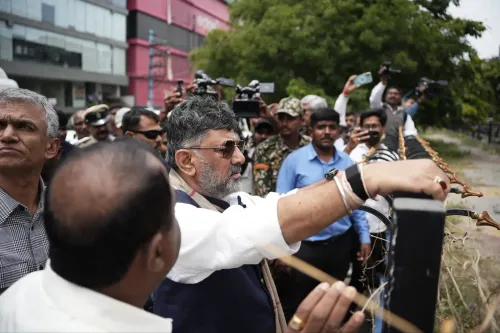
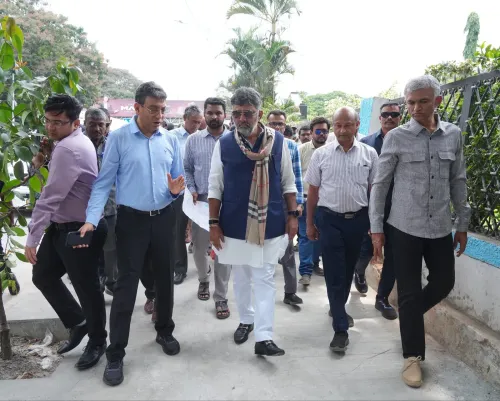
The Chief Minister's Office of Karnataka announced on Friday, 10 July 2026, that Chief Minister Shri D.K. Shivakumar conducted a ground-level inspection of footpaths at Jayanagar 4th Block in Bengaluru, accompanied by Greater Bengaluru Development Minister Shri Krishna B. Gowda and senior officials.
Context
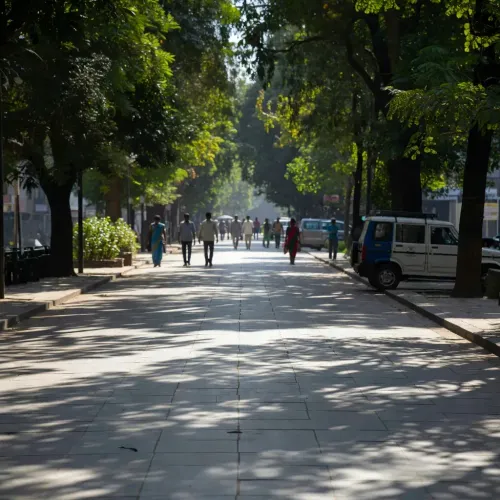
During the inspection, CM Shivakumar underscored the need to keep pedestrian pathways 'clear and accessible' so that residents can 'move around the city with ease and safety.' Jayanagar 4th Block is one of south Bengaluru's most established localities, recognised for its busy markets, tree-lined streets, and dense footfall across commercial and residential stretches.
The Chief Minister's on-ground visit signals a shift from administrative directives to direct executive oversight of civic infrastructure, a style increasingly adopted by urban-focused state governments seeking visible public accountability.
Policy Backdrop
Bengaluru's pedestrian infrastructure has been a persistent civic concern. The Bruhat Bengaluru Mahanagara Palike (BBMP) has periodically launched footpath widening and encroachment-removal drives across the city since the early 2010s under successive state governments, with mixed outcomes on the ground.
These efforts broadly align with national urban programmes such as AMRUT (Atal Mission for Rejuvenation and Urban Transformation), which explicitly prioritises accessible public spaces and non-motorised transport infrastructure in rapidly growing cities. Karnataka has been an active participant in AMRUT-linked urban mobility projects across Bengaluru's core wards.
Stakeholders and Impact
The most immediate beneficiaries are the pedestrians and daily commuters of Jayanagar, a locality where footpath encroachments by vendors, parked vehicles, and construction material have long been a source of resident complaints. Accessible footpaths are particularly critical for senior citizens, schoolchildren, and persons with disabilities navigating the area.
The presence of Greater Bengaluru Development Minister Krishna B. Gowda alongside the Chief Minister indicates that the inspection carries administrative weight beyond a symbolic walkthrough, with the ministry responsible for coordinating civic development across the expanded Bengaluru metropolitan area.
Resident welfare associations and urban mobility advocates in Bengaluru have consistently called for sustained enforcement rather than one-off clearance drives, pointing to the tendency of encroachments to return within weeks of removal without continued monitoring.
What's Next
The inspection is expected to trigger follow-up action by BBMP officials in Jayanagar and potentially in neighbouring wards, with civic body reviews likely to assess footpath conditions across other high-footfall localities. Budget allocations for footpath upgrades in upcoming ward-level planning cycles could also be influenced by the Chief Minister's direct intervention.
If the state government formalises a city-wide pedestrian infrastructure audit — as has been discussed in urban planning circles — Jayanagar 4th Block could serve as a pilot benchmark, with outcomes shaping how Bengaluru approaches walkability across its rapidly expanding footprint.
Point of View
Where Bengaluru's walkability and road quality have been recurring electoral flashpoints, such visible interventions carry political as well as civic weight. The durability of any improvement, however, will depend on whether this inspection translates into sustained monitoring mechanisms rather than a one-time clearance drive.
NationPress
10 Jul 2026
Frequently Asked Questions
Why did CM Shivakumar inspect footpaths in Jayanagar?
CM D.K. Shivakumar inspected footpaths at Jayanagar 4th Block on 10 July 2026 to assess pedestrian infrastructure and highlight the importance of keeping pathways clear and accessible for residents.
What is Jayanagar 4th Block known for?
Jayanagar 4th Block is a well-established residential and commercial locality in south Bengaluru, recognised for its busy markets, vibrant streets, and active public spaces with high daily footfall.
Who accompanied CM Shivakumar during the Jayanagar footpath inspection?
Greater Bengaluru Development Minister Shri Krishna B. Gowda and senior government officials accompanied Chief Minister D.K. Shivakumar during the inspection.
What is BBMP's role in Bengaluru footpath maintenance?
The Bruhat Bengaluru Mahanagara Palike (BBMP) is the civic body responsible for constructing, maintaining, and clearing encroachments from footpaths across Bengaluru, and has periodically launched drives to improve pedestrian infrastructure since the early 2010s.
How does this inspection relate to national urban programmes?
The focus on pedestrian accessibility aligns with AMRUT (Atal Mission for Rejuvenation and Urban Transformation), a national programme that prioritises accessible public spaces and non-motorised transport in fast-growing Indian cities, in which Karnataka has been an active participant.