CM Shivakumar Launches ₹16,000 Cr Rural Push in Karnataka
Synopsis
Karnataka CM D. K. Shivakumar launched the ₹10,000 crore Mukhyamantri Gramina Raste Samparka Yojane targeting 15,000 km of rural roads and the ₹6,000 crore Mukhyamantri Gramina Abhivruddhi Yojane covering infrastructure in 29,340 villages, at a ceremony at Vidhana Soudha Banquet Hall on 20 November 2026.
Key Takeaways
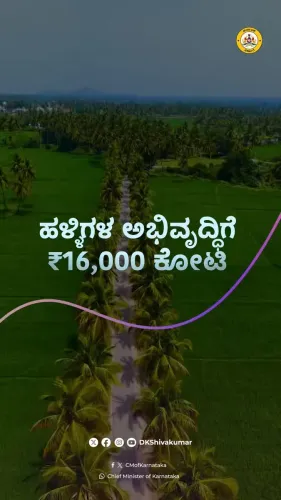
Karnataka government launched two rural schemes with a combined outlay of ₹16,000 crore on 20 November 2026 .
The Mukhyamantri Gramina Raste Samparka Yojane will develop 15,000 km of rural roads at a cost of ₹10,000 crore .
The Mukhyamantri Gramina Abhivruddhi Yojane allocates ₹6,000 crore for CC roads, drains, and drinking water in 29,340 villages .
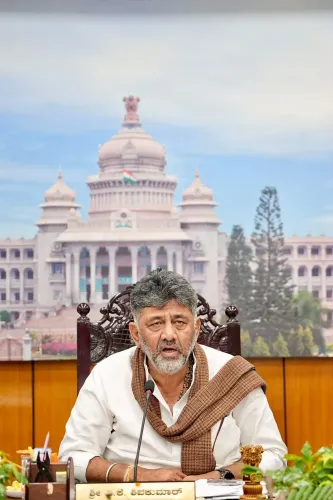
Shivakumar addressed the launch event at Vidhana Soudha Banquet Hall, Bengaluru .
Rural Development Minister Eshwar Khandre , senior legislators, and senior bureaucrats including Principal Secretary Pankaj Kumar Pandey attended the ceremony.
Progress on the 15,000-km road target and village works will be a key benchmark for the state's rural development record heading into the 2027-28 budget cycle .
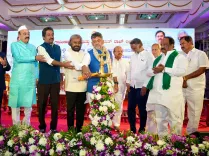
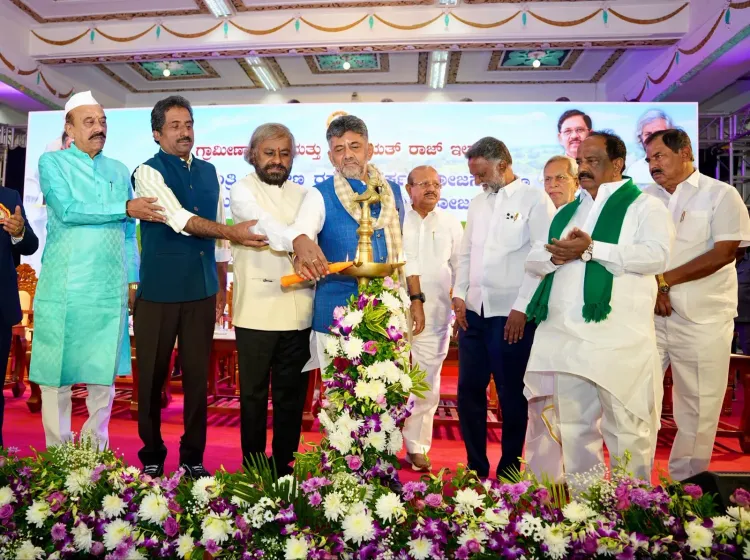
Sixteen thousand crore rupees. That is the number Karnataka's Chief Minister's Office put on the table on Friday, 20 November 2026, when the state government formally launched a sweeping rural infrastructure drive aimed at rewriting the story of village connectivity across the state. Chief Minister D. K. Shivakumar kicked off the programme at the Vidhana Soudha Banquet Hall in Bengaluru, flagging off two flagship schemes and spelling out what the government intends to build — and where.
Two schemes, one ₹16,000 crore commitment
The launch covered two distinct programmes. Under the Mukhyamantri Gramina Raste Samparka Yojane (Chief Minister's Rural Road Connectivity Scheme), the state has committed ₹10,000 crore to develop 15,000 kilometres of rural roads — a scale that would rank it among the largest single-state rural road drives in recent years. The companion scheme, the Mukhyamantri Gramina Abhivruddhi Yojane (Chief Minister's Rural Development Scheme), earmarks ₹6,000 crore for works across 29,340 villages, covering concrete-cement roads, drains, and drinking water infrastructure.
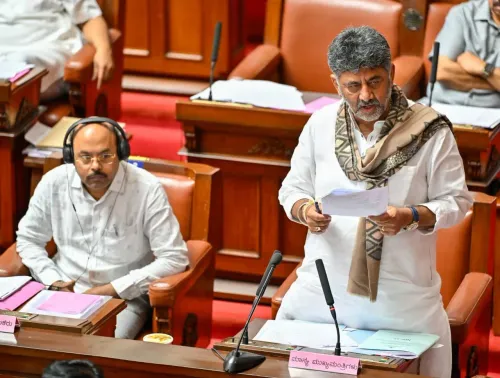
Shivakumar, speaking at the event, underlined the government's priorities in plain terms: 'ಜನರಿಗೆ ಶುದ್ಧ ಕುಡಿಯುವ ನೀರನ್ನು ನಾವು ಕೊಡಬೇಕಿದೆ' — 'We must provide clean drinking water to the people' — and confirmed the government's commitment to rural road development.
Khandre, Jayachandra and a full house at Vidhana Soudha
Rural Development and Panchayat Raj Minister Eshwar Khandre and Minister K. S. Basavanthappa were present at the launch, alongside T. B. Jayachandra, Karnataka's Special Representative to Delhi. MLAs including Raheem Khan, N. H. Konaraddy, Ashok Pattan, and Venkatashivareddy attended, as did Rural Development and Panchayat Raj Department Principal Secretary Pankaj Kumar Pandey and Rural Drinking Water Supply and Sanitation Department Commissioner Fauzia Tarannnum.
Where this fits in Karnataka's rural infrastructure story
Karnataka, like most large states, has long run its own village-level infrastructure programmes alongside the central government's Pradhan Mantri Gram Sadak Yojana, launched in 2000 to provide all-weather connectivity to unconnected habitations. State-funded schemes typically address the last-mile gaps that PMGSY's eligibility criteria leave uncovered — smaller hamlets, internal village roads, drainage, and water supply. The twin schemes announced today target precisely that terrain: the 29,340 villages in the rural development scheme and the 15,000-km road target suggest the government is thinking at scale about coverage, not just flagship corridors.
The yardstick for both schemes will be in the execution. With state budget allocations for 2027-28 still ahead, the pace of fund release and contractor mobilisation across Karnataka's 31 districts will determine whether the ambition on the Vidhana Soudha stage translates into tarmac and tap water in the village square.
Point of View
While the village-level works in 29,340 habitations speak directly to last-mile deprivation that PMGSY does not reach. For the Congress government in Karnataka, anchoring both schemes under the Chief Minister's name is a deliberate brand-building exercise ahead of local body elections. The real test will be whether fund disbursement and contractor mobilisation can match the headline numbers — large state rural programmes in India have historically faced significant execution gaps between announcement and completion. Watchers should track both the 2027-28 budget allocation and periodic audit findings from the Rural Development and Panchayat Raj Department.
NationPress
20 Nov 2026
Frequently Asked Questions
What is the Mukhyamantri Gramina Raste Samparka Yojane in Karnataka?
It is a Karnataka state scheme launched on 20 November 2026 that earmarks ₹10,000 crore to develop 15,000 km of rural roads, aimed at improving all-weather connectivity in villages across the state.
What is the Mukhyamantri Gramina Abhivruddhi Yojane?
It is a companion scheme under which the Karnataka government has allocated ₹6,000 crore for village-level infrastructure — including concrete-cement roads, drains, and drinking water supply — in 29,340 villages.
Who launched the ₹16,000 crore Karnataka rural development schemes?
Chief Minister D. K. Shivakumar launched both schemes at the Vidhana Soudha Banquet Hall in Bengaluru on 20 November 2026, in a ceremony organised by the Rural Development and Panchayat Raj Department.
How is the Karnataka rural road scheme different from PMGSY?
The Pradhan Mantri Gram Sadak Yojana is a central government programme that primarily connects unconnected habitations above a population threshold. Karnataka's state scheme targets last-mile gaps — smaller roads, drains, and water supply — in villages not fully covered by the central programme.
How many villages will benefit from Karnataka's ₹6,000 crore rural development scheme?
According to the official launch announcement, 29,340 villages across Karnataka are slated to receive works including CC roads, drainage, and drinking water infrastructure under the Mukhyamantri Gramina Abhivruddhi Yojane.