CM Shivakumar Launches 400-km Footpath Drive in Bengaluru
Synopsis
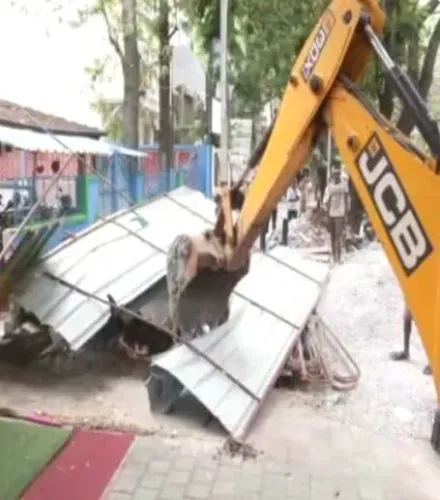
Karnataka's government has reclaimed more than 400 km of Bengaluru footpaths in nine days through a citywide encroachment clearance drive, with CM D.K. Shivakumar inspecting key stretches on 10 July 2026. A Comprehensive Footpath Policy aims to balance pedestrian access with street vendor livelihoods.
Key Takeaways
The Karnataka government launched a Footpath Encroachment Clearance Drive and Safe Footpath Campaign in Bengaluru .
More than 400 km of footpaths were reclaimed across five city corporations in nine days .
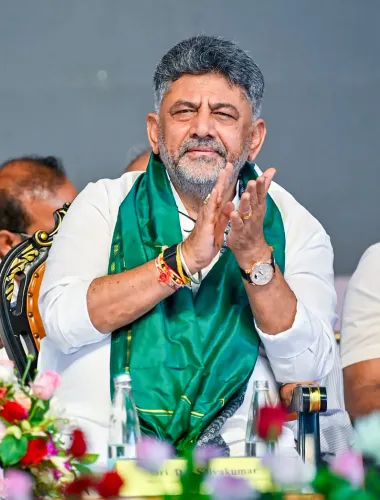
Shivakumar personally inspected key stretches on 10 July 2026 to review progress.
A Comprehensive Footpath Policy is designed to protect street vendor livelihoods alongside enforcement.
The drive aligns with the national Street Vendors Act, 2014 and AMRUT urban mobility frameworks.
Sustained implementation of the Footpath Policy — not just the clearance drive — will determine long-term impact.
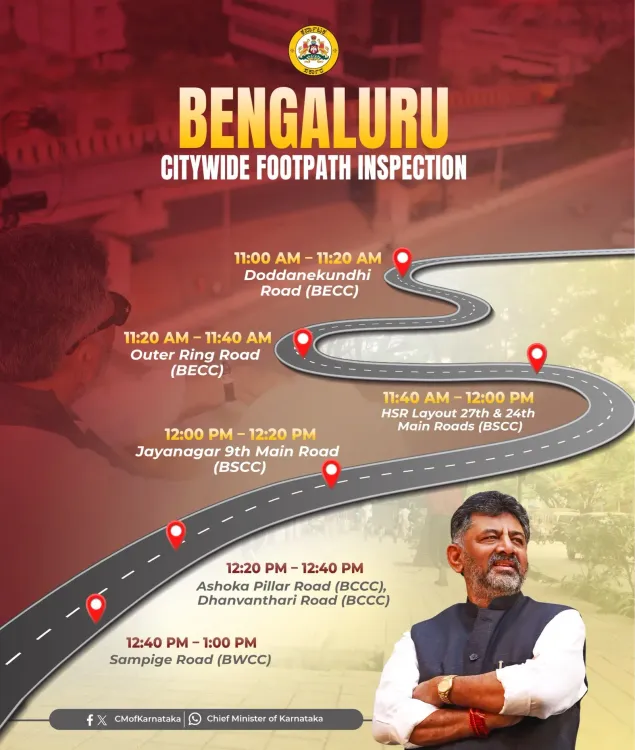
The Chief Minister's Office of Karnataka announced on Friday, 10 July 2026 that the state government has launched a citywide Footpath Encroachment Clearance Drive and Safe Footpath Campaign in Bengaluru, reclaiming more than 400 km of footpaths across the city's five municipal corporations in just nine days. Chief Minister D.K. Shivakumar was scheduled to personally inspect key stretches across the city on the same day to review progress and assess the quality of restored pedestrian infrastructure.
Context
The drive targets illegal encroachments that have long rendered Bengaluru's footpaths unusable for pedestrians, forcing walkers onto busy roads and contributing to road-safety hazards in one of India's most densely populated urban centres. The government's announcement states that the campaign aims to restore footpaths 'for pedestrians while ensuring a balanced approach that protects the livelihoods of street vendors through a comprehensive Footpath Policy.'
The dual mandate — enforcement against encroachment alongside a structured policy for street vendors — reflects the tension that has historically complicated such drives in Indian cities. The Comprehensive Footpath Policy is positioned as the framework that distinguishes this effort from earlier, purely enforcement-led operations.
Policy Backdrop
The campaign draws on a layered policy foundation. The Street Vendors (Protection of Livelihood and Regulation of Street Vending) Act, 2014 mandates designated vending zones and legal protections for informal traders, making outright eviction legally and politically fraught. Any enforcement action must, under that law, account for vendor rehabilitation and zone demarcation.
Separately, the Atal Mission for Rejuvenation and Urban Transformation (AMRUT), launched in 2015, has channelled central funding toward footpath widening and urban mobility upgrades in cities including Bengaluru. The Karnataka government's current drive aligns with that national framework, potentially positioning the state to access or demonstrate compliance with AMRUT-linked urban-mobility benchmarks.
Bengaluru's five city corporations — the administrative units through which the drive is being executed — were constituted as part of a broader restructuring of Greater Bengaluru's civic governance, giving the state more granular jurisdictional levers to coordinate such campaigns across the metropolitan area.
Stakeholders and Impact
Pedestrians stand to be the most immediate beneficiaries if the reclaimed footpaths are maintained. Bengaluru, as India's leading IT hub, draws a large daily commuter population that relies on walkable last-mile connectivity between transit points and workplaces. Improved footpath access also carries implications for persons with disabilities and senior citizens who are disproportionately affected by blocked or broken pavements.
Street vendors represent the most directly affected constituency on the other side of the ledger. Vendor associations in Bengaluru have in the past resisted clearance drives that displaced livelihoods without providing alternative regulated spaces. The government's explicit reference to a Comprehensive Footpath Policy is likely intended to pre-empt that resistance, though the specific vending-zone provisions and enforcement guidelines under the policy have not yet been detailed publicly.
What's Next
CM Shivakumar's inspection of key stretches on 10 July 2026 is expected to yield a public review of the drive's first phase and signal priorities for the next stage of enforcement and restoration. Observers will watch for the rollout of designated vending zones under the Footpath Policy, which will determine whether the drive sustains political and legal credibility beyond the initial clearance phase.
Longer-term, pedestrian safety metrics, footpath usage data, and vendor compliance rates will indicate whether the campaign achieves durable change or follows the pattern of earlier drives that saw encroachments return after enforcement pressure eased. The state's ability to institutionalise the Footpath Policy — rather than rely on periodic drives — will be the key determinant of Bengaluru's walkability trajectory.
Point of View
' the Shivakumar administration is attempting to shift the narrative from displacement to regulated inclusion. The Chief Minister's personal inspection adds visible accountability at a moment when the drive's momentum is highest. Whether this translates into a durable policy shift or follows the cyclical pattern of Indian urban enforcement — intense initial action, gradual regression — will depend almost entirely on the institutional follow-through in the months ahead.
NationPress
10 Jul 2026
Frequently Asked Questions
What is the Bengaluru Footpath Encroachment Clearance Drive?
It is a citywide operation launched by the Karnataka government to remove illegal encroachments from footpaths across Bengaluru's five municipal corporations, aiming to restore safe pedestrian access. The drive reclaimed more than 400 km of footpaths in its first nine days.
How many kilometres of footpaths have been reclaimed in Bengaluru?
The Chief Minister's Office of Karnataka stated that more than 400 km of footpaths were reclaimed across Bengaluru's five city corporations in nine days as of 10 July 2026.
What is Karnataka's Comprehensive Footpath Policy?
It is a policy framework introduced alongside the encroachment clearance drive to balance pedestrian infrastructure restoration with protections for street vendors, including provisions for regulated vending spaces. Specific details of vending-zone demarcation are yet to be made public.
Will street vendors be evicted under the Bengaluru footpath drive?
The government has stated that the drive will follow a 'balanced approach' protecting vendor livelihoods under the Comprehensive Footpath Policy, in line with the Street Vendors (Protection of Livelihood and Regulation of Street Vending) Act, 2014, which mandates designated vending zones rather than outright eviction.
What did CM D.K. Shivakumar do regarding the footpath drive on 10 July 2026?
Chief Minister D.K. Shivakumar inspected key footpath stretches across Bengaluru on 10 July 2026 to review the progress of the clearance drive and assess the quality of restored pedestrian infrastructure.