CM Shivakumar Launches 'Namma Shale Namma Javabdari' CSR School Drive
Synopsis
Chief Minister D.K. Shivakumar inaugurated 'Namma Shale Namma Javabdari' at Vidhana Soudha on 4 November 2026, launching a structured CSR-driven initiative to strengthen Karnataka government school infrastructure and education quality.
Key Takeaways
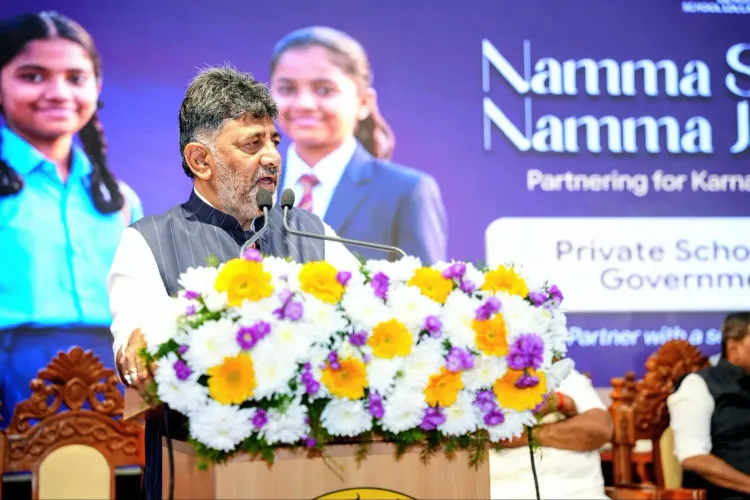
Shivakumar inaugurated the 'Namma Shale Namma Javabdari' programme on 4 November 2026 at the Banquet Hall, Vidhana Soudha.
The initiative channels Corporate Social Responsibility (CSR) funds into government school infrastructure and quality improvements across Karnataka.
The launch meeting brought together Institutional CSR representatives alongside senior legislators, ministers, and top state bureaucrats.
Key officials present included Chief Secretary Dr.
Shalini Rajneesh , Minister Madhu Bangarappa , and Commissioner K.
Vidya Kumari from the School Education Department.
The programme fits a wider Karnataka pattern of public-private collaboration in education, structured under the Companies Act CSR framework.
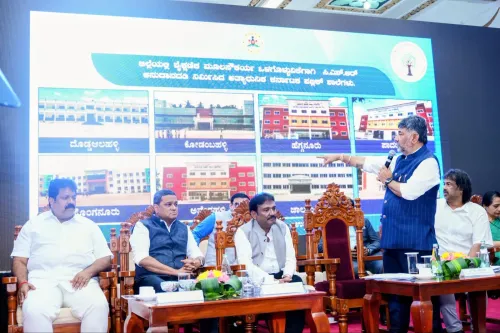
Karnataka's government schools got a new champion on Wednesday, 4 November 2026, when Chief Minister D.K. Shivakumar inaugurated the 'Namma Shale Namma Javabdari' — Kannada for 'Our School, Our Responsibility' — programme at the Banquet Hall, Vidhana Soudha, Bengaluru, calling on corporate India to step up for public education.
'Namma Shale Namma Javabdari': What the programme promises
The initiative is designed to channel Corporate Social Responsibility funds directly into Karnataka's government school ecosystem — targeting infrastructure upgrades, learning environment improvements, and overall education quality. The programme positions CSR not as charity but as institutional accountability, asking companies to treat local government schools as shared civic assets worth investing in.
The launch event brought together Institutional CSR representatives alongside a high-powered government delegation, signalling that the state is treating this as a serious procurement of private commitment, not a ceremonial pledge drive.
Who was in the room at Vidhana Soudha
The gathering reflected the cross-departmental weight the CM's office is placing on this initiative. Deputy Speaker of the Karnataka Legislative Assembly Shri Mankal Vaidya, Minister Shri Madhu Bangarappa, and Rajya Sabha MP Shri Mansoor Ali Khan represented the political establishment. On the bureaucratic side, Chief Secretary Dr. Shalini Rajneesh, Additional Chief Secretary to the Chief Minister Shri Tushar Giri Nath, Additional Chief Secretary, School Education and Literacy Department, Smt. V. Rashmi Mahesh, Principal Secretary, Commerce and Industries Department, Dr. S. Selva Kumar, and Commissioner, Department of School Education, K. Vidya Kumari were all present — a lineup that spans education, commerce, and the CM's own office.
CSR as a school-funding lever in Karnataka
The move fits a broader pattern in Karnataka's education policy: successive state governments have periodically sought corporate involvement to supplement public spending, working within the framework of CSR provisions under the Companies Act. The logic is straightforward — public budgets alone cannot close infrastructure gaps across thousands of government schools, but structured CSR pipelines can fill targeted needs faster than budgetary cycles allow.
What makes 'Namma Shale Namma Javabdari' notable is the institutional formality of its launch: a dedicated programme name, a Vidhana Soudha inauguration, and a room full of corporate CSR heads signals an intent to build accountability mechanisms — not just goodwill gestures — into the framework. The real test will come in the months ahead, when CSR commitments either translate into renovated classrooms and functional libraries or stall in paperwork.
Point of View
The Shivakumar government is making a political statement: that public education is a pride issue, not just a welfare line item. The programme places the CM personally at the centre of education reform optics ahead of a period when his administration needs visible delivery on social investment. Structurally, it also reflects a nationwide trend of state governments using mandatory corporate CSR spends as a quasi-budget instrument for public infrastructure — a clever workaround, though one that raises long-term questions about state capacity and accountability when corporate priorities shift.
NationPress
4 Nov 2026
Frequently Asked Questions
What is 'Namma Shale Namma Javabdari'?
'Namma Shale Namma Javabdari' — meaning 'Our School, Our Responsibility' in Kannada — is a Karnataka government programme launched on 4 November 2026 to strengthen government school infrastructure and education quality by channelling Corporate Social Responsibility (CSR) funds from institutions into public schools.
Who launched 'Namma Shale Namma Javabdari' and where?
Chief Minister D.K. Shivakumar inaugurated the programme at the Banquet Hall, Vidhana Soudha, Bengaluru, on 4 November 2026, at a meeting with Institutional CSR representatives.
Which officials were present at the launch?
Among those present were Deputy Speaker Mankal Vaidya, Minister Madhu Bangarappa, Rajya Sabha MP Mansoor Ali Khan, Chief Secretary Dr. Shalini Rajneesh, and School Education Commissioner K. Vidya Kumari, along with other senior officials.
How does Karnataka's CSR school programme work?
The programme encourages companies and institutions to direct their mandatory CSR spending under the Companies Act toward government schools in Karnataka, funding infrastructure upgrades and quality education improvements.
What is the goal of 'Namma Shale Namma Javabdari'?
The goal is to improve physical infrastructure, learning environments, and overall education quality in Karnataka's government schools by systematically engaging corporate CSR participation alongside government investment.