CM Shivakumar Marks Kempegowda's 517th Jayanti in Yelahanka
Synopsis
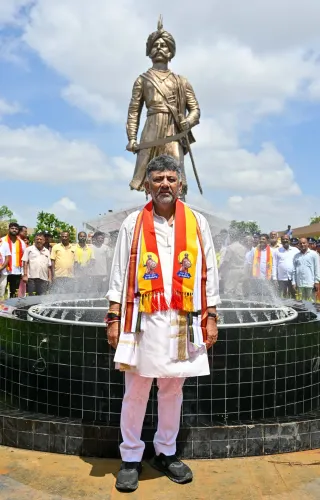
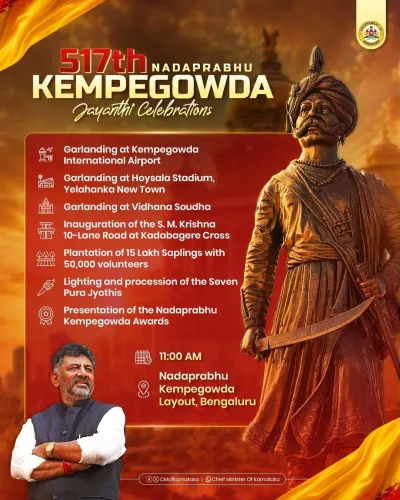
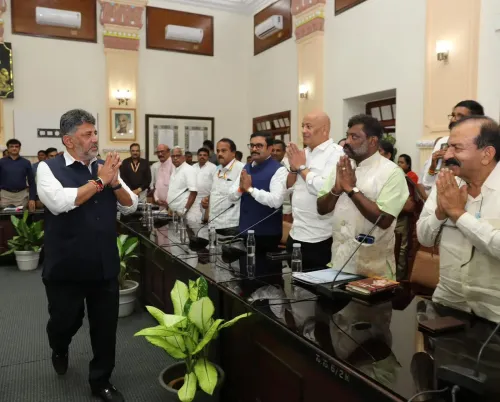
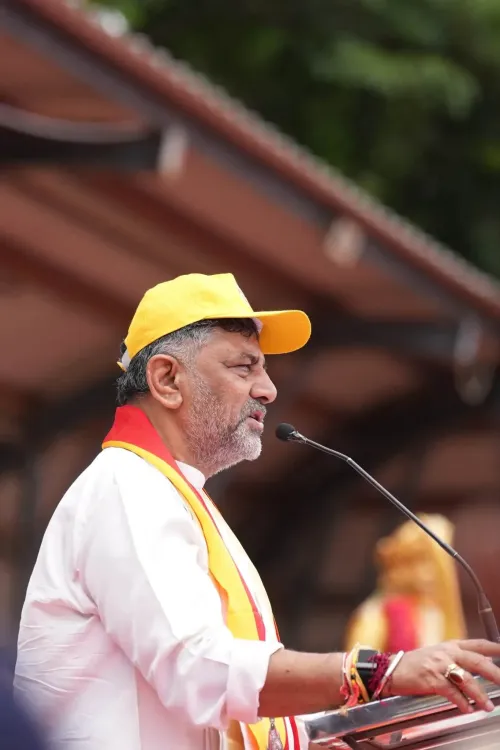
Chief Minister D K Shivakumar attended the 517th Jayanti of Nadaprabhu Kempegowda at Hoysala Stadium in Yelahanka, Bengaluru, on 27 June 2026, paying tribute to the 16th-century founder of Bengaluru and his contributions to the Kannada region.
Key Takeaways
Chief Minister D K Shivakumar participated in the 517th Jayanti of Nadaprabhu Kempegowda on 27 June 2026 .
The event was held at Hoysala Stadium (Hoysala Kreedangana) in Yelahanka , a northern suburb of Bengaluru .
Nadaprabhu Kempegowda is credited with founding Bengaluru in 1537 and developing its early tank, temple, and administrative systems.
Yelahanka is the historic seat of the Kempegowda lineage and a recurring venue for state-level Jayanti commemorations.
Karnataka governments have observed Kempegowda Jayanti as an official state event for decades, with Bengaluru's international airport named in his honour since 2017 .
The event reinforces the state's commitment to Kannada cultural identity and may precede announcements on heritage conservation.
The Chief Minister's Office of Karnataka announced on Saturday, 27 June 2026 that Chief Minister D K Shivakumar attended the 517th Jayanti of Nadaprabhu Kempegowda, held at the Hoysala Stadium in Yelahanka, a northern suburb of Bengaluru, and paid tribute to the 16th-century founder's enduring contributions to the Kannada land.
Context
The official post, written in Kannada, states that Chief Minister Shivakumar participated in the Nadaprabhu Kempegowda Jayanti programme organised at Hoysala Kreedangana (Hoysala Stadium) in Yelahanka upanagara (Yelahanka suburb) and recalled Kempegowda's contributions to the Kannada region. The event marks the birth anniversary of the chieftain who is credited with laying the foundations of modern Bengaluru in 1537.
Nadaprabhu Kempegowda was a feudatory chieftain of the Yelahanka lineage under the Vijayanagara Empire. He is widely revered for establishing the city's early tank-based water system, constructing temples, and setting up administrative structures that shaped the region for centuries.
Policy Backdrop
Karnataka governments have observed Kempegowda Jayanti as an official state event for decades, reflecting the chieftain's symbolic importance to Kannada identity and Bengaluru's civic heritage. A landmark moment in this tradition came in 2017, when the state decided to rename Bengaluru's Kempegowda International Airport in his honour, cementing his place in the city's modern identity.
Yelahanka, the historic seat of the Kempegowda lineage, has been a recurring venue for such commemorations, connecting the event to its geographic and cultural roots. The choice of Hoysala Stadium as the venue underscores the public, community-facing character of the annual observance.
Stakeholders and Impact
The event carries significance for Kannadigas across the state and for Bengaluru residents in particular, for whom Kempegowda represents civic pride and the city's pre-colonial origins. Successive administrations, regardless of political affiliation, have used the Jayanti to reinforce regional cultural identity and connect governance to historical continuity.
Commemorations of this kind also draw attention to heritage conservation priorities. Kempegowda's watch-towers, tanks, and temples across Bengaluru remain subjects of ongoing civic and archaeological interest, and such events often serve as platforms for announcements related to their upkeep.
What's Next
Observers will watch for any follow-up announcements emerging from the event, particularly regarding heritage-site development, conservation funding, or civic infrastructure projects linked to Kempegowda's legacy in Bengaluru. The scale and visibility of the 517th Jayanti programme may also set the tone for planning the landmark 518th observance next year. Such high-profile state events frequently serve as staging grounds for broader policy signals on urban heritage and Kannada cultural promotion.
Point of View
Anchoring the ruling party's identity in Kannada pride and Bengaluru's founding narrative. For CM Shivakumar, personal participation in such events reinforces his positioning as a steward of Karnataka's cultural legacy at a time when regional identity remains electorally potent. The long-standing bipartisan tradition of commemorating Kempegowda suggests this is less about partisan signalling and more about the state's institutional investment in its own historical consciousness. Whether the ceremony yields concrete announcements on heritage infrastructure will determine whether it registers as policy action or ceremonial routine.
NationPress
27 Jun 2026
Frequently Asked Questions
Who was Nadaprabhu Kempegowda?
Nadaprabhu Kempegowda was a 16th-century chieftain of the Yelahanka lineage under the Vijayanagara Empire, credited with founding Bengaluru in 1537. He built tanks, temples, and administrative systems that shaped the city for centuries.
What is Kempegowda Jayanti?
Kempegowda Jayanti is the annual birth anniversary celebration of Nadaprabhu Kempegowda, observed as an official state event in Karnataka to honour his contributions to Bengaluru and Kannada culture.
Where was the 517th Kempegowda Jayanti held in 2026?
The 517th Kempegowda Jayanti was held at Hoysala Stadium in Yelahanka, a northern suburb of Bengaluru, on 27 June 2026.
Why is Yelahanka significant for Kempegowda Jayanti?
Yelahanka is the historic seat of the Kempegowda lineage and the base from which Nadaprabhu Kempegowda administered the region, making it a culturally significant venue for his birth anniversary commemorations.
Was Bengaluru's airport named after Kempegowda?
Yes. In 2017, Karnataka decided to name Bengaluru's international airport after Nadaprabhu Kempegowda, recognising his foundational role in the city's history.