Dr. Jitendra Singh on fast learning as key to survival today
Synopsis
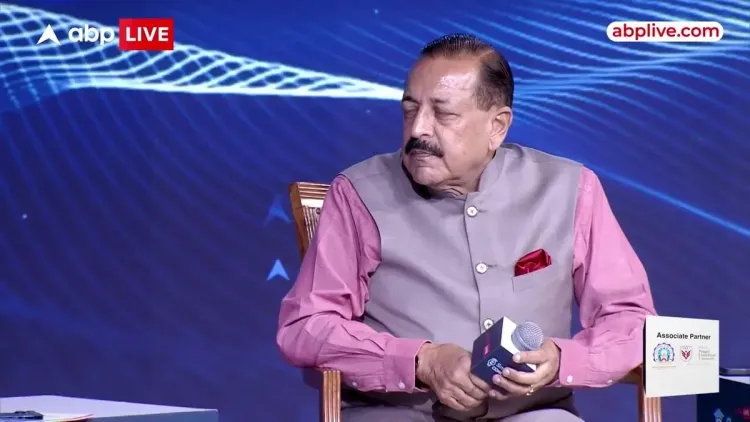
Union Science and Technology Minister Dr. Jitendra Singh declared at a FiresideChat that surviving in today's world demands being not just a good learner but a fast one — a message that aligns with India's NEP 2020 push for lifelong, adaptive learning in an era of rapid technological change.
Key Takeaways
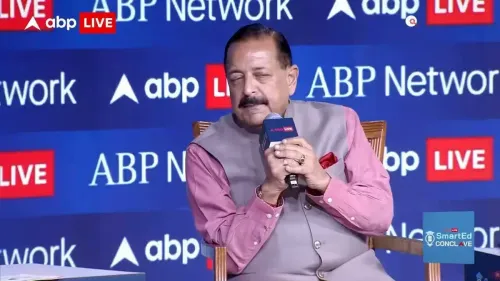
Jitendra Singh stated at a #FiresideChat that being a 'fast learner' is essential to survival in the modern age.
The remark was shared on 27 June 2026 via his official X account, accompanied by a video clip from the event.
The statement aligns with the National Education Policy 2020 , which prioritises flexible, lifelong learning frameworks over rigid curricula.
Singh oversees both the Department of Science and Technology and the Department of Earth Sciences , placing him at the centre of India's research and capacity-building agenda.
The emphasis on learning agility reflects India's broader goal of building science and technology competitiveness ahead of the 2047 centenary vision.
Stakeholders including students, researchers , and academic institutions are the primary audience for the minister's message on adaptability.
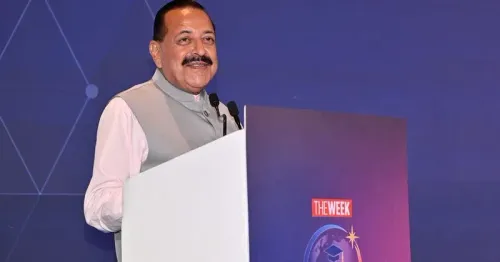
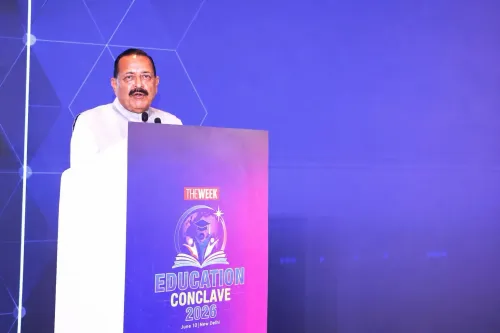
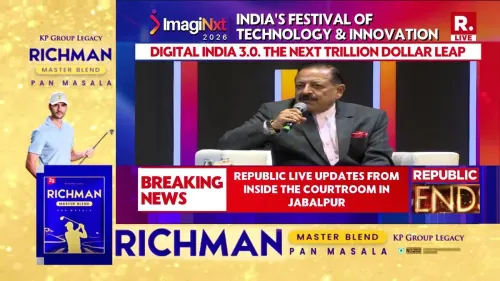
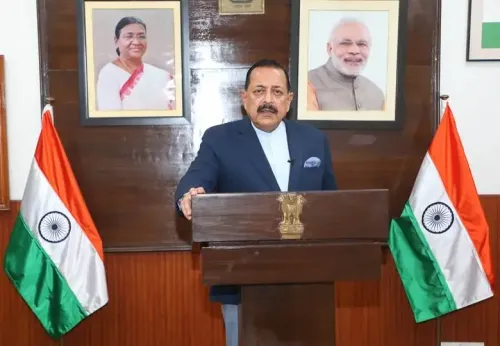
Union Science and Technology Minister Dr. Jitendra Singh on Saturday, 27 June 2026, underscored the importance of rapid, continuous learning as an essential skill for navigating the demands of the modern age, speaking at a #FiresideChat event. The minister's remarks, shared on his official X account, drew a direct link between adaptability and survival in today's fast-changing world.
Context
Dr. Singh quoted a pointed observation at the fireside discussion: 'In order to survive in today's age and times, one has to be a good learner and that too, a fast learner.' The statement positions the capacity for rapid knowledge acquisition not merely as a professional advantage but as a foundational life skill. The remark was accompanied by a video clip from the event, amplifying its reach among students, researchers, and policy audiences.
The framing reflects a growing consensus among science and technology administrators that the pace of change — driven by artificial intelligence, biotechnology, and digital disruption — demands a fundamentally different relationship with learning than previous generations required.
Policy Backdrop
Dr. Singh's emphasis on fast learning resonates strongly with the National Education Policy (NEP) 2020, which replaced the 1986 education framework and introduced flexible, multidisciplinary curricula designed to foster critical thinking and lifelong learning from the earliest stages of schooling. The NEP explicitly acknowledged that technological change would render rigid, subject-siloed education inadequate for future workforce demands.
As the minister overseeing both the Department of Science and Technology and the Department of Earth Sciences, Dr. Singh sits at the intersection of research policy and national capacity-building. Successive Indian administrations have tied science and technology investment to economic competitiveness, promoting digital literacy and innovation as strategic national priorities. Ministerial statements emphasising adaptability have frequently accompanied the rollout of new research and development missions targeting emerging technology sectors.
Stakeholders and Impact
Students and researchers are the most immediate audience for this message, particularly those navigating rapidly evolving fields such as artificial intelligence, renewable energy, and the life sciences. For young professionals entering a labour market reshaped by automation, the minister's framing carries practical urgency beyond mere inspiration.
The broader policy implication touches institutions as well — universities, research laboratories, and skilling bodies are under increasing pressure to design programmes that prioritise learning agility over static credential accumulation. Dr. Singh's public articulation of this principle signals continued ministerial attention to how India's science and education ecosystem adapts to technological acceleration.
What's Next
Observers will watch for concrete policy follow-through in the form of parliamentary updates on NEP 2020 implementation and new mission announcements from the Department of Science and Technology. Whether the fireside remarks translate into specific programme design — such as AI-integrated curricula or accelerated research fellowships — will be the measure of their policy weight.
India's ambition to become a global science and technology power by 2047 rests substantially on whether its human capital can indeed learn fast enough to keep pace with the world it is trying to shape.
Point of View
Not rote mastery, is the currency of the future. Coming from a minister who bridges science policy and the Prime Minister's Office, the statement carries institutional weight beyond motivational rhetoric. It signals that the government's human capital strategy is increasingly oriented around learning velocity as a national competitiveness metric. The timing also reflects a broader pattern of Indian science administrators using public forums to build cultural consensus around innovation readiness ahead of major R&D mission rollouts.
NationPress
27 Jun 2026
Frequently Asked Questions
What did Dr. Jitendra Singh say at the FiresideChat?
Dr. Jitendra Singh said that in order to survive in today's age and times, one has to be a good learner and, crucially, a fast learner — framing rapid knowledge acquisition as a core survival skill.
What is Dr. Jitendra Singh's role in the Indian government?
Dr. Jitendra Singh is the Union Minister of State (Independent Charge) for Science and Technology and Earth Sciences, and also serves as Minister of State in the Prime Minister's Office and for Personnel.
How does this relate to India's National Education Policy 2020?
The NEP 2020 replaced the 1986 education policy and introduced flexible, multidisciplinary learning frameworks emphasising critical thinking and lifelong learning — directly echoing the minister's call for fast, continuous learning.
Why is fast learning considered important in India's current policy context?
Rapid technological change in areas such as artificial intelligence, biotechnology, and renewable energy means that static educational credentials are insufficient; India's science and technology strategy increasingly demands adaptable, continuously learning professionals.
What should students and researchers take away from the minister's statement?
Students and researchers should recognise that learning agility — the ability to acquire new knowledge quickly — is being positioned by the government as a foundational skill for career success and national development, not just a personal virtue.