CM Yogi at SAIL Solar Plant Groundbreaking in Gautam Buddha Nagar
Synopsis
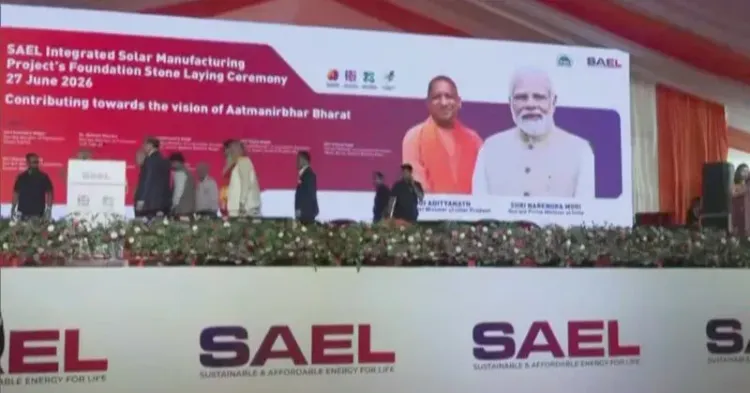
Chief Minister Yogi Adityanath laid the foundation of a SAIL solar manufacturing plant in Gautam Buddha Nagar on 27 June 2026, advancing Uttar Pradesh's green industrial ambitions and India's 500 GW renewable energy target for 2030.
Key Takeaways
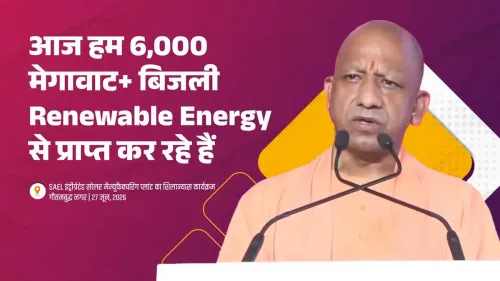
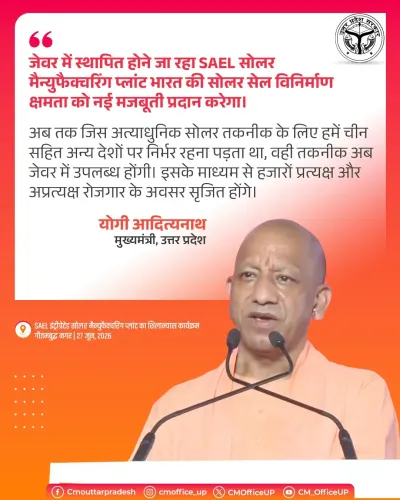
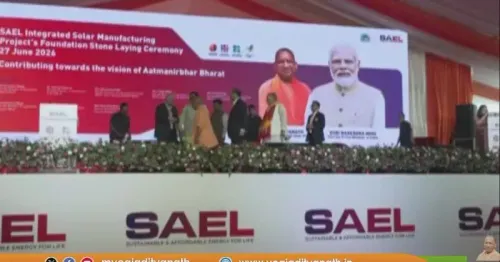
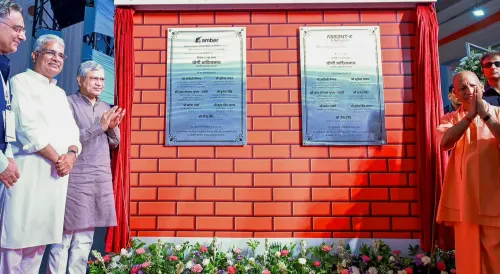
CM Yogi Adityanath attended the foundation-laying of a SAIL solar manufacturing plant in Gautam Buddha Nagar on 27 June 2026 .
Steel Authority of India Limited (SAIL) , a central public-sector enterprise, is diversifying into solar manufacturing as part of India's Atmanirbhar Bharat supply-chain push.
The project aligns with the Uttar Pradesh Solar Energy Policy 2022 , which offers land banks, subsidies, and single-window clearance to solar investors.
India is targeting 500 GW of non-fossil fuel capacity by 2030 , driving states to compete for solar manufacturing investments under the central PLI scheme .
Gautam Buddha Nagar , in the NCR, is being positioned as a key node in Uttar Pradesh's emerging green industrial corridor.
Capacity figures, investment size, and commissioning timelines are yet to be formally announced.
Chief Minister Yogi Adityanath attended the foundation-laying ceremony of a solar manufacturing plant by Steel Authority of India Limited (SAIL) in Gautam Buddha Nagar, Uttar Pradesh, on Saturday, 27 June 2026. The event marks a significant step in India's push to build domestic solar manufacturing capacity within the National Capital Region's industrial corridor.
Context
The Chief Minister's Office of Uttar Pradesh shared a live update — 'गौतमबुद्ध नगर में सेल के सोलर मैन्यूफैक्चरिंग प्लांट के शिलान्यास कार्यक्रम में सम्मिलित होते मुख्यमंत्री' ('Chief Minister participating in the foundation-laying ceremony of SAIL's solar manufacturing plant in Gautam Buddha Nagar') — signalling direct state-level political endorsement for the project. CM Yogi Adityanath has made industrial investment a cornerstone of his administration since taking office in March 2017.
Gautam Buddha Nagar, part of the National Capital Region, hosts several industrial clusters and IT parks, making it a preferred destination for large-scale manufacturing investments. The district's proximity to Delhi and existing logistics infrastructure give it a competitive edge for green industrial projects.
Policy Backdrop
India's ambition to achieve 500 GW of non-fossil fuel energy capacity by 2030 has intensified the race among states to attract solar manufacturing units. The central government's Production Linked Incentive (PLI) scheme for solar photovoltaic modules, approved in 2021, was designed to reduce India's dependence on imported solar equipment and build a resilient domestic supply chain under the Atmanirbhar Bharat framework.
Uttar Pradesh reinforced its intent with the Uttar Pradesh Solar Energy Policy 2022, which provides land banks, subsidies, and single-window clearance to attract solar investors. The SAIL plant in Gautam Buddha Nagar fits squarely within this policy architecture, with a central public-sector enterprise diversifying into green manufacturing to serve both state and national renewable energy goals.
SAIL's move into solar manufacturing reflects a broader government nudge for public-sector steel companies to extend into solar value chains — securing upstream supply security for panels and modules that India's grid expansion will require in large volumes.
Stakeholders and Impact
The project is expected to benefit solar manufacturers, renewable energy investors, and the local workforce in and around Gautam Buddha Nagar. A SAIL-backed facility carries the credibility of a central public-sector undertaking, which could attract ancillary private investment in the region's emerging green industrial corridor.
For Uttar Pradesh, the groundbreaking adds momentum to the state's pitch as a preferred destination for large-scale industrial projects — a narrative CM Yogi has actively cultivated through successive investors' summits. Domestic solar module makers and the broader renewable energy ecosystem stand to gain from increased local production capacity reducing import bills.
What's Next
Attention will now turn to formal announcements on module production capacity, total investment outlay, and projected employment generation as construction progresses. Further solar manufacturing agreements are anticipated at upcoming Uttar Pradesh Investors Summit editions, where the state has historically used such groundbreakings as anchors to draw additional commitments.
India's 2030 renewable energy targets leave limited room for delay, and the pace at which the SAIL plant moves from foundation-laying to commercial production will be closely watched by both policymakers and the private solar sector as a benchmark for public-sector-led green diversification.
Point of View
Reinforcing the state's sustained effort to brand itself as an investment-friendly destination ahead of future investors' summits. For SAIL, the move into solar manufacturing represents a strategic hedge as the steel sector faces long-term decarbonisation pressure. Cumulatively, this fits a pattern where India's 2030 renewable targets are being used to reshape the mandate of legacy public-sector enterprises.
NationPress
25 Sept 2026
Frequently Asked Questions
What is the SAIL solar manufacturing plant in Gautam Buddha Nagar?
Steel Authority of India Limited (SAIL) is setting up a solar manufacturing plant in Gautam Buddha Nagar, Uttar Pradesh, with CM Yogi Adityanath performing the foundation-laying on 27 June 2026. The plant is part of SAIL's diversification into green manufacturing to support India's renewable energy goals.
Why is SAIL entering solar manufacturing?
SAIL is diversifying into solar manufacturing as part of India's Atmanirbhar Bharat push to build domestic supply chains for solar equipment, reducing dependence on imports and supporting the country's 500 GW non-fossil fuel target by 2030.
What is the Uttar Pradesh Solar Energy Policy 2022?
The Uttar Pradesh Solar Energy Policy 2022 provides land banks, subsidies, and single-window clearance to attract solar energy investors to the state, making UP competitive in securing large-scale renewable manufacturing projects.
What is the PLI scheme for solar modules?
The Production Linked Incentive (PLI) scheme for solar PV modules, approved by the central government in 2021, offers financial incentives to domestic manufacturers to scale up production of solar cells and modules, reducing India's reliance on imported solar equipment.
Why is Gautam Buddha Nagar chosen for the SAIL solar plant?
Gautam Buddha Nagar is part of the National Capital Region and hosts established industrial clusters with strong logistics connectivity, making it a preferred location for large green manufacturing investments under Uttar Pradesh's industrial corridor strategy.