CM Odisha Mohan Majhi Plugs PDS Leakages, Saves ₹490 Crore
Synopsis
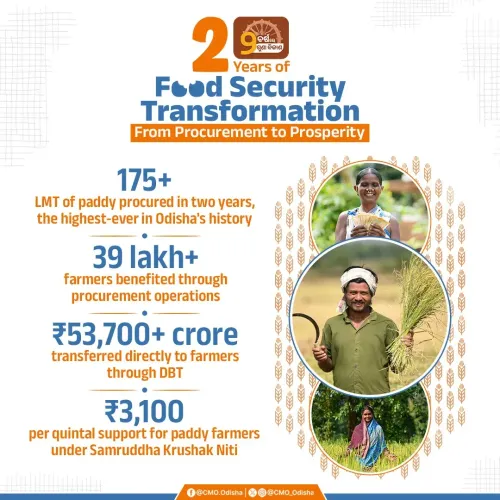
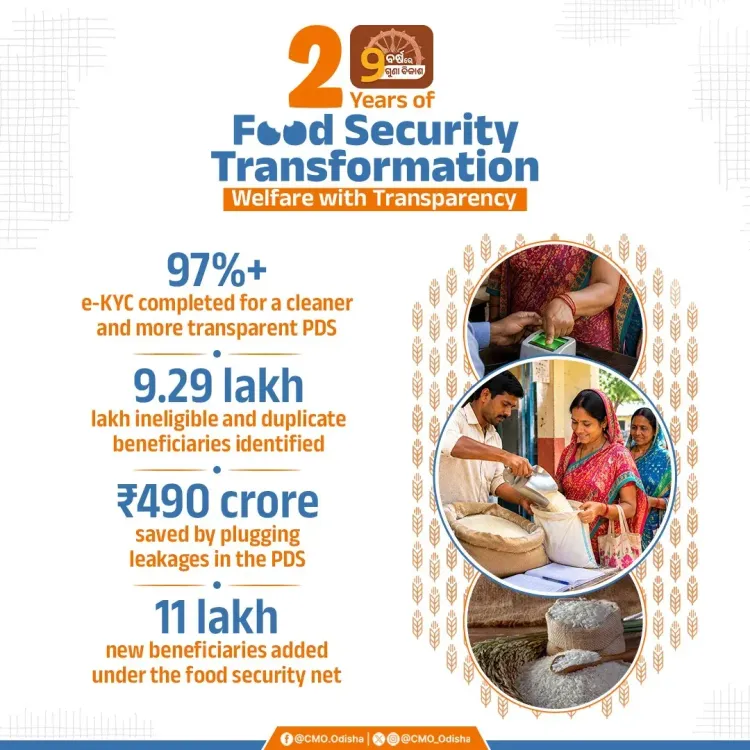
The Chief Minister's Office of Odisha says CM Mohan Majhi's government has saved ₹490 crore in two years by completing 97% e-KYC verification under the Public Distribution System, removing 9.29 lakh ineligible entries and adding over 11 lakh genuine beneficiaries.
Key Takeaways
The Chief Minister's Office of Odisha announced on June 27, 2026 that the state has saved ₹490 crore through PDS reform in two years under CM Mohan Charan Majhi .
Over 97% e-KYC verification of PDS beneficiaries has been completed using Aadhaar-linked electronic authentication.
9.29 lakh ineligible entries were removed from the Public Distribution System to plug leakages.
Over 11 lakh genuine beneficiaries were simultaneously onboarded, expanding the verified beneficiary base.
The announcement was tagged to PMO India , aligning the state's welfare digitisation with the Centre's broader Digital India framework.
Independent audits of the claimed savings figures and e-KYC methodology are expected to be closely watched by policy observers and civil society.
The Chief Minister's Office of Odisha announced on Saturday, June 27, 2026, that the state government under Chief Minister Mohan Charan Majhi has achieved significant reforms in the Public Distribution System (PDS), claiming savings of ₹490 crore through technology-driven beneficiary verification over two years in office.
Context
The official post by the Chief Minister's Office states that the government has completed over 97% e-KYC verification of PDS beneficiaries, removed 9.29 lakh ineligible entries, and simultaneously onboarded over 11 lakh genuine beneficiaries into the food security network. The announcement was made under the hashtag #2YearsofLokankaSarakar (two years of the people's government), marking a milestone in the Majhi administration's welfare governance agenda.
The post frames these figures as a fulfilment of a governance promise: 'A promise made. A promise delivered.' It also tags PMO India, signalling an intent to align the state's achievements with the central government's broader welfare digitisation push.
Policy Backdrop
India's Public Distribution System operates under the National Food Security Act, 2013, which provides legal entitlements for subsidised food grains to priority households across the country. The challenge of 'ghost beneficiaries' — duplicate or ineligible entries drawing rations — has long undermined the system's efficiency and fiscal integrity.
A nationwide drive to seed Aadhaar into PDS ration cards, launched between 2014 and 2017, laid the groundwork for e-KYC-based authentication. Odisha's current drive builds on this Digital India framework, using electronic verification to authenticate each beneficiary and close loopholes that allowed ineligible households to draw subsidised grain.
Indian states have progressively integrated Aadhaar-based authentication into PDS to reduce leakages and improve targeting. Odisha's claimed ₹490 crore in savings — if borne out by independent audit — would represent one of the more substantial state-level outcomes reported under this model.
Stakeholders and Impact
The primary beneficiaries of a cleaner PDS roll are eligible low-income households in Odisha who previously competed with ghost entries for their entitlement. The government's claim of adding over 11 lakh genuine beneficiaries while pruning 9.29 lakh ineligible ones suggests a net expansion of the verified beneficiary base, not merely a reduction exercise.
For the state's welfare administration, the reported savings of ₹490 crore represent fiscal headroom that could theoretically be redirected to other social programmes. Civil society groups and opposition parties are likely to scrutinise the methodology behind these figures, particularly how 'ineligible' entries were identified and whether any genuine beneficiaries were inadvertently excluded — a concern that has surfaced in similar drives in other states.
What's Next
The Chief Minister's Office framing of this announcement as a two-year governance milestone suggests the administration intends to use PDS reform as a flagship narrative ahead of future political cycles. Policy watchers will look for independent state-level audits to verify the ₹490 crore savings figure and the e-KYC completion rate.
Broader implications include the possible replication of this e-KYC drive across other Odisha welfare schemes — such as pension disbursements and scholarship programmes — where beneficiary verification gaps are similarly documented. The Centre's push for a unified beneficiary database across schemes could find a willing state partner in Bhubaneswar if these PDS numbers hold up to scrutiny.
Point of View
Odisha could emerge as a reference case for other BJP-governed states seeking to demonstrate welfare efficiency. The broader arc here is the Centre-state alignment on Aadhaar-linked governance, with this announcement serving as a visible data point in that ongoing narrative.
NationPress
27 Jun 2026
Frequently Asked Questions
How much money has Odisha saved through PDS reform under CM Mohan Majhi?
The Chief Minister's Office of Odisha claims the state has saved ₹490 crore by plugging leakages in the Public Distribution System through e-KYC verification and removal of ineligible beneficiaries over two years.
What is e-KYC verification in the Public Distribution System?
e-KYC (electronic Know Your Customer) in the PDS uses Aadhaar-linked biometric authentication to verify that ration card holders are genuine and eligible, helping remove duplicate or ghost entries from the system.
How many ineligible beneficiaries were removed from Odisha's PDS?
The Odisha government states that 9.29 lakh ineligible entries were removed from the Public Distribution System, while over 11 lakh genuine beneficiaries were added during the same period.
What is the Public Distribution System and who benefits from it?
The Public Distribution System (PDS) is India's nationwide programme under the National Food Security Act, 2013 , that distributes subsidised food grains to eligible low-income households across the country.
What is the significance of the 2YearsofLokankaSarakar announcement?
The hashtag #2YearsofLokankaSarakar marks two years of the Mohan Majhi-led government in Odisha, with the PDS reform figures being highlighted as a key governance achievement of the administration.