CM Shivakumar Inaugurates 33 New Crest Gates at Tungabhadra Dam
Synopsis
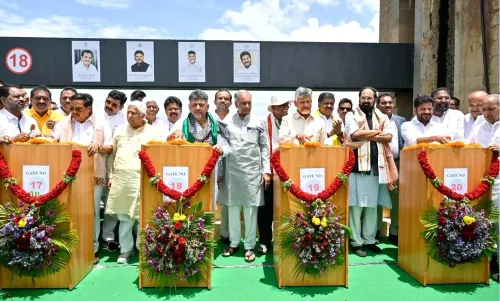
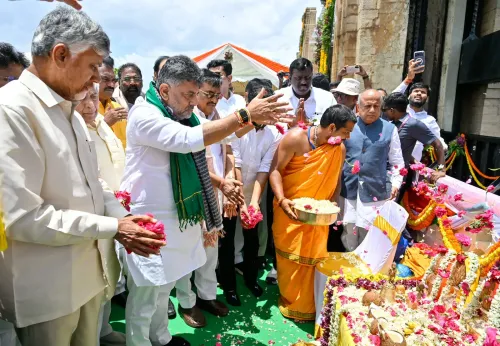
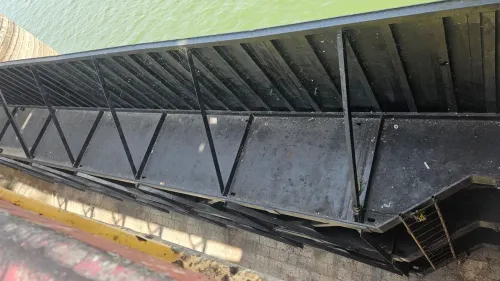
Chief Minister D.K. Shivakumar inaugurated 33 newly installed crest gates at the Tungabhadra Reservoir on 25 June 2026, replacing structures that had stood for seven decades. The Karnataka government completed the work in record time ahead of the monsoon, ensuring the reservoir is ready to store water for the kharif season and benefit basin farmers.
Key Takeaways
33 new crest gates were inaugurated at Tungabhadra Reservoir by CM D.K.
Shivakumar on 25 June 2026 .
The replaced gates were approximately 70 years old , having been part of the dam since its completion in 1953 .
The Karnataka government completed the installation in what the CMO called 'record minimum time.' Work was finished before the onset of the monsoon , ensuring the reservoir can begin filling from the first rains of the 2026 season.
The upgrade primarily benefits Tungabhadra basin farmers dependent on the reservoir for kharif season irrigation .
The Tungabhadra Dam was originally a joint project of the erstwhile Hyderabad and Mysore states , completed in 1953.
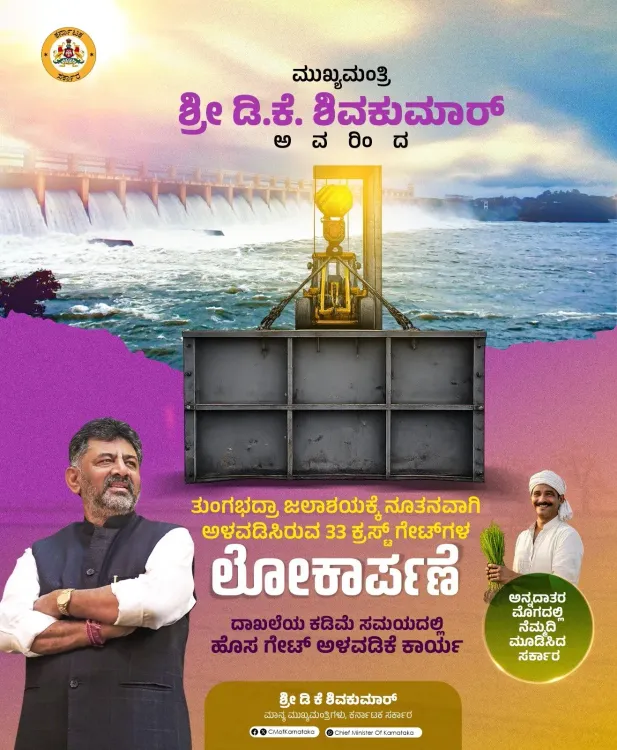
The Chief Minister's Office of Karnataka announced on Thursday, 25 June 2026, that Chief Minister D.K. Shivakumar would inaugurate 33 newly installed crest gates at the Tungabhadra Reservoir, completing a critical pre-monsoon infrastructure upgrade aimed at protecting the interests of farmers across the state.
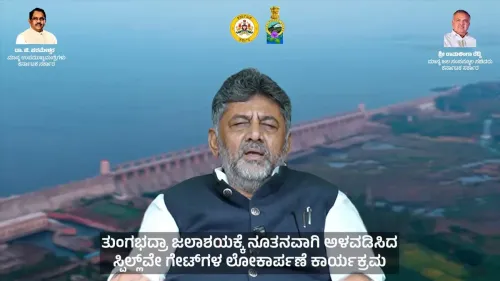
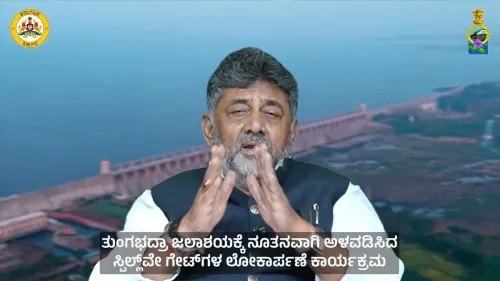
The post, written in Kannada, states: 'ತುಂಗಭದ್ರಾ ಜಲಾಶಯಕ್ಕೆ ನೂತನವಾಗಿ ಅಳವಡಿಸಿರುವ 33 ಕ್ರಸ್ಟ್ ಗೇಟ್ಗಳ ಲೋಕಾರ್ಪಣೆ' — 'The inauguration of 33 newly installed crest gates at the Tungabhadra Reservoir.' The office noted that the new gates replace structures that were seven decades old, and that the work was completed in 'record minimum time' ahead of the monsoon season.
Context
The Tungabhadra Dam, completed in 1953 as a joint project of the erstwhile Hyderabad and Mysore states, is one of Karnataka's most significant multipurpose reservoirs. It serves irrigation and hydropower needs across the Tungabhadra basin, supporting farmers in drought-prone districts of both Karnataka and neighbouring states.
The original crest gates installed at the dam's commissioning had been in service for roughly 70 years. Their replacement had been a long-pending infrastructure priority, with ageing hardware posing risks to both reservoir operations and downstream water security.
Policy Backdrop
Across India, state governments have accelerated rehabilitation programmes for large dams built in the 1950s, driven by structural safety concerns and the need to optimise storage capacity. Karnataka's decision to complete this work before the onset of the monsoon follows a deliberate strategy of maximising kharif season storage at reservoirs serving rain-shadow districts.
The CMO's announcement specifically highlighted that the installation was finished in 'record minimum time,' framing the speed of execution as a demonstration of the state government's commitment to farmers. The reservoir is now described as ready to fill — 'ತುಂಗಭದ್ರೆಯ ಒಡಲು ಭರ್ತಿಯಾಗಲು ಸಿದ್ಧ' ('the Tungabhadra is ready to be filled') — before the rains arrive.
Stakeholders and Impact
The primary beneficiaries of the upgraded infrastructure are farmers in the Tungabhadra basin, particularly those dependent on the reservoir for irrigation during the kharif crop cycle. Timely completion before the monsoon means the dam can begin accumulating storage from the first rains, directly influencing water availability for the sowing season.
The CMO noted that the completion of the new gates has 'brought a smile of relief to the faces of the state's farmers' — a framing that links the infrastructure project explicitly to agrarian welfare. Hydropower generation, which also depends on reservoir levels, stands to benefit from improved gate operations as well.
What's Next
With the inauguration formalised by CM D.K. Shivakumar, attention will shift to water inflow levels at Tungabhadra Reservoir during the 2026 southwest monsoon and the release schedules that will govern irrigation supply to basin districts. The Karnataka government may also announce further modernisation works at other ageing dams in the Krishna river basin, of which the Tungabhadra is a major tributary. The success of this pre-monsoon completion could set a precedent for how the state frames infrastructure timelines around agricultural calendars going forward.
Point of View
' Chief Minister Shivakumar is staking a claim to administrative efficiency on a project with direct agrarian consequences. This fits a broader pattern of Indian state governments reframing dam rehabilitation as farmer welfare, blurring the line between engineering necessity and political messaging. The real test will come in the monsoon months: if Tungabhadra fills to capacity and irrigation releases are timely, the government will have a tangible outcome to point to; if inflows disappoint, the gate inauguration will remain a symbolic gesture.
NationPress
24 Sept 2026
Frequently Asked Questions
What are the new crest gates installed at Tungabhadra Reservoir?
The Karnataka government installed 33 new crest gates at the Tungabhadra Reservoir, replacing the original gates that had been in place since the dam was completed in 1953 — nearly 70 years of service. CM D.K. Shivakumar inaugurated them on 25 June 2026.
Why were the Tungabhadra dam gates replaced?
The original crest gates were approximately 70 years old and required replacement to ensure safe and efficient reservoir operations. Ageing gates pose risks to water storage management, and their replacement was a long-pending infrastructure priority for Karnataka.
How does the Tungabhadra gate replacement help farmers?
The new gates allow the reservoir to be operated more effectively, maximising water storage from monsoon inflows. This directly benefits farmers in the Tungabhadra basin who depend on the reservoir for irrigation during the kharif crop season.
When was the Tungabhadra Dam built?
The Tungabhadra Dam was completed in 1953 as a joint project of the erstwhile states of Hyderabad and Mysore. It is a multipurpose dam providing irrigation and hydropower across the Tungabhadra basin in Karnataka and neighbouring states.
Who inaugurated the new crest gates at Tungabhadra Reservoir?
Karnataka Chief Minister D.K. Shivakumar inaugurated the 33 newly installed crest gates at the Tungabhadra Reservoir on 25 June 2026, as announced by the Chief Minister's Office of Karnataka.