CM Shivakumar to Hold Drought Review Meet with District Officials

Synopsis
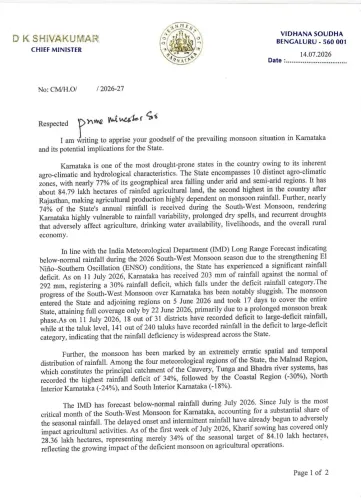
Chief Minister DK Shivakumar will hold a video conference with all Karnataka district collectors and zilla panchayat CEOs at 11 AM on 19 July 2026 to review drought conditions, drinking water, livestock fodder, agriculture, and employment. A Cabinet meeting follows at 3 PM.
Key Takeaways
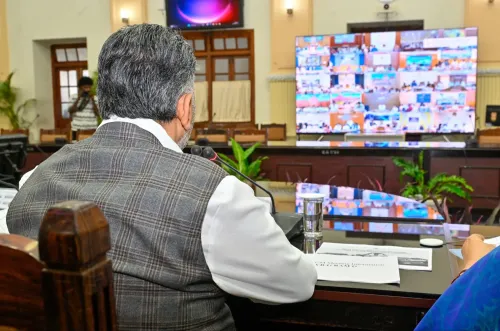
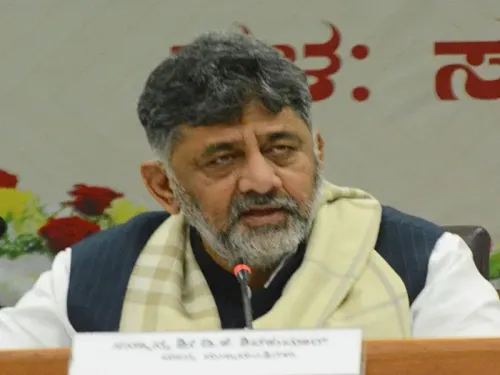
Chief Minister DK Shivakumar will chair a video conference at 11 AM on 19 July 2026 from Vidhana Soudha, Bengaluru .
All district collectors and zilla panchayat chief executive officers across Karnataka are required to participate.
The review covers five areas: drought conditions, drinking water, livestock fodder, agricultural activity, and employment .
A Cabinet meeting will be chaired by the Chief Minister at 3 PM the same day, likely to deliberate on relief measures.
The session follows Karnataka's recurring pattern of state-level drought coordination triggered by monsoon variability .
Small farmers and livestock owners are the primary stakeholders in the outcomes of these deliberations.
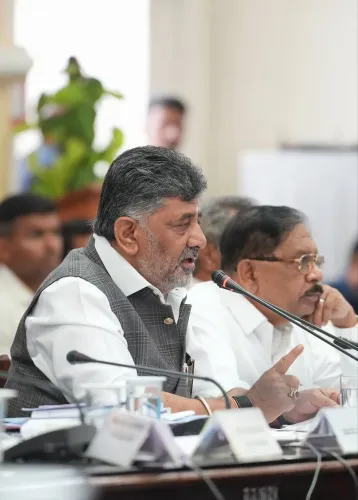
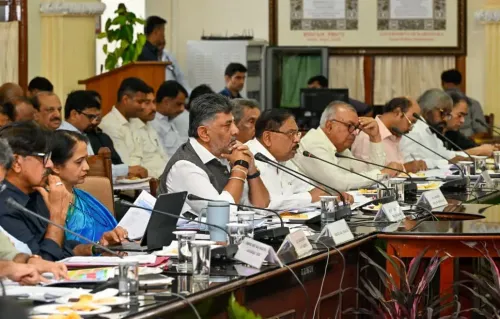
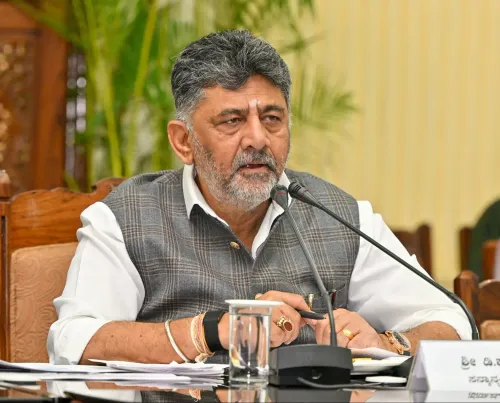
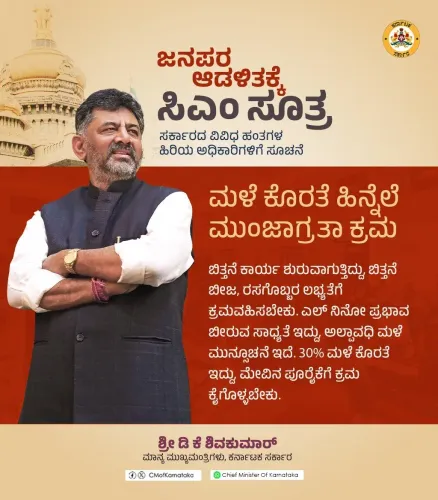
The Chief Minister's Office of Karnataka announced on Sunday, 19 July 2026 that Chief Minister DK Shivakumar will chair a video conference with all district collectors and zilla panchayat chief executive officers at 11 AM from Vidhana Soudha, Bengaluru, to review the state's drought situation, followed by a Cabinet meeting at 3 PM.
Context
The official post, written in Kannada, states that the video conference will cover five critical areas: 'ಬರ ಪರಿಸ್ಥಿತಿ, ಕುಡಿಯುವ ನೀರು, ಜಾನುವಾರು ಮೇವು, ಕೃಷಿ ಚಟುವಟಿಕೆ ಹಾಗೂ ಉದ್ಯೋಗ' — that is, 'drought conditions, drinking water, livestock fodder, agricultural activity, and employment'. All district-level officials across Karnataka are expected to participate in the video conference before the Chief Minister chairs the Cabinet meeting later in the afternoon.
Vidhana Soudha in Bengaluru serves as the seat of Karnataka's legislature and state government, and is the customary venue for high-level administrative reviews of this nature.
Policy Backdrop
Karnataka is no stranger to drought-driven administrative mobilisation. The state declared drought in multiple districts following deficient rainfall in 2023, triggering district-level assessments of drinking water and fodder availability — a pattern that has recurred across successive governments.
Periodic video conferences between the Chief Minister and district collectors are a standard tool in the state's drought-response playbook, enabling rapid assessment of ground conditions across all 31 districts without requiring officials to travel to the capital. Such reviews typically feed directly into Cabinet deliberations on relief packages and fund releases.
Stakeholders and Impact
Small and marginal farmers and livestock owners are the most directly affected constituencies when Karnataka faces drought. Drinking water scarcity in rural and semi-urban areas, reduced fodder availability for cattle, and disruption to the kharif sowing season can compound economic distress for millions of households dependent on rain-fed agriculture.
The inclusion of employment on the agenda signals that the government may also review the implementation of rural employment guarantee schemes as a drought-relief buffer — a mechanism that has historically been deployed to provide income support when agricultural work dries up.
What's Next
The outcomes of today's Cabinet meeting will be closely watched for any announcements on relief packages, additional budgetary allocations, or formal drought declarations for specific districts. The performance of the southwest monsoon in the coming weeks will be a key determinant of whether the state escalates its relief operations or scales them back.
How swiftly the government translates the findings of the district-level review into on-ground relief measures will be a test of Karnataka's drought-response machinery — and of Chief Minister Shivakumar's administrative priorities heading into the second half of the monsoon season.
Point of View
A move that carries both welfare and electoral weight in agrarian constituencies. The back-to-back scheduling of the district review and the Cabinet meeting in a single day is a deliberate governance signal: findings from the ground are expected to feed directly and immediately into policy decisions. This pattern of centralised, top-down coordination reflects the Shivakumar administration's approach to managing the political risks of visible rural distress during a critical monsoon window.
NationPress
19 Jul 2026
Frequently Asked Questions
Why is CM DK Shivakumar holding a video conference with district collectors?
CM DK Shivakumar is holding the video conference on 19 July 2026 to review Karnataka's drought conditions, drinking water availability, livestock fodder, agricultural activity, and employment situation across all districts.
What is the agenda of the Karnataka Cabinet meeting on 19 July 2026?
The Cabinet meeting, scheduled for 3 PM on 19 July 2026 at Vidhana Soudha, is expected to deliberate on drought relief measures following the morning video conference with district officials.
Which districts in Karnataka are affected by drought in 2026?
The post does not specify individual districts; the review involves all district collectors, suggesting the government is assessing drought conditions across Karnataka broadly.
What is Vidhana Soudha and why are meetings held there?
Vidhana Soudha is the seat of Karnataka's legislature and state government in Bengaluru. It is the customary venue for high-level administrative and Cabinet meetings in the state.
How does Karnataka typically respond to drought conditions?
Karnataka's standard drought response includes video conferences between the Chief Minister and district officials to assess ground conditions, followed by Cabinet decisions on relief packages, drinking water supply, fodder distribution, and activation of rural employment schemes.