CM Sukhu: BJP MPs won't demand HP's Rs 1,500 cr relief
Synopsis
CM Sukhvinder Singh Sukhu publicly accuses BJP MPs and MLAs of refusing to demand Himachal Pradesh's ₹1,500 crore disaster relief from Delhi, calling their silence self-serving and politically motivated.
Key Takeaways
CM Sukhu alleges BJP legislators from Himachal Pradesh have not advocated for the state's rights in New Delhi .
He claims PM Modi had announced ₹1,500 crore in disaster relief for Himachal Pradesh, which has not been disbursed.
Sukhu accuses BJP leaders of staying silent to protect their own political positions within the party.
The charge fits a broader pattern of opposition-ruled states alleging delays in central disaster fund releases.
Himachal Pradesh is among India's most flood- and landslide-prone states, making central relief transfers critical to its recovery.
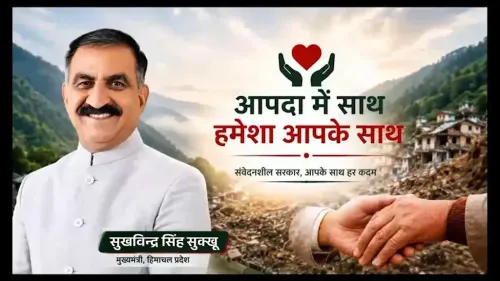
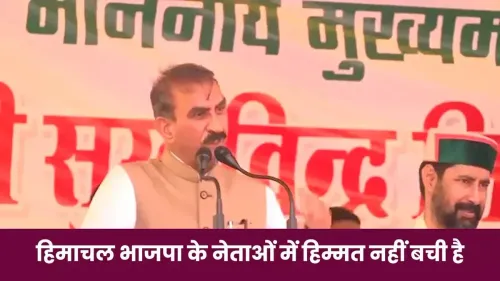
Himachal Pradesh Chief Minister Sukhvinder Singh Sukhu has levelled a pointed public charge: that BJP legislators — both MPs and MLAs — have stayed conspicuously silent in New Delhi even as the state waits for a promised ₹1,500 crore in central disaster relief that has not arrived. Speaking in blunt, colloquial terms on Tuesday, 29 September 2026, Sukhu framed the silence not as oversight but as deliberate political self-preservation.
The Chief Minister's post, written in Hindi, carried a sharp metaphor: BJP representatives, he said, 'Parwanoo se aage unka munh nahi khulta, yahin Himachal mein kauwe ki tarah kaanv-kaanv karte hain' — 'their voices don't carry beyond Parwanoo; here in Himachal they caw like crows.' The image of local bluster giving way to Delhi silence was unmistakable, and deliberate.
The ₹1,500 crore that never came
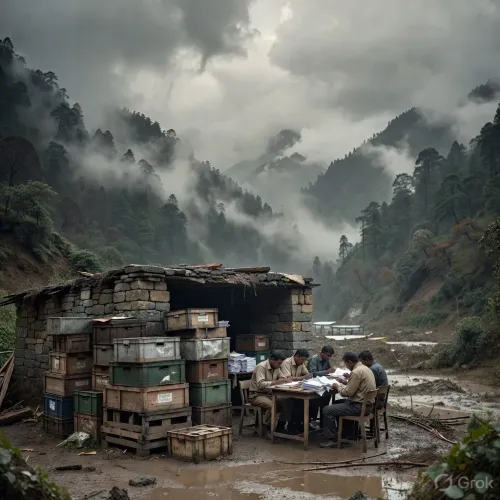
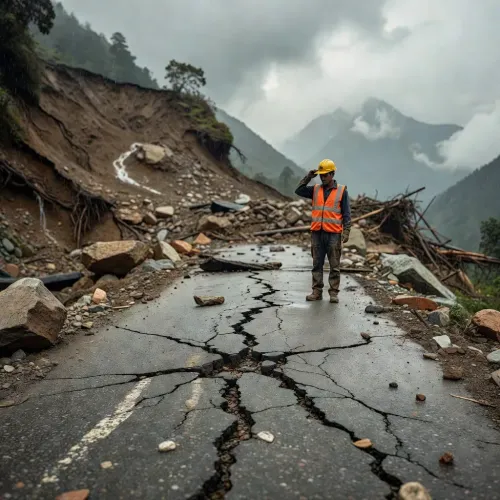
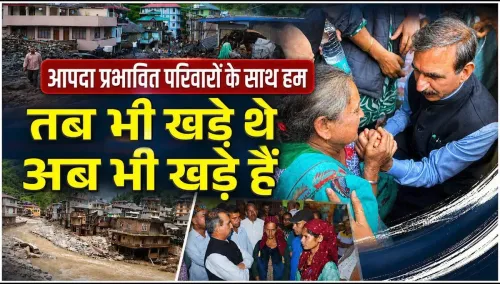
At the heart of Sukhu's attack is a specific, unmet commitment. After Himachal Pradesh was devastated by severe floods and landslides — the kind of multi-season disaster that has increasingly scarred the Himalayan state — Prime Minister Narendra Modi announced ₹1,500 crore in relief assistance. That announcement, the Chief Minister says, has produced no actual disbursement. The funds, he asserts, have not reached the state 'to this day.'
This is not an isolated grievance. Across India, opposition-governed states have repeatedly raised the issue of central disaster funds being delayed or withheld — a friction point baked into the federal architecture, where states bear the immediate cost of relief while waiting on central transfers. Himachal Pradesh, a Congress-ruled state surrounded by BJP's dominance at the centre, sits squarely in that pattern.
Sukhu's 'kursi' charge against BJP legislators
The most caustic line in Sukhu's post targets motivation. He writes that BJP leaders stay silent because they fear that demanding the state's rightful funds could cost them their positions — 'kursi na chali jaye', 'lest their chair be taken away.' It is an accusation of institutional cowardice: that legislators prioritise their standing with the party's central leadership over their constituents' material needs.
Parwanoo, the town Sukhu names as the effective boundary of BJP legislators' advocacy, sits on the Himachal–Haryana border — the gateway between the state and the plains. Invoking it as the limit of their voice is a geographically loaded dig: they speak loudly at home, and go mute the moment they step into the national capital's corridors.
Disaster relief politics in a Himalayan state
Himachal Pradesh is among India's most climatically vulnerable states. Cloudbursts, flash floods, and landslides have grown in frequency and intensity, repeatedly straining state finances and infrastructure. The central government's disaster relief mechanism — channelled through funds that require central releases — means state governments are structurally dependent on the centre in their worst moments. When those funds are delayed, the political cost is borne entirely by the state administration that faces the public directly.
Sukhu's post is therefore also a pressure tactic: by naming a specific figure and a specific failure in a public forum, he raises the cost of continued inaction and puts BJP legislators on notice that their silence now has a public record.
Whether the charge prompts a response from BJP's parliamentary contingent from Himachal, or triggers any fresh communication from the central government on fund disbursement, will be the next political test in this standoff — and the next measure of just how far that crow's call actually travels.
Point of View
He shifts the debate from partisan rhetoric to accountability. The 'Parwanoo boundary' metaphor is crafted for a Himachali audience — it lands locally while the underlying claim travels nationally. The broader arc here is the Congress strategy of weaponising central fiscal delays in states it governs, turning each unreleased transfer into an election-ready grievance. Whether BJP legislators respond with counter-evidence or stay silent will itself become data in the next news cycle.
NationPress
29 Sept 2026
Frequently Asked Questions
What is the ₹1,500 crore disaster relief that CM Sukhu is referring to?
CM Sukhu refers to a central government announcement by PM Narendra Modi of ₹1,500 crore in disaster relief for Himachal Pradesh following severe floods and landslides. He alleges the amount has not been released to the state as of September 2026 .
Why is CM Sukhu criticising BJP MPs and MLAs?
CM Sukhu accuses BJP legislators of refusing to raise Himachal Pradesh's demands in New Delhi , claiming they fear losing their positions within the party if they press the central government for the state's due funds.
What does Sukhu mean by 'Parwanoo se aage unka munh nahi khulta'?
It is a metaphor meaning BJP legislators speak up only within Himachal Pradesh but go silent the moment they cross into the national capital. Parwanoo is a border town at the entry point of Himachal Pradesh, used here as a symbol of their limited advocacy.
Is delay of central disaster funds to opposition states a common issue in India?
Yes. Opposition-governed states across India have frequently raised concerns about delays in central disaster relief transfers, citing structural federal dependencies where states bear immediate costs while waiting on central disbursements.
What happens next after Sukhu's public accusation?
The political test will be whether BJP legislators from Himachal Pradesh respond publicly or whether the central government issues any communication on the status of the ₹1,500 crore disbursement — particularly ahead of any upcoming state assembly sessions.