CM Sukhu demands 50% royalty, GST relief from Finance Minister
Synopsis
Chief Minister Sukhvinder Singh Sukhu has publicly demanded 50% royalty from debt-free central hydro projects and revival of GST compensation worth Rs 4,000 crore, pressing Finance Minister Nirmala Sitharaman on Himachal Pradesh's long-standing fiscal grievances.
Key Takeaways
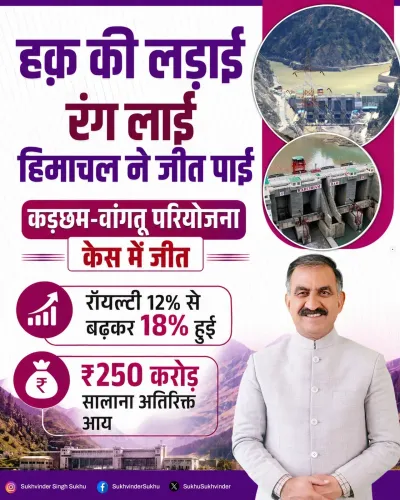
CM Sukhu is demanding 50% royalty from NTPC, SJVNL and NHPC projects once they become debt-free, up from the current 12% free-power royalty .
The previous BJP government in Himachal Pradesh received Rs 4,000 crore in GST Compensation Cess over five years (2017–2022) ; Sukhu says this was discontinued when Congress came to power.
GST's consumption-based design structurally disadvantages smaller producing states like Himachal Pradesh that lack large consumer markets.
Sukhu confirmed he has raised both demands directly with Union Finance Minister Nirmala Sitharaman , who he says listens to the state's case.
A successful royalty revision, the CM argues, would make Himachal Pradesh financially self-sufficient enough to extend funds to other states.
Himachal Pradesh's rivers power millions of homes across India — yet the mountain state that generates that electricity gets back a fraction of what it's worth. Himachal Pradesh Chief Minister Sukhvinder Singh Sukhu went public on Wednesday, 30 September 2026, laying out a pointed fiscal case he says he has already taken directly to Union Finance Minister Nirmala Sitharaman — demanding a dramatic revision in hydropower royalties and restoration of GST compensation that he argues was quietly cut off when his government took office.
The 12% royalty Sukhu calls inadequate
At the heart of Sukhu's demand is a number: 12%. That is the free-power royalty Himachal Pradesh currently receives from central hydroelectric projects run by NTPC, SJVNL (SJVN), and NHPC under standard agreements. The Chief Minister argues the formula is fair only while those projects are still repaying their construction loans — once the debt is cleared, the calculus changes entirely.
'Our water generates electricity,' Sukhu wrote in Hindi, 'and in return we get 12% royalty. When NTPC, SJVNL and NHPC projects become debt-free, we should be given 50% royalty from those projects.' He framed the ask not as charity but as a correction: a state that gives up its rivers should share meaningfully in the profits once lenders are paid off.
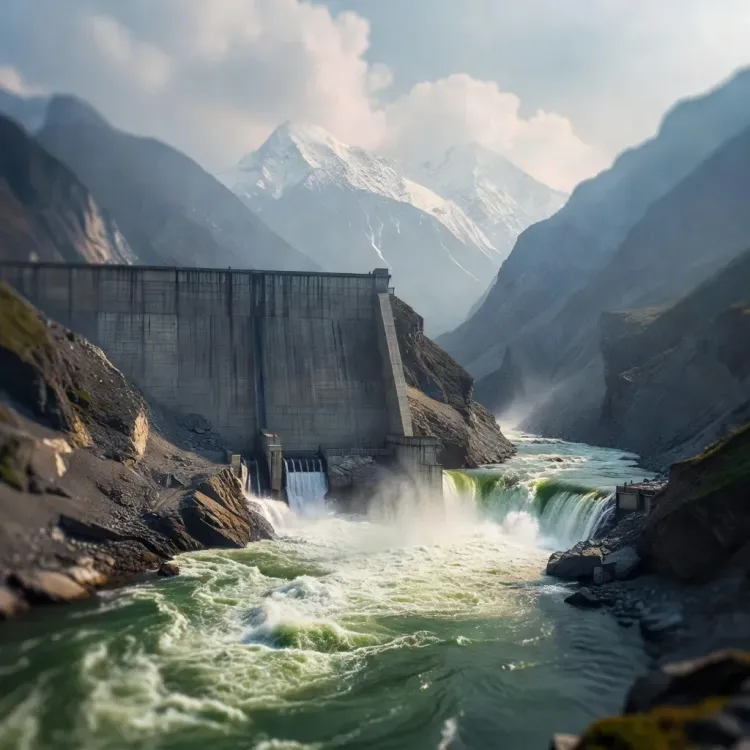
Himachal Pradesh is one of India's most hydropower-rich states. SJVN — originally a joint venture between the Centre and the state — operates several large dams in the Satluj basin alone. NHPC runs major projects across Himachal's river valleys. As those plants age and original project loans wind down, a royalty revision would represent a structurally significant shift in revenue flows to Shimla.
The GST gap: Rs 4,000 crore that stopped arriving
Sukhu's second grievance cuts to the core of India's GST architecture. When the nationwide goods-and-services tax was rolled out in July 2017, the Centre cushioned producing and manufacturing states — which stood to lose under the consumption-based formula — with a five-year GST Compensation Cess. Himachal Pradesh, a net producer of hydropower rather than a large consumer market, fell squarely in that category.
Sukhu says the previous BJP government, which held office from 2017 to 2022, received Rs 4,000 crore in GST Compensation Cess over those five years from the Centre. The compensation window closed in June 2022 — almost exactly when the Congress came to power in Shimla. 'When we came to government,' he stated, 'RDG and GST reimbursement cess were stopped.' The timing, he implies, left his administration holding a fiscal gap the previous dispensation never had to navigate.
The CM was careful to note that Sitharaman hears him out. 'We raise this issue with the Finance Minister and she listens to us,' he said — a line that signals ongoing negotiation rather than a breakdown, even as it publicly escalates the pressure.
Federalism's oldest fault line
What Sukhu is articulating is a version of a tension as old as Indian federalism itself: resource-rich but fiscally stretched states that feel the Centre captures the value of their natural endowments while they bear the environmental and social costs. Himachal Pradesh cannot expand its tax base the way a large industrial state can — its geography makes that impossible. What it can do is produce enormous quantities of clean electricity from rivers that belong, ultimately, to its people.
The GST complaint adds another layer. A consumption-based tax inherently rewards populous consuming states and penalises smaller producing ones — a structural asymmetry that the compensation cess was designed to soften. Its expiry in 2022 sharpened that imbalance, and several hill and hydro-producing states have since raised similar concerns in GST Council meetings.
If a royalty revision on debt-free hydro projects were agreed, the fiscal impact on Himachal Pradesh's budget could be substantial — and Sukhu says it would ultimately free the state from depending on loans from other states: 'Himachal will become capable of giving money to other states.' That is not a small promise for a government that has faced visible revenue pressures since 2022.
Point of View
000 crore in lost GST compensation — he converts a quiet bilateral negotiation into political accountability. The demands sit within a well-documented fault line in Indian fiscal federalism, where hydro-producing hill states argue the current resource-sharing architecture was designed for a different economy. Notably, Sukhu refrains from attacking Sitharaman personally — praising her for 'listening' — which keeps the door open for a deal while still sharpening the pressure ahead of any GST Council revision cycle. The political subtext is equally deliberate: reminding voters that the Congress administration inherited a fiscal disadvantage that the BJP government never faced.
NationPress
30 Sept 2026
Frequently Asked Questions
What is the current hydropower royalty Himachal Pradesh gets from central projects?
Himachal Pradesh currently receives 12% free power as royalty from central hydroelectric projects run by NTPC, SJVNL and NHPC under standard project agreements.
Why is CM Sukhu demanding 50% royalty from NTPC, SJVN and NHPC?
Sukhu argues that once these central projects fully repay their construction loans and become debt-free, Himachal Pradesh should receive 50% royalty rather than the current 12%, reflecting the state's contribution of water resources.
How much GST Compensation Cess did Himachal Pradesh receive and when did it stop?
The previous BJP government in Himachal Pradesh received approximately Rs 4,000 crore in GST Compensation Cess over five years from 2017 to 2022 . The compensation ended in June 2022 when the five-year GST compensation window closed.
Why does Himachal Pradesh lose out under GST?
GST is a consumption-based tax, meaning revenue flows to states where goods and services are consumed. Himachal Pradesh is a net producer — primarily of hydroelectric power — rather than a large consumer market, so it collects less GST revenue than states with bigger populations and markets.
Has Nirmala Sitharaman agreed to Himachal Pradesh's royalty and GST demands?
CM Sukhu has not announced any formal agreement. He stated that Finance Minister Sitharaman 'listens' to Himachal Pradesh's case, indicating ongoing talks but no confirmed commitment as of 30 September 2026 .